
If you are like me, the crazy up-and-down temperatures have left you anxious for spring weather to stay. Forcing spring flowering branches is one way to bring some spring beauty inside. Since pruning is on many of our garden to-do lists this month, why not gather a few extra branches for forcing?
Flower buds develop on spring flowering branches before winter arrives. These flowering shrubs need a period dormancy triggered by the cold temperatures and shorter days of winter. By February, this requirement has usually been met.
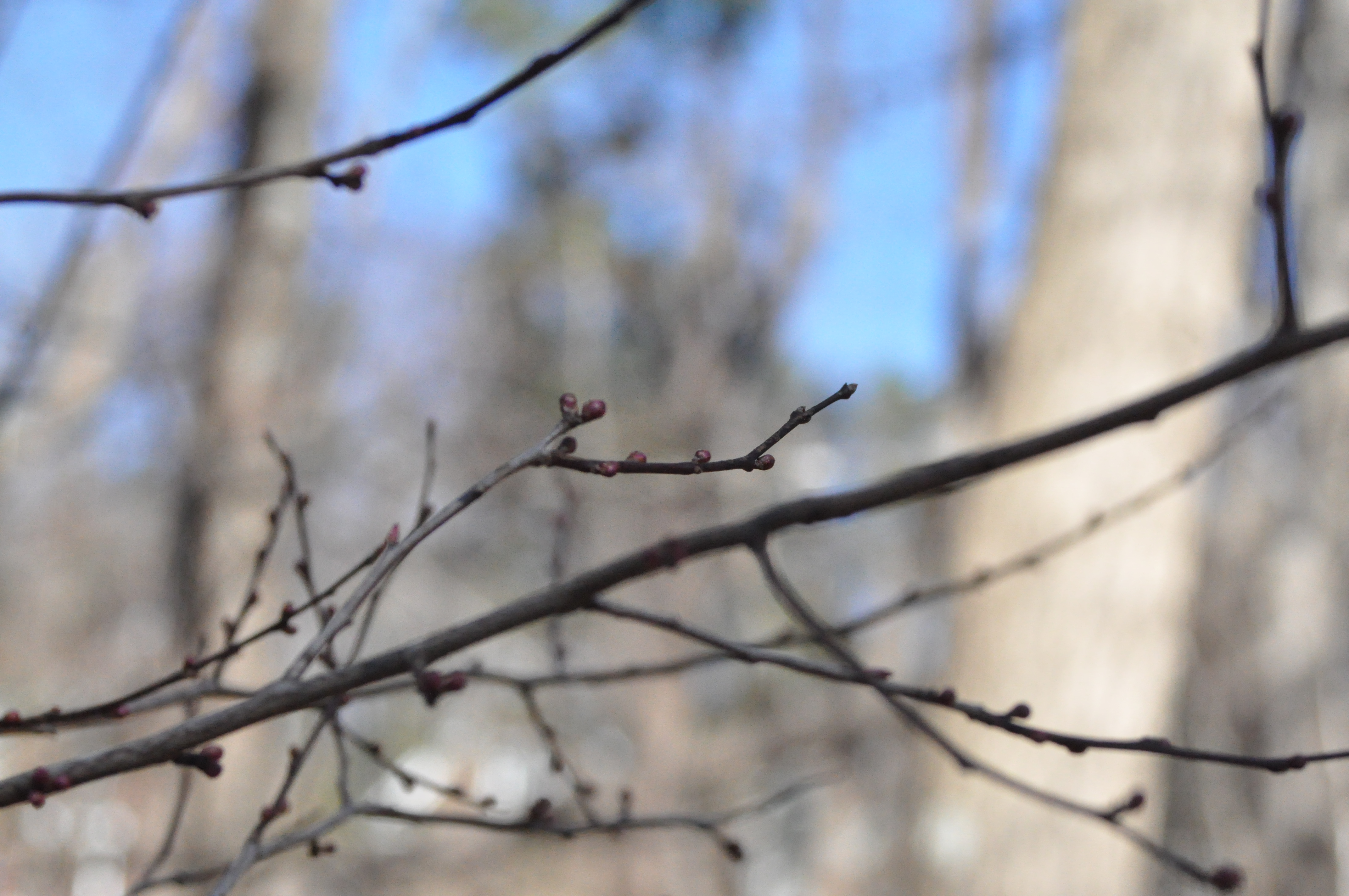 Photo – Ann Barnes
Early spring flowering trees and shrubs are the easiest to force. Forsythia, quince, pussy willows, cherries, and plums are good choices for February forcing. When removing branches for forcing, look for round, plump flower buds like those in the photo above. Choose branches with a pleasing shape and plenty of flower buds, but don’t forget to maintain the natural shape of your shrubs. For best results, prune on a mild day. While you are collecting branches for forcing, inspect your plants for dead, diseased, or damaged branches and remove those as well. This is not the time for a hard pruning though – you don’t want to spoil the outdoor flower show once spring arrives.
Once you bring your branches inside, cut each at a sharp angle. Many people recommend smashing the bottom inch or two of the branches with a hammer or cutting into the bottom of each branch before inserting them into water. Add a drop of bleach to your water, along with floral preservative or sugar. Water should be changed every few days. Place your container in a cool, dark place until the buds begin to show color, then bring them inside. Arrange your branches, place in a well lit room out of direct sunlight, and enjoy!