
By Jeanne Arnts, NC State Extension Master GardenerSM volunteer of Durham County
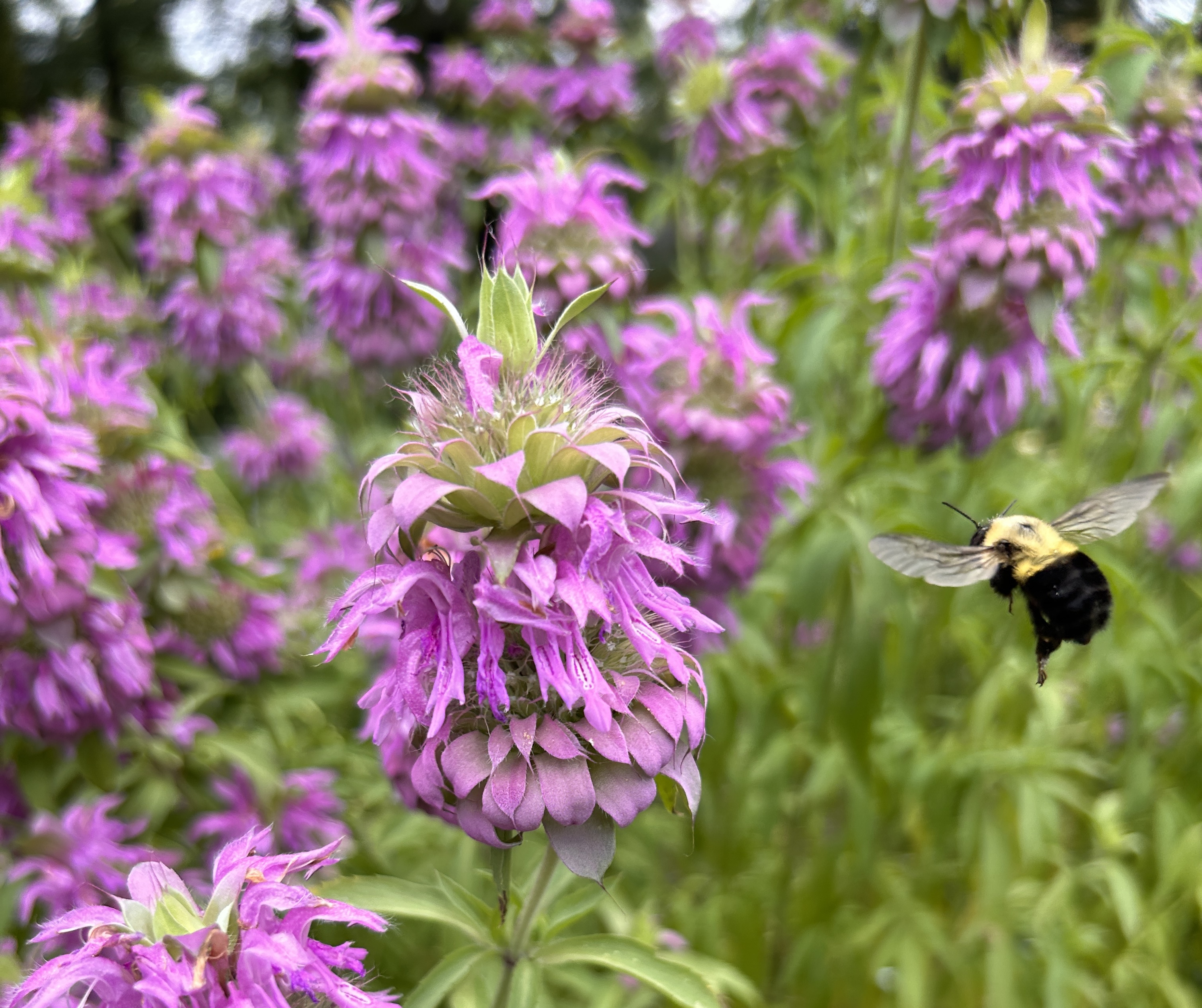
Image credit: Marcia Kirinus
In my December 2024 blog, “From Beloved to Invasive: How Does it Happen?”, I concluded by stating that I would follow up with suggestions for native plant alternatives to invasive ornamentals. While a comprehensive guide isn’t feasible in a single post, I will highlight some of the most common and troublesome invasive plants and their native replacements.
Challenges in Replacing Invasive Plants
Replacing invasive plants with natives is not always straightforward, as there are rarely perfect native substitutes. An invasive plant may bloom longer, at different times, or offer other aesthetic appeals that native alternatives do not. However, invasive plants harm local ecosystems by outcompeting native species and failing to support caterpillars and specialist pollinators. While adult butterflies can seek nectar from any plant, their caterpillars depend on the leaves of their host plants, with which they have evolved over millennia, for survival. Research by Tallamy, et al., indicates that a biomass of at least 70% native plants is required in a nesting area to support bird nestlings that rely on caterpillars for nutrition. In my yard, I prioritize adding species that support native specialist bees and caterpillars.

Native Trees and Shrubs to Replace Invasive Ornamentals
- Bradford Pear (Pyrus calleryana ‘Bradford’) → Serviceberry (Amelachier arborea), Dogwood (Cornus florida), Redbud (Cercis canadensis), or Fringe tree (Chionanthus virginicus)
- Though the Bradford pear was initially thought to be a sterile hybrid when introduced to the U.S. nursery trade in 1964, its cultivars can cross-pollinate and revert back to the invasive Callery pear species. Like most invasive shrubs and trees, birds eat the fruit and spread the seeds through defecation, leading to aggressive spread of this species. Dogwood and Redbud are excellent alternatives, supporting multiple caterpillar species (101 for Dogwood and 25 for Redbud). If you have a Bradford Pear consider replacing it with Serviceberry, Fringe Tree, Redbud or Dogwood.
- Butterfly Bush (Buddleja davidii) → Buttonbush (Cephalanthus occidentalis), Sweet pepperbush (Clethra alnifolia), Virginia sweetspire (Itea virginica)
- While Butterfly Bush attracts many butterflies, it doesn’t support their caterpillars. Buttonbush, on the other hand, supports native bees, as well as moths, such as the buttonbush clearwing moth (Hemaris diffinis). Sweet pepperbush is also a great alternative, supporting native bees and butterflies, as well as night-flying moths. Virginia Sweetspire thrives in part shade and moist soil, and like the other alternatives, serves as a host plant for various caterpillars.
- Heavenly Bamboo (Nandina domestica) → Yaupon Holly (Ilex vomitoria) or Inkberry (Ilex glabra)
- Nandina is popular for its red berries, but they are toxic to birds and mammals. Yaupon Holly and Inkberry provide similar ornamental value, non-toxic berries, and ecological benefits. They are nectar-rich and host plants for 44 species of caterpillars. Both are dioecious, meaning male and female plants are needed to produce berries.
- Burning Bush (Euonymus alatus) → Strawberry Bush (Euonymus americanus) or Fragrant Sumac (Rhus aromatica)
- Burning Bush is prized for its red fall foliage but is invasive. Strawberry Bush, also known as Hearts A’Busting, offers similar aesthetics but needs protection from deer. Fragrant Sumac also provides vibrant fall color and summer fruit for wildlife.

Image credit: NCSU Plant Toolbox peverdonk CC BY-NC 2.0)
Native Vines to Replace Invasive Vines
- Chinese & Japanese Wisteria (Wisteria sinensis, W. floribunda) → American Wisteria (Wisteria frutescens)
- Unlike its invasive counterparts, American Wisteria is less aggressive and can be managed with pruning. Like it’s invasive cousins, it needs support of a trellis or wall.
- Japanese Honeysuckle (Lonicera japonica) → Crossvine (Bignonia capreolata) or Coral Honeysuckle (Lonicera sempervirens)
- While Japanese Honeysuckle attracts generalist pollinators, it doesn’t support specialized relationships with local insects. Its invasive nature also harms native plants. Crossvine, a native alternative, supports a wide range of caterpillars and pollinators, including hummingbirds and bees. I particularly like Crossvine because of its abundant blooms, I planted one near a pine that receives sun, and it climbed the pine up to a height of 50 feet without girdling it. Crossvine’s claim to fame, according to N.C. State, is that it produces more blooms per square foot than any other vine. Honeysuckle, a bit tamer, also attracts hummingbirds and bees and supports nectar-feeding butterflies.


From left to right: Crossvine, (Bignonia capreolata) climbing up a pine tree. Image Credit: Susan Strine CC BY 2.0. Coral Honeysuckle, (Lonicera sempervirens) & White-lined sphinx Moth, (Hyles lineata) Image Credit: Ronnie Pitman. CC BY-NC 2.0 Coral Honeysuckle, (Lonicera sempervirens) in flower Image Credit: Chris Kreussling CC BY-NC-ND 2.0
Native Ground Covers to Replace Invasive Ground Covers
- English Ivy (Hedera helix) → Native Violets (Viola canadensis, V. sororia) or Wild Strawberry (Fragaria virginiana)
- English Ivy is an invasive ground cover that harms trees and structures. Native violets and Wild Strawberry are better alternatives, offering ecological benefits like providing berries for wildlife. Be aware that there is an invasive, exotic wild strawberry plant look alike called, ‘Mock strawberry’, (Potentilla indicia), that does not provide any ecological value. You can identify it in the early spring because it has yellow flowers. The native wild strawberry has white flowers.
- Periwinkle (Vinca minor, V. major) → Green and Gold (Chrysogonum virginianum) or Golden Ragwort (Packera aurea)
- Both Green and Gold and Golden Ragwort provide vibrant yellow spring flowers, with ecological benefits, including supporting pollinators. They both bloom yellow in the spring.
- Monkey Grass (Liriope muscari) → Blue-eyed Grass (Sisyrinchium angustifolium)
- While Liriope is a “lesser threat” invasive, Blue-eyed Grass is a more attractive alternative, although it prefers less shade. For deep shade, consider Chrysogonum virginianum.


From left to right, Native Violet, (Viola canadensis), Image Credit: ScottCC BY 2.0 . Green and Gold, (Chrysogonum virginianum), Image Credit: Marcia Kirinus. Blue eyed grass, (Sisyrinchium angustifolium), Image Credit: Debbie Roos
Choosing Native Cultivars (‘Nativars’) Wisely
In many plant nurseries, you will find cultivars of native plants. These plants have been bred to highlight certain attributes. Many ecologists prefer to use straight species to promote diversity, but not all cultivars are harmful. Research from Penn State University indicates that 50% of cultivars are equally or more effective at attracting pollinators than their straight counterparts.
What should you avoid?
Avoid cultivars with double flowers, as these often replace the reproductive parts necessary for pollinators. Also, avoid cultivars with unusual leaf colors (e.g., purple or variegated) as they may have different chemical compositions that make them less suitable for caterpillars.
What attributes are okay?
- Changes in size (e.g., dwarf varieties) or growth habits typically don’t affect the plant’s ecological role.
- Cultivars bred to produce more flowers can benefit pollinators, provided the flowers still offer nectar and pollen.
- Increased hardiness to extreme weather conditions can help native cultivars survive and benefit wildlife.
Research Before You Buy
Before purchasing new plants, I always consult the NC State Plant Toolbox for reliable information on growth conditions and ecological value. I also avoid purchasing insecticide-treated plants, as they can harm pollinators and beneficial insects. Buying from reputable native plant nurseries or Master Gardener plant sales ensures that you make safe, beneficial choices. The next Master Gardener plant sale will be on April 5, 2025. Learn more here.
By making thoughtful plant selections, we can create beautiful landscapes that support local ecosystems. Every native plant added to your yard makes a difference!
Resources and Additional Information
- Bees, Bugs, and Blooms – A Pollinator Trial — Research — Penn State College of Agricultural Sciences.
- Controlling Invasive Plants (North Carolina Botanical Gardens booklet)
- Native Plant Recommendations – New Hope Bird Alliance
- North Carolina Extension Gardener Plant Toolbox
- Nonnative plants reduce population growth of insectivorous birds – PubMed Proc Natl Acad Science: Narrango, Tallamy, Marra, Sci USA. 2018 Nov 6;115(45):11549-11554. doi: 10.1073/pnas.1809259115. Epub 2018 Oct 22.
- Understanding Neonicotinoids | Xerces Society
Article Short Link: https://wp.me/p2nIr1-5CJ


