
By Carol Feldman, NC State Extension Master GardenerSM volunteer of Durham County
From beetles and bitterness to poor pollination – here’s how to keep your cucumbers happy and healthy. This is the second part in a series on cucumbers. Part one titled Cucumbers…Let’s Grow Some! was published in July 2025.
___________________________
If you love reading the blog posts here as much as I do, you might have caught a piece I wrote in July about cucumbers. You know, the nitty-gritty: how to choose seeds based on what you want from your cucumbers, how to plant, grow, harvest, and store them.
This time, I invite you to dig a little deeper with me. I wanted to know – and I hope you’re wondering too – how to be as successful as possible in your quest to grow great cucumbers. What are the most common pests to watch for? What do they look like? How can you prevent problems, and what can you do if they show up?
And what about other issues? I can tell you about a doozy we had at Briggs Community Garden – completely abiotic (environmental) and entirely unintentional. (Maybe that’s a story for article #3? Keep an eye out here for more on that in September.)

Tending to the cucumber fence at Briggs Community Garden. (Image credit: Carol Feldman)
Most Common Cucumber Pests
Pests! I think just about every plant grown in soil attracts certain pests, and cucumbers are no exception. Let’s take a look at two pests that love cucumber plants. For each one, we’ll focus on three key aspects: identification, prevention, and organic methods of treatment – just in case prevention doesn’t quite do the trick.
Beetles
The most common offenders are the striped cucumber beetle, Acalymma vittatum, and the spotted cucumber beetle, Diabrotica undecimpunctata howardi. These pests are small, only about 1/4″ long. Striped cucumber beetles have alternating black and yellow stripes along their backs and are specific to the cucurbits, while spotted cucumber beetles are more of a generalist feeder and can also affect other crops like corn beans, and peas. They are slightly larger and display 12 black spots on a yellow background.
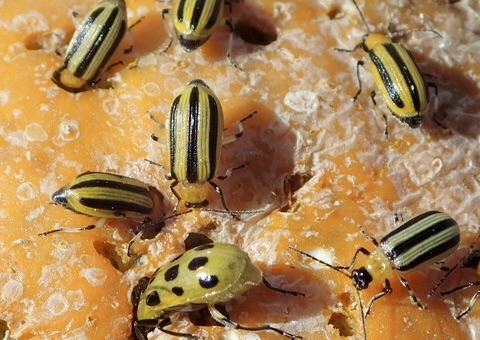
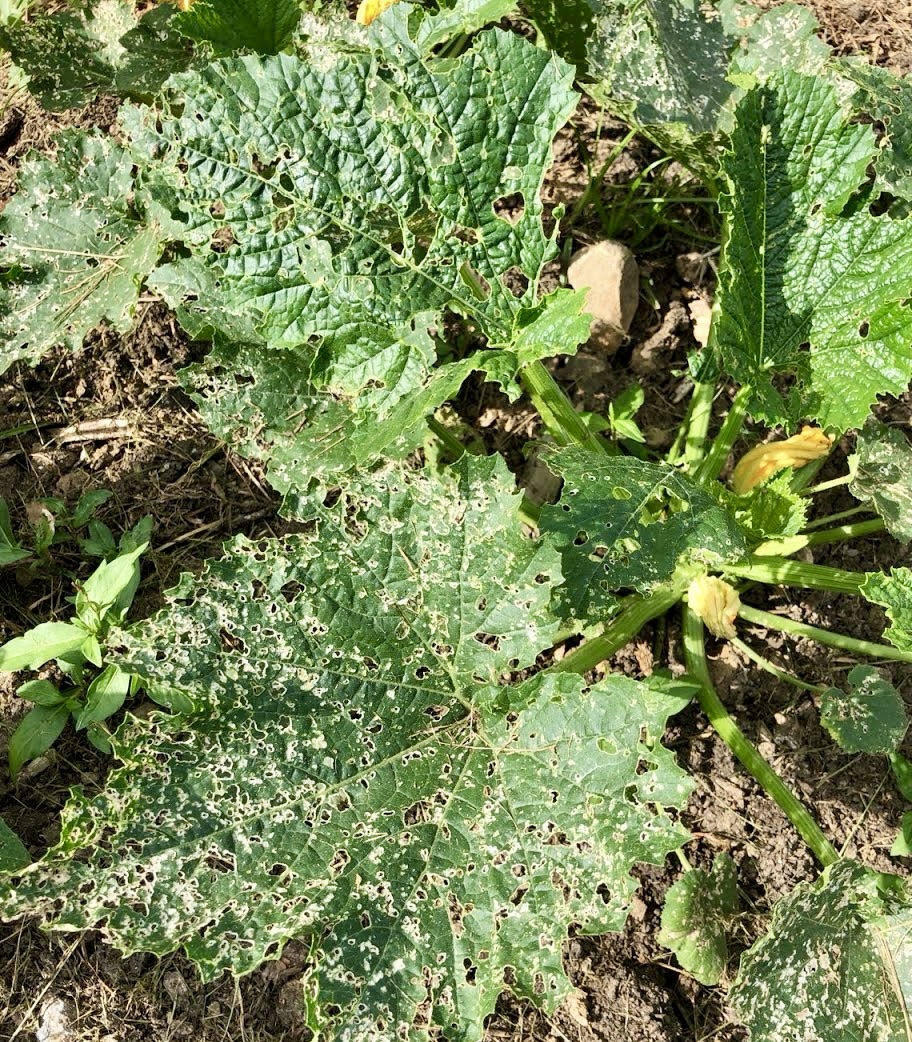
Left: Both striped cucumber beetles, Acalymma vittatum, and spotted cucumber beetle, Diabrotica undecimpunctata howardi, feeding on fruit. (Image credit: Whitney Cranshaw, Colorado State University, Bugwood.org) Right: Feeding damage caused by cucumber beetles (Image credit: NCSU Extension)
Both types of beetle cause damage to stems (even below the soil), leaves, flowers, and fruit. Worse, they can also transmit bacterial wilt and cucumber mosaic virus to the plants.
Prevention Methods to Control Beetle Infestations
- Practice good cultural care (healthy soil, spacing, and sanitation).
- Use trap plants like flowering radishes to lure beetles away from your cucumbers—a clever decoy!
- Cover cucumber seedlings with row covers early on to physically block the pests.
- Dust leaves with diatomaceous earth or Surround WP® (kaolin clay) as a deterrent.
If beetles still break through, more aggressive treatments include pyrethrum or diluted cold-pressed neem oil. However, both can also harm beneficial insects, so apply them early in the morning when insect activity is lowest. (Double-check this timing recommendation for your area and climate.)
Most treatments require multiple applications, so be prepared to reapply as needed.
Melon Aphids
The melon aphid, also known as the cotton aphid, Aphis gossypii, is a tiny insect – just 1 to 1.5 mm long – that ranges in color from yellowish green to greenish black. These sap-suckers are typically found on the undersides of leaves, where they feed and cause reduced plant vigor, lower fruit production, and diminished fruit quality.
Be sure to regularly scout the undersides of leaves for both adult aphids and their eggs. Why the concern? Aphids are major disease vectors – especially when it comes to cucumber mosaic virus, which they transmit more effectively than almost any other pest.
So yes, it’s important to keep these pests off your plants. I know, I know – easier said than done – but do make a point of monitoring and managing them.
Prevention Strategies for Melon Aphids
- Maintain strong cultural practices.
- Plant more flowers (sacrificial plants may help!).
- Avoid overcrowding cucumber plants.
- Keep an eye out for ants—there’s actually a fascinating (and frustrating) symbiotic relationship here: ants love the honeydew that aphids secrete and will go as far as protecting and herding aphids to keep that sugary feast flowing. The sugary mess can also bring on sooty mold which would be a secondary problem.
Organic Treatment Options
- Spray affected leaves with soapy water, followed by a clear water rinse.
- Try yellow pan traps: fill shallow yellow-colored containers with water and a little dish soap to attract and trap aphids. Research suggests it’s a valid way to capture not just aphids but a variety of flying insects. The theory is that they’re drawn to yellow, mistaking it for a host plant or flower. (How to make a yellow pan insect trap.)


Left: Melon aphid, Aphis gossypii, can be light green, brown to black. Their piercing/sucking mouth parts can introduce diseases like cucumber mosaic virus. (Image Credit: J.R. Baker NCSU ) Right: An infestation of Aphis gossypii on the underside of a leaf. Note droplets of honeydew secreted by the aphids. (Image credit: Clemson University – USDA Cooperative Extension, Bugwood.org)
Most Common Diseases
Bacterial Wilt
While bacterial wilt is a general term and can affect several types of vegetables, the bacterium Erwinia tracheiphila is host specific and will only attack cucurbits. That includes cucumbers, muskmelons, squash, and pumpkins. If you see bacterial wilt on tomatoes, it’s likely due to Ralstonia solanacearum (also known as southern bacterial wilt), which is a completely different bacterial species. It is ‘southern’ because this is a soil borne bacteria mostly seen in tropical, subtropical areas. However in Durham, we do have related species in the Ralstonia complex.
Quick ID: The plant suddenly wilts, often without warning.
Cucumber beetles are the main culprits in spreading Erwinia tracheiphila. These beetles are especially drawn to stressed or unhealthy cucumber plants. They may feed on leaves already infected with the bacteria, allowing the pathogen to multiply in their digestive systems over the winter. Come spring, when the beetles become active again, they spread the bacteria to fresh, healthy cucumber leaves.
Preventing Bacterial Wilt in Cucumbers
- Follow scrupulous cultural practices.
- Control cucumber beetles before they become a problem.
Unfortunately, there is no cure once a plant is infected. If you spot signs of bacterial wilt, remove the affected plant from your garden immediately to prevent further spread.


Left: Bacterial wilt seen in cucumber by the bacterium Erwinia trachiepila. (Image credit: M.A. Hansen, VPISU, Bugwood.org) Right: Southern bacterial wilt seen in tomato caused by a Raulstonia species bacteria. (Image credit: NCSU Plant Pathology)
Powdery Mildew
This is a very common fungal disease caused by Podosphaera xanthii (most common on cucurbits in the U.S.) and Erysiphe cichoracearumon. They look very similar in the field, and both can be managed with the same prevention and treatment strategies (cultural practices and organic fungicides like sulfur or potassium bicarbonate). While powdery mildew typically won’t kill your cucumber plants, it can significantly reduce fruit production.
Quick ID: Look for powdery white spots on leaves and vines.

Preventing Powdery Mildew in Cucumbers
- Water only at the base of plants to avoid wetting the foliage.
- Provide good air circulation (don’t plant seedlings too close together).
- Remove affected leaves as soon as you see symptoms.
- Choose disease-resistant varieties when possible.
Organic Treatment Options
- Scout both the tops and undersides of at least 50 older leaves weekly, checking for early signs of infection. Remove any affected foliage.
- Sulfur is considered one of the most effective organic antifungal treatments. Be sure to follow the application instructions carefully for best results.
- Rotate crops yearly so disease does not build up in one area.
- Choose disease-resistant varieties.
Cucumber Mosaic Virus (CMV)
Despite its name, cucumber mosaic virus (CMV) affects far more than just cucumbers – over 1,000 plant species can be infected, often with devastating results. It is caused by an actual virus—a plant-infecting RNA virus in the family Bromoviridae. It’s one of the most widespread and damaging viruses for vegetables and ornamentals around the world, including cucumbers.

Cucumber mosaic virus (CMV) on spinach—a good example of the mottled, “off-color” puckering pattern you might also see on infected cucumbers. (Image credit: Alan Leslie, University of Maryland)
Quick ID:
Look for new growth that appears discolored or off. Symptoms can vary depending on the plant, but typically you’ll see blotchy, irregular coloring – white, yellow, or dark green – and sometimes yellowing just along the veins.
CMV spreads easily from infected to healthy plants, often with the help of insects like aphids.
Prevention Methods for Cucumber Mosaic Virus
- Focus on strong cultural practices to keep plants healthy.
- Regularly scout for and eliminate aphids, which can pick up the virus from sick plants and transfer it to others.
- Disinfect your tools—spray with alcohol or a 10% bleach solution—when working from plant to plant.
- Remove weeds that may act as virus hosts.
- Pull and discard any infected plants to stop the spread.
There is no known cure for CMV. Prevention is absolutely key.
Anthracnose on Cucumbers
Anthracnose is caused by the fungus Colletotrichum orbiculare. It’s found worldwide wherever cucurbits are grown—and we see plenty of it in North Carolina, thanks to our warm, humid weather and those frequent summer afternoon storms.

Anthracnose affects all above-ground parts of the plant: leaves, stems, and fruit.
Quick ID:
Look for pitted brown lesions on the leaves, typically about 1/4 to 1/2 inch in diameter. Check the new growth – if anthracnose is present, the leaves may appear curled or distorted.
Anthracnose Prevention Tips
- Use strong cultural practices.
- Rotate your cucurbit crops every 1–3 years, if possible, since the fungus can survive in soil for extended periods.
- Choose resistant varieties.
- Be cautious about planting a second crop of cucumbers in late July or early August, when conditions are ripe for anthracnose.
- Water only at the base of plants to avoid spreading spores.
- If needed, apply an approved organic fungicide.
Other Common Issues with Cucumbers
Pollination

Cucumber production relies heavily on pollination. If you notice small or oddly shaped fruit as in this photo, poor pollination may be the cause.
In older cucumber varieties, plants typically had both male and female flowers – these are called monoecious plants. You can usually tell them apart easily: male flowers grow directly from the stem, while female flowers have a noticeable swelling between the flower and the stem – that’s the ovary, which will become a cucumber after successful pollination.
Pollination usually occurs when their pollinator (primarily the honey bee), transfers pollen from male to female flowers. That’s still the case for most cucumber plants grown from seed. However, many newer varieties produce only female flowers. Some of these varieties are self-pollinating, but many still rely on insects, wind, or even hand pollination.
If you’re interested in trying hand pollination yourself, there are plenty of guides and videos online that show how it’s done step-by-step.
A well-pollinated cucumber is typically nice and straight. Curved or misshapen cucumbers often point to inadequate or incomplete pollination.
Cucumber Bitterness

This is a common issue – especially with older cucumber varieties – that hasn’t been completely eliminated, though it can often be reduced. The compound responsible for bitterness is called cucurbitacin. It naturally occurs in the leaves, stems, and roots of cucumber plants, but when the plant is stressed, cucurbitacin can be transferred into the fruit – particularly in larger cucumbers.
Here in North Carolina, our heat and humidity can stress plants and may lead to more bitterness than in cooler regions of the country.
One traditional trick to reduce bitterness is to cut off both ends of the cucumber, then rub each cut end in a circular motion against the open cucumber “wound.” You’ll see a milky, white, frothy substance form—this contains cucurbitacin. Rinse it off, make a second cut, and you’ll often notice a much milder flavor.
Fortunately, plant breeders have developed newer cucumber varieties with reduced cucurbitacin content, so bitterness is becoming less common overall.
Final Thoughts on Disease Free Cucumbers
Cucumber troubles happen to the best of us. From sneaky beetles to inconsistent pollination, a little detective work can go a long way toward solving the problem.
With a bit of knowledge – and maybe a squirt bottle of water to deter insects, you’ll be well on your way to growing a healthy, productive cucumber patch.
A Word of Caution: There have been recent recalls of mass-produced cucumbers—in April, May, and June 2025—due to a salmonella outbreak affecting several states and major retailers. As always, be sure to wash all vegetables thoroughly before eating. Growing your own cucumbers may also be an excellent strategy for food safety!
Resources and Additional Information
- Clemson University has developed an informative resource on cucumber pests. https://hgic.clemson.edu/factsheet/cucumber-squash-melon-other-cucurbit-insect-pests/
- If you want to know more about cucumber pollination, Penn State has a very good article, “Cucumber Pollination”. https://extension.psu.edu/cucumber-pollination
- The University of Georgia provides a great review on how to grow cucumbers in a home garden.https://extension.uga.edu/publications/detail.html?number=C1034&title=growing-cucumbers-in-the-home-garden
- NC State University has a great review of what might be happening if your home canned pickles don’t taste good. https://content.ces.ncsu.edu/pickle-and-pickle-product-problems
- The NCSU Plant Toolbox has more information on cucumis sativus as well as other cucumber varieties. NCSU Plant Toolbox https://plants.ces.ncsu.edu/plants/cucumis-sativus/
- NC State University: ces.ncsu.edu: Bacterial Wilt of Tomato. This is an excellent article on bacterial wilt directed to tomatoes but will hold true for cucumbers. There is also an excellent article on cucurbit powdery mildew. Both of these are “Vegetable Pathology Worksheets.”
- To learn more about cucumber varieties Master Gardener volunteers have grown locally, see our former blog post by Kathryn Hamilton https://wp.me/p2nIr1-3Jf .
Edited by Marcia Kirinus, NC State Extension Master GardenerSM volunteer of Durham County
Article Short Link: https://wp.me/p2nIr1-6eD