To Do in the Garden: April 2026

Gary CrispellBy Gary Crispell, NC State Extension Master GardenerSM volunteer of Durham County

Aka: GARY’S GARULOUS GARDENING GUIDE

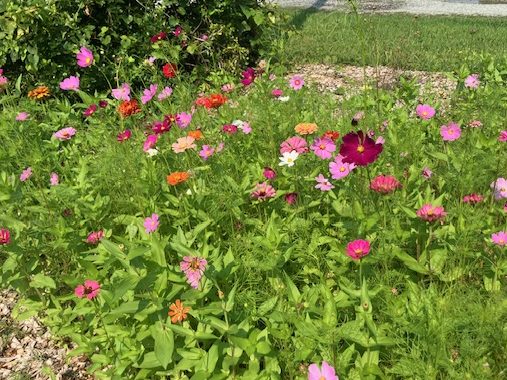
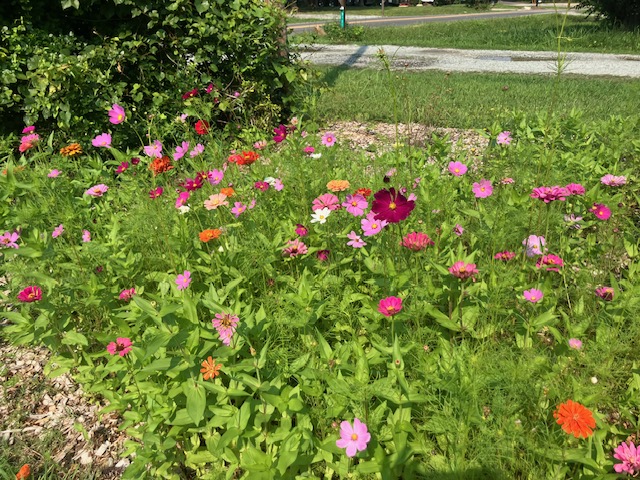
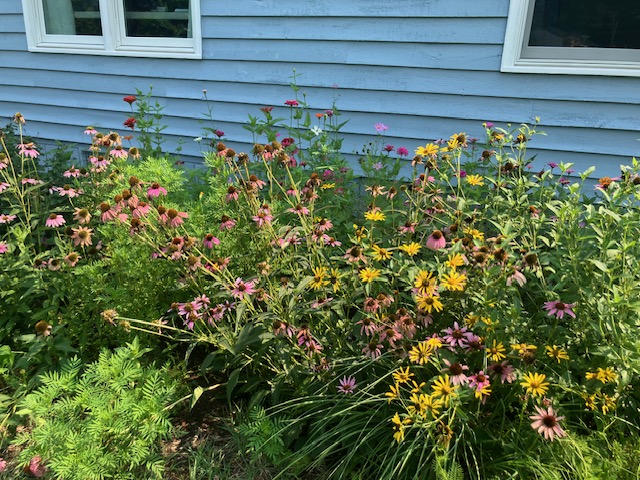
Well…what can we say about March 2026 except that it was consistently inconsistent. Although, within the inconsistency a certain pattern evolved. The thermometer struggled to keep up with the up and down extremes of the temperature, but by the end of the month the pattern became three days of rising temperatures followed by a steep drop (like 30-40 degrees steep), followed by a three day rise to record highs before another 30 degree drop. The rain, however, did not drop, not a single drop mostly. Our rain gauge indicates 1.27” for the month. I’m pretty sure most of Arizona got more. The Accidental Cottage Garden looks amazing after being blitzed by six (of now my favorite) EMG’s. They were awesome. They cleaned out the beds, pruned some shrubbery, and made merry in the garden. It was both gratifying and humbling to know that they would take time out of their busy lives (and they all have busy lives) to help an EMG in need. EMG’S ARE AWESOME!!

What a beautiful day as several EMGs work in the cottage garden! (Image credit: Allie Mullin, JennVan Brunt, Allie Mullin)


Now here are some tips to make your garden look awesome.

Lawn Care

Fertilize warm season grasses (Bermuda grass, zoysia) with a high nitrogen slow release fertilizer as they are breaking dormancy now and would really like a good hearty breakfast. Hold off if you have a centipede lawn until late in May. It is no longer mandatory to cease fertilizing cool season lawns (bluegrass, fescue, rye) after mid-March. Use a balanced (10-10-10 or equivalent) fertilizer and be judicious. The window for applying crabgrass preventer may have closed. The colloquial way of remembering when to do that is sometime between the blooming of forsythia and blooming of dogwoods.

Fertilizing

Besides the lawn (see above), it is appropriate to feed any of the shrubbery that you didn’t get around to last month. (It’s ok. Nobody’s judging.)

Planting

A big question mark this year. How optimistic are you? Are you willing to cover stuff if we get a late frost? When the overnight temperature quits dipping into the thirties, the soil temp will soon enough get warm enough to plant melons, squash, pumpkins, cucumber, and corn from seed. Save the okra for the end of the month. You can transplant tomatoes and peppers. Be sure to plant enough to share with friends and with folks whose thumbs might not be so green and those whose homes might be real portable. They like fresh produce, too. Warm season grasses can be planted in April. Most need to be sodded or plugged/sprigged. Seeding is either not available or not generally successful. Check out the NCSU TurfFiles web site for all things grass in North Carolina.

Whether in a pot or in the yard, spring is a time for flowering plants and new growth! (Image credit: Allie Mullin)

Pruning

Remove any winter damage from trees and shrubs. Leave spring flowering shrubs like azaleas, lilac (Syringa sps.), forsythia, spiraea, etc. alone until after they have finished blooming. Prune berry bearing plants such as hollies (Ilex sps.) and pyracantha while they are in bloom so you can judge how much of this year’s berry crop you are removing. Prune flowering cherry (Prunus sps.) and redbuds (Cercis sps.) as needed.

Enthusiastic EMG pruners visit the ACG and practice their pruning skills. (Image credit: Allie Mullin, Jenn VanBrunt)

Spraying

It is open season on azalea lace bugs, boxwood leaf miners, euonymus and tea scales and spider mites. Spray only as needed preferably with an organic product and ALWAYS read and follow label instructions. Spray iris beds for borers. Treat cruciferous vegetables (broccoli, cabbage, Brussels sprouts) for worms. Spray squash plants weekly near the base from now until the first of June for borers. Spray apple and pear trees with streptomycin to control fire blight. Spray once at bud opening and again at full bloom. In rainy weather a third application might be necessary.
Begin weekly fruit tree spray program after bloom petals fall.

Other Things to Keep You Outside When It’s Way Too Nice to be Inside

There is always mulch. There are many options and much depends on your aesthetic preferences. There is pine bark in its many guises and single, double and triple shredded hardwood. Decorative stone next to the house if you are concerned about termites. Pine straw (needles) looks great in natural areas. There is dyed pallet chips (if you must) and wheat straw is good around the vegetable garden. All of them help retain soil moisture and cut down on the number of weeds. Total weed elimination is a myth. They are both prolific and tenacious. Besides pulling them by hand is therapeutic provided you can get back up afterward.

Here’s a thought. Let’s just sit outside and revel in nature unveiling herself yet again. I mean sometimes it might require a cold beverage of some sort and other times in April it might take hot chocolate and a fire pit, but either way it’s a celebration of April in North Carolina. Happy Spring, y’all.

Time for a rest to enjoy the the Accidental Cottage Garden in all its glory! (Image credit: Allie Mullin )

Additional Reading and Resources

NC Extension has some more tips for the Spring Gardener: https://gardening.ces.ncsu.edu/garden-calendars/timely-tips-for-spring-in-the-piedmont-central-nc/

To learn more about growing healthy gardens in the Piedmont regions of North Carolina visit: https://sites.google.com/ncsu.edu/piedmont-spring-garden/home

The Virginia Cooperative Extension provides information on the types of mulch, their purpose, and how to avoid common problems related to mulch. https://www.pubs.ext.vt.edu/SPES/spes-661/spes-661.html#:~:text=If%20using%20mulch%20with%20small,contribute%20to%20the%20tree’s%20longevity.

Shortlink: https://wp.me/p2nIr1-7h7

Editor: Martha Engelke

To Do in the Garden: March 2026

By Gary Crispell, NC State Extension Master GardenerSM volunteer of Durham County

Aka: GARY’S GARULOUS GARDENING GUIDE

OMG! Was February wild or what? It was consistent in its inconsistency and that’s about all there is to that. Don’t look now, but it is March. Not the parade kind of march with bands and floats and stuff. March as in “Look at all the green things coming up in the garden!” That March. The garden wakes up in March and stretches like a dog after a nap.

The Accidental Cottage Garden (ACG) is still hibernating for the most part. There are some grape hyacinths (Muscari armeniacum) in bloom, and the saucer magnolia (M. soulangeana) is opening just in time to get frosted. We’ve been here eight years now and we got to enjoy that tree in full flower twice. It would really prefer to be in Wilmington, but the bus ticket is too expensive. Even the pansies (Viola x hybrid) on the deck succumbed to the cold this year. The pots froze solid and killed the roots. I think there are plenty of perennial rosettes out there, but literally not having a leg to stand on has made it difficult to negotiate the yard. It will be a grand adventure seeing who has returned and who was just resting preparing to show off. We have attained meteorological spring, so get out those garden gloves and hats. Locate the sunscreen just in case, and don’t forget the liniment and heating pad and ice packs. Just being real here. Let’s go work in the garden before the insects wake up.

Lawn Care

It is time to fertilize cool season grasses (tall fescue, bluegrass, perennial rye). A slow release, high nitrogen (the “N” /first number on the bag) fertilizer will give you the greenest lawn into the summer. These grasses typically want to go dormant in the heat of summer (July & August), so unless you want to water them a lot during that time, this will be the last time to fertilize them until late August/early September. Preemergent crabgrass control should be applied between the time the forsythia (Forsythia intermedia) bloom and the time the native dogwoods (Cornus florida) bloom. Later than that and the soil temperature will be warm enough that the crabgrass will have already germinated. Mowing can commence whenever it seems appropriate. You know, like when the lawn looks raggedy and the soil is dry enough that the mower won’t leave ruts. Mow to a height of 3” to 4”. That height allows the grass blades to shade the soil (read root zone) and protect it from the heat of summer. It also helps weed control by preventing enough sunlight for weed germination and growth. win, win.

Let the clippings return to the ground unless they are too long (Waited a bit too long between mowings, did we?) or wet and clumping (and if we are mowing the grass when it’s wet, why?). Clippings do not belong in the landfill. If leaving them on the ground isn’t an option use them in the compost pile or as mulch.

(Image credit: Gman Viz/CC BY-NC-SA 2.0)

Fertilization (other than the lawn)

Green things that can be fertilized this month include shade trees, shrubs, and spring-flowering bulbs. Green things that should not be fertilized this month include St. Patrick’s Day revelers and leprechauns. Moderation is the key. (Take note revelers.) Asparagus beds should be fertilized early in March before the new spears appear. Work some fertilizer into the veggie garden bed(s). Lime may also be worked in now if your SOIL TEST so indicates. It will take 3 to 6 months for the calcium to become available to the plants, but that should be just in time for the June tomatoes and great timing for the Fall garden. Besides, if you don’t do it now, when will you?

Planting

All the things you didn’t get around to planting in the Fall (life got in the way, right?) can be planted now, and sooner rather than later. Just be cognizant of the fact that they will probably have greater water needs through the summer than anything planted in the Fall. Fall planted material had all winter to establish a root system strong enough to carry it through less than severe drought. There are exceptions, but there are always exceptions. (Take the aforementioned revelers and leprechauns for example.) Other things to be planted this month include perennials, for example coreopsis (C. bipinnata, C. lanceolata), foxglove (Digitalis purpurea), purple cone flower (Echinacea purpurea), balloon flower (Platycodon grandiflorus) and roses (Rosa sps.) While you have the trowel in hand might as well hit the vegetable garden. The same things that could be planted in late February can still be planted now. We’re talking root veggies (beets, carrots, potatoes, turnips, etc.) and salad greens (leaf lettuces, cabbages, kale, etc.). There is still time to start annuals and warm season vegetables inside for transplanting in April or May.

Pruning

Be advised, finish any fruit tree pruning ASAP. Prune roses mid to late March. (As an aside, now that we have been bumped up a USDA zone to 8, that timeline may need revising to an earlier date. I’ll research that for next year. Stay tuned.) Prune to a 5 leaflet leaf if those are visible. Otherwise prune the cane to an outward facing bud. Prune spring-flowering shrubs soon after the blooms fade. Dead head (pick off spent blossoms) pansies (Viola x hybrid) to prolong bloom time.

Spraying

Break out the sprayers! However, before using said sprayers check the plants for pests. With few exceptions (There they are again and we’ll get to them yet again in a minute.) prophylactic pesticide application is unwarranted. Always know what it is you are trying to control so that you can use the appropriate product. ALWAYS read the label and ALWAYS follow the instructions thereon. Applying a horticultural dormant oil to fruit trees, (prophylactically) particularly those that have recently been pruned, will help control several insect problems. (I told you we’d see exceptions again.)

MORE THINGS TO DO WHEN THE WEATHR IS HIGHLY UNPREDICTABLE

Get all the soon-to-be-needed gardening equipment ready for use. If it is supposed to be sharp, sharpen it. If it needs calibrating (sprayers and spreaders), calibrate it. If it has moving parts, lubricate them. If it has a four stroke motor, change the oil and filter. Plant a tree for Arbor Day. Here in North Carolina that is March 20th this year. It is always the first Friday after the 15 th . There will be several city, county, state sponsored events that will be posted on the various websites after March 1. In all things gardening, have fun. If it isn’t fun, hire it out or plant something that doesn’t require the burdensome task you deplore. Gardening should be fun, relaxing,
therapeutic even. It is March. Let the fun begin!

Logo for North Carolina Arbor Day featuring the text 'NC' in dark blue and 'Arbor Day' in green, with a green tree graphic.

NC Arbor Day will be held March 20, 2026 with many events throughout the state. To learn more go to: https://www.arborday.org/celebrate/history

Additional Reading and Resources

NC State Extension. Central North Carolina Planting Calendar for Annual Vegetables, Fruits, and Herbs

NC State Extension. Pruning Calendar

Edited by Martha Keehner Engelke NC State Extension Master GardenerSM volunteer of Durham County

Shortlink: https://wp.me/p2nIr1-7aD