
By Cathy Halloran, NC State Extension Master GardenerSM volunteer of Durham County
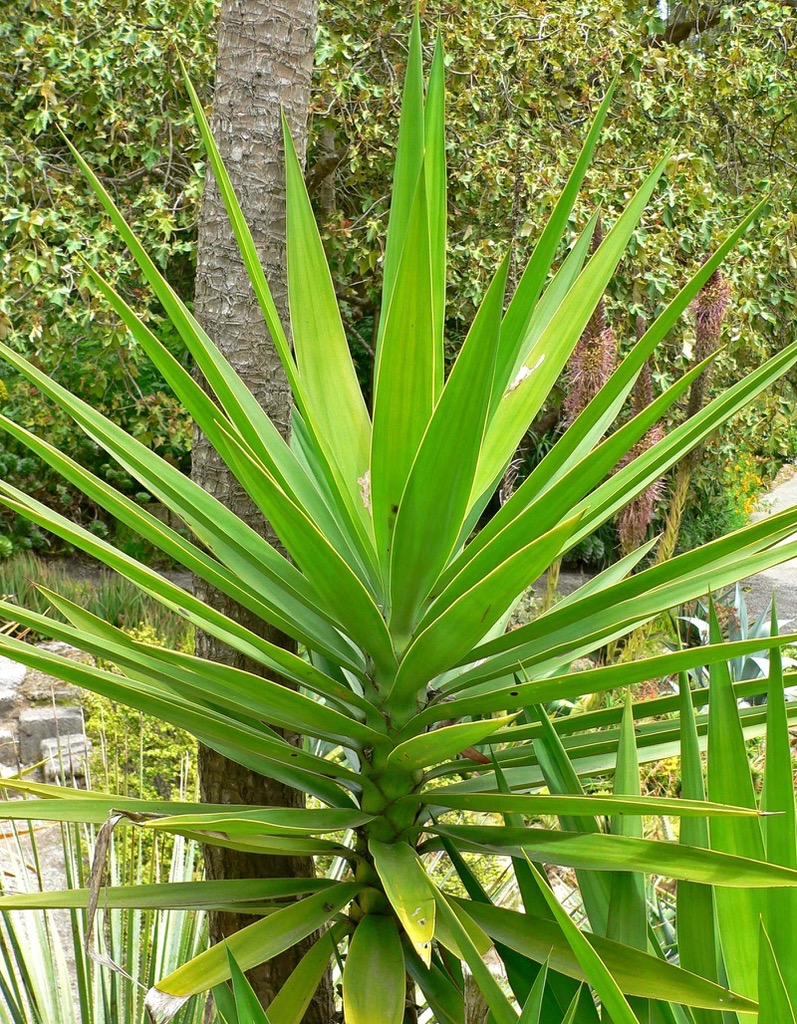

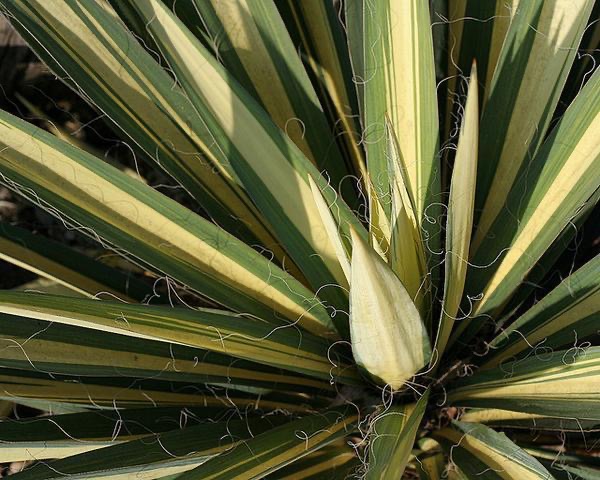
(Left to right) Delightful details of yucca plants: the crown-like splendor of Spanish dagger (Yucca aloifolia) and the creamy bell-shaped flowers and striking foliage of the Adam’s needle yucca (Yucca filamentosa). (Image credit: Stan Shebs CC BY-SA 3.0; Maja Dumat CC BY 2.0 ;M Kuhn CC BY-NC-SA 2.0)
I’ve changed my mind on including yuccas in my garden designs. I used to think they were funny looking and the flowers out of scale and consistency with the foliage and plant structure. However, time, combined with a warmer, drier Piedmont climate, has me rethinking where yuccas can be included in gardens. To do so, I had to learn about yuccas.
On a macro level, yuccas are low maintenance, slow growing with attractive leaves and interesting blooms. There are about 50 species worldwide, on every continent except Antartica. Closer to home, Yucca filamentosa, or Adam’s needle, also known as Curlyleaf or Spoonleaf, is native to the Southeastern US. It is a perennial, broadleaf, evergreen, clumping shrub in the asparagus family, Asparagaceae. Depending on variety, it grows 2-8 feet tall and 2-5 feet wide. It is resistant to deer, rabbits, poor soil, salt spray, drought, and heat. I would call that a real price-performer!
They have arrow-like leaves that are attractive all year round but also very sharp. Flowers bloom on large stalks that emerge from the center of the plant. Based on type and variety, they bloom anywhere from spring to mid-late summer. Flower stalks are tall and the flowers are usually white or cream. Hummingbirds, bees, moths, small mammals, and songbirds are attracted to the plant to collect nectar and pollen.


Yuccas provide texture and architectural interest in Durham’s public gardens this year. (Image credit: Cathy Halloran)
The City of Durham has a horticulturist on staff named Ben Bergmann, PhD, who has designed and planted pocket gardens in prior blank concrete areas in downtown Durham. Due to the heat, lack of irrigation, and not-so-great soil, he has incorporated eye-catching yuccas. I have included some photos from a pocket garden at the corners of East Chapel Hill-Mangum-Morris (see above). I lucked out and captured them while beginning to bloom!
How can yucca be incorporated in a garden? This plant can be used to add some thrill and variety to a garden, while not requiring much water or maintenance. Its sword-shaped leaves provide visual interest which is different from the common round, oval, serrated shapes we often encounter. The leaf colors of Yucca filamentosa range from green to a creamy white to pale yellow and green leaves. The color can draw the eye into the garden. It does well in mass plantings, and when used with companion plants such as black-eyed Susan, coreopsis, lantana, lavender, salvia, and sedum.
I’ve come around to appreciate yuccas. They are a nice low maintenance, low water, and attractive plant to add to my repertoire.
Resources and Additional Information
To learn more about our native-variety yucca, Yucca filamentosa, check out NCSU’s plant toolbox site.
https://plants.ces.ncsu.edu/plants/yucca-filamentosa
Clemson Cooperative Extension’s factsheet on yuccas offer more details on a variety of species.
Check out University of Florida’s Extension page for more general growing information.
Article Short Link https://wp.me/p2nIr1-4Hq