Leave The Leaves: A Simple Way to Help Wildlife and Your Garden

By Marcia Kirinus, NC State Extension Master GardenerSM volunteer of Durham County

Image credit: Jean Epiphan


Did you know that the National Wildlife Federation has designated October as Leave the Leaves Month? This initiative encourages people to rethink traditional fall yard clean-up by leaving fallen leaves in place—or at least on your property—instead of bagging them up and sending them to the landfill

Traditional fall clean-up often involves raking or blowing leaves, bagging them, and setting them out on the curb. Then we head over to the big box store to buy mulch and fertilizer to replace what nature is already providing. This process is time consuming, resource draining, and unnecessary. Leaves are not trash. We are missing an opportunity.

Instead, let nature do the hard work — your garden will thank you. The thing that is most natural to do — the thing that happens in nature — is to let your leaves lie where they fall. If you have extra leaves, bag them and offer them to neighbors or local gardeners who can make good use of them.

Beyond convenience, there are significant benefits to leaving the leaves. First and foremost, they nourish the soil. As leaves decompose, they enrich the soil with nutrients, promoting healthier, richer soils. Consider them free mulch and fertilizer. Second, leaves insulate the soil, protecting it from temperature fluctuations. They also help retain moisture. Finally, leaves make incredibly important habitats for wildlife. Have you noticed a decline in lightning bugs? Most of their life cycle is spent under leaf debris. By keeping your leaves in place you can boost wildlife habitats, enrich your soil, and even help with global environmental challenges.
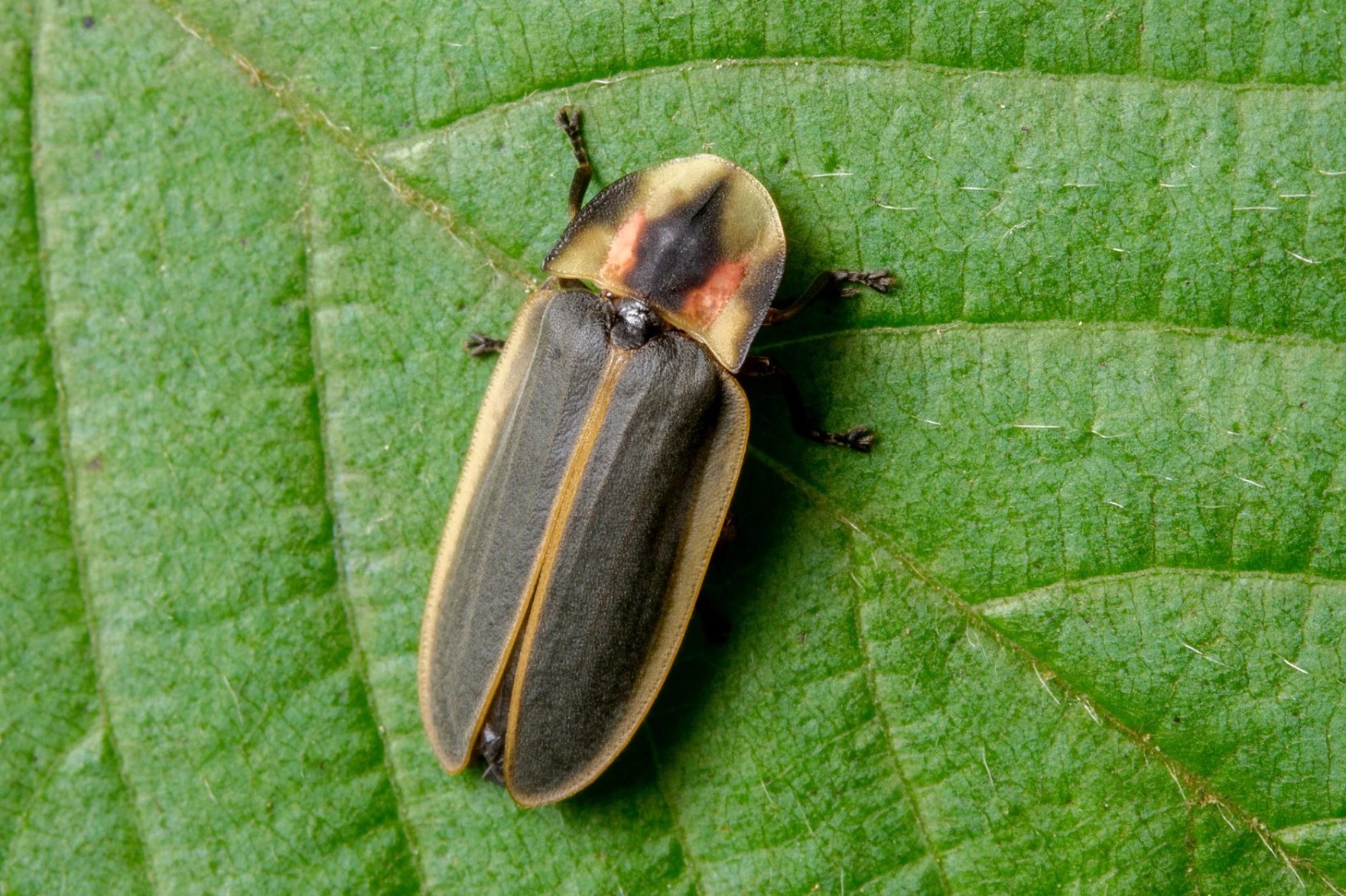
Left: Adult Firefly. Right: Larvae of Firefly . Most fireflies are habitat specialists. They rely on undisturbed leaf litter for one year or more to complete their lifecycles. These insects spend most of their lives as larvae preying on earthworms and other animals in the soil or leaf litter. If that habitat is disrupted during their youth, populations can be extinguished. (Image credit M. Bertone, NCSU Entomology.)

Last year’s oak leaves slowly decomposing with the help of small pinwheel mushrooms (Marasmius rotula).  Image credit: Jean Epiphan


Soil Enrichment: The Cornerstone of Healthy Gardens

Soils rich in organic matter absorb and retain water better, turning a soggy lawn into a sponge-like garden bed. In as little as two years, you can turn those wet areas into walkable spaces. It’s not a miracle as building soils naturally is a slow process, but it’s a start and it’s free.

Healthy soil, enriched by decomposed leaves, supports deep-rooted plants, reduces watering needs, and improves plant resilience.


Wildlife Benefits: From Moths to Bumblebees

Leaves provide shelter for many species, including fireflies, butterflies, Moths and endangered bumblebees. Caterpillars overwinter in leaf litter, which also sustains backyard birds in spring. By leaving leaves on the ground, you’re creating essential habitats for these creatures, helping maintain biodiversity and supporting the larger food chain, from insects to birds. Caterpillars, which overwinter in the leaf litter, are a primary food source for 96% of backyard birds during the spring.

From Left to Right: Luna moth pupae, ( Actias luna ), are often difficult to see as they are a chestnut brown and overwinter in leaf litter. In the spring it will emerge as a soft green, 3 to 4.5 inch moth. All life stages provide food for predators. (Image credit: Donald W. Hall, UF) Leaf litter is the ideal Earthworm habitat. Earthworms provide beneficial castings which are building blocks to healthy soil. (Image credit: M. Bertone, NCSU) Woolly bear (Pyrrharctia isabella) construct shelters like this one made from pine needles to protect themselves from the winter elements. They also commonly use leaf litter and other yard debris. (Image credit: batwrangler, flickr. with permission)


Small Acts, Big Impact: Helping with Global Change

By making small changes in how we manage our yards, we can create big environmental benefits—both locally and globally. Leaving the leaves isn’t just about benefiting your yard—it’s about making a difference on a global scale. Encouraging wildlife and helping to maintain a balance in the food chain is one way you are helping. By skipping the blower and rake, you also reduce fossil fuel consumption, lowering your carbon footprint. Additionally, leaves that are sent to landfills contribute to methane emissions as they decompose without oxygen. Composting them in your yard helps reduce these emissions.

If you still want to move your leaves around the yard, consider using a rake instead of a blower. Rakes are quieter, healthier for you, and don’t rely on fossil fuels. They also give you more control, allowing you to gently move the leaves without disturbing the soil or nearby wildlife. My neighbor for 17 years told me that he can rake faster than he can blow his leaves. I was dubious. At the time, my clean-up tool was a blower. However, I hated the noise and smell so I took his words as a challenge. I pulled out the rake and never looked back. I can rake faster, and with a lighter touch. I can listen to the birds and I feel stronger, fitter for doing so.

I also reduced my turfgrass lawn significantly so I can leave the leaves in place. I converted it into valuable wildlife habitat by planting native ferns and flowers. Lawns require water, fertilizer, and herbicides, not to mention mowing, which creates noise and uses fossil fuels. And lawns are wildlife dead zones. However, I still need a place to play fetch with Moira, so a small patch of “meadow” remains. I say meadow because it is green – mostly clover.

Making the most of your leaves

Here are a few simple strategies to keep them working for you. You don’t have to leave all the leaves exactly where they fall.

  • On Lawns: A thick layer of leaves can suffocate your lawn. Instead, run a mower over the leaves to chop them into smaller pieces. A thin layer (1–2 inches) of shredded leaves can actually nourish the grass over the winter, breaking down over time to feed the soil.
  • Flower or Vegetable Beds: Spread whole leaves in flower beds or vegetable gardens. They act as mulch, suppressing weeds and adding organic matter as they decompose, improving soil structure and fertility. For most garden beds, a leaf layer of 3–5 inches deep is ideal. Avoid piling leaves directly on top of plants; instead, place them around the plants, covering any exposed soil. This will suppress weeds, preserve soil moisture, and return nutrients to the roots as the leaves decompose.
  • Composting: Leaves are perfect for composting—rich in carbon and ideal for building fertile soil. Consider adding them to your compost pile or creating a leaf mold. If the wind blows leaves into unwanted areas, let nature guide them into natural piles, and then redistribute the leaves to your garden beds or around trees.

From left to right: Mower cutting leaves into small pieces instead of removing them (Image credit: Pixaby);. Moving whole leaves to help create paths by suppressing weeds (Image credit: Justin Butts). Composting excessive leaves (Image credit: Christy Bredenkamp, NC Extension Director, Moore County).

Conclusion: A Small Change with a Big Impact


With just a few thoughtful changes, as gardeners and homeowners, we have the power to make a positive impact on the environment by simply rethinking how we take care of our little piece of earth outside of our back door. This October, join the movement and Leave the Leaves—because every leaf left behind makes a difference.

Resources and Additional Information

Article Short Link: https://wp.me/p2nIr1-5bS


Bringing Plants of the Piedmont back to Downtown Durham

By Eric Wiebe, NC State Extension Master GardenerSM volunteer of Durham County

A once neglected site, Rotary Plaza in downtown Durham comes alive in July 2021 with sunflowers that produce seeds for wildlife. Millet, a grain used here in the design and novel to many urban dwellers, also serves as a great food source for gold finches and other birds. (Image credit: Ben Bergmann)

Have you noticed changes to the plantings in downtown Durham over the past few years? If not, you need to head on down, walk around, and appreciate the transformation of the many of the city-owned green spaces. This transformation, and the strategies behind it, point to a new way of thinking about our relationship to the landscape, both in urban settings like downtown, but also in our own yards. 

I had the pleasure of both walking around downtown Durham with and then sitting down and talking to Ben Bergmann, the architect of this transformation. Ben was hired by City of Durham in September 2020 and charged with re-envisioning and elevating horticulture in downtown Durham, including creating a Downtown Horticulture Crew within Landscape Services. Ben brought a widely varied background to this position, trained with BS, MS, and PhD degrees in plant sciences, and working as everything from small business owner and farmer to tropical agroecologist and research scientist. One thing all this work has in common is plants and his great love of them. Ben feels this broad range of experiences has helped prepare him for a job that has him applying both the art and science horticulture to a municipal government position with its many constraints and opportunities and multitude of stakeholders. 

“When I started, I realized I needed a mission statement to clearly and concisely communicate to my supervisors and the public what I and my unit in government is doing.” He stated that his landscape design and management are guided by the goal of enhancing

  • Environmental sustainability
  • Programmatic stability
  • Aesthetic appeal
  • Service benefits

He notes that it is important to recognize that these categories are not mutually exclusive, but each has a role to play in his horticultural work supporting the living landscape in downtown Durham. 

Designing Sustainably

Ben explains that a crucial re-orientation is to start planning a landscape by thinking about how it can best align with the ecosystem, and that means starting with native plants that can be used. “For urban contexts some people would say that there is nothing native to these downtown spaces, and they will use this as an ‘out’ to plant whatever they want. I don’t embrace this–something was native, originally, in these spots. Many times these native plants can and will grow and thrive in these spaces.”

When Ben thinks about which native species to use, he first looks for plants native to the North Carolina Piedmont and secondarily to the larger Piedmont of eastern U.S. He notes, however, that it is very important to select plants with a long-range vision. That is, when accounting for global climate change, plants that are going to be here in 20 years may very well be in an environment that looks more like the southern Piedmont, our coastal plains, or South Carolina.

(Left to right) By selecting plants that can cope with a warming environment, Bergmann installed dwarf palmetto (Sabal minor), a plant typically associated with climates in the native ranges east and south of Durham, NC, and shown in green on the USDA’s zone map. (Image credit: Ben Bergmann; https://plants.usda.gov)

While native species take the lead when planning bed renovations, Ben states that non-native plants can still play a role. Returning to his guiding principles, non-natives can help fill functional gaps that might be hard to resolve in the short run with native species. Similarly, there are times that a spot planting of a non-native will help achieve a particular aesthetic goal by providing highlight color, texture, or architecture.

(Left to right) Before, a non-imaginative flag pole bed at Durham Parks and Recreation building included a highly invasive and exotic species: Nandina domestica. After a re-imagining, the same bed demonstrates there is a place for non-native plants alongside natives, especially during transition phases. (Image credit: Ben Bergmann1

Because the legacy plantings downtown were almost 100% non-native, it means that during a bed’s transition period, some non-natives may be left to help visually and functionally stabilize the bed until new, native plants can get established and then take over. Among other things, the non-native plants retained just for the transition can provide shelter from the sun and wind during establishment.

(Left) The process of establishing an urban prairie at the Rotary Plaza began in September 2020 with beds filled with weeds and remnants of long past garden attempts. (Middle) In March 2020, the the beds are full of cover crops: crimson clover, a nitrogen fixer that is great for pollinators in early spring, and winter rye, which has high biomass production and deeply penetrating roots. The intricate planting pattern reflects intentionality and provides visual interest. (Right) By July 2022 the Piedmont Prairie Garden at Rotary Plaza is realized and chock-full of sustainable native plants. (Image credit: Ben Bergmann)2

Even given how much he has achieved is such a short time, Ben still takes the long view when planning and planting. For example, cover crops have been used in very purposeful ways in areas such as the Rotary Garden. During the initial transition of this space, cover crops were planted and maintained in ways that not only helped build the soil, but created visual interest. Over time, the cover crops matured and eventually replaced with native perennials, creating an evolving horticultural narrative in this space. As Ben said, “Some [landscape] designers shy away from transitions–they want to ‘put a tarp over it’ until it has reached its final phase. I don’t shy away from transitions; they are an important part of my plans.”

Ben notes that using select non-native plants, cover crops, and other annuals allows him to more easily use seeds, plugs, and small plants in the beds. In the case of herbaceous perennials and woody plants, besides being less expensive, younger, smaller plants will typically develop more robust root systems and quickly outgrow their bigger counterparts.

Addressing Urban Challenges

Ben was quick to remind me of the many contextual limitations and challenges the Downtown Horticulture Crew faces daily that home suburban gardeners rarely have to contend with. For example, CPTED (Crime Prevention Through Environmental Design), is an important set of guiding heuristics that often preempts other design considerations. In addition to making sure plantings do not screen illicit activities, it also disallows designs that interfere with security cameras or impair pedestrian safety, including driver site lines at street crossings. 

The center of the Chapel Hill Street parking lot is a perfect example of an urban heat island with even hotter microclimates where landscapes are needed. (1) In January of 2022, the lot was cleared of weeds and other unhealthy, dated, and non-native landscape plants. (2-5) The view in 2024, after Bergmann and his team revitalized the area with an assortment of heat-tolerant natives. (Image credit: Ben Bergmann)3

Most of the beds Ben and his crew manage are surrounded by heat absorbing asphalt and concrete and buildings with glass that intensify solar radiation by reflecting light onto them. This creates heat islands much hotter than in surrounding communities. In addition, tall buildings funnel wind through these spaces and block rain, further desiccating plants. 

Humans also are unhelpful, by walking on, driving over, or otherwise physically challenging plantings. Some soils are more like landfill or construction sites, and many have the negative impact of overuse by dogs on their walks. Even with these challenges, Ben has identified quite a few native species that are up for environmental extremes while still fulfilling functional and aesthetic goals. Not surprisingly, he is currently exploring the possibility of a demonstration xeriscape-inspired bed. This one may very well include some non-native plants more typically found in desert environments.

Educating the Community

Ben understands that an important part of his job is educating not only the workers and residents of downtown Durham but all city residents and visitors as to a new way of envisioning landscapes. Landscapes that, while they exist in a human-built environment, much more clearly reflect real ecosystems of the NC Piedmont. This means not only planting predominantly native species but planting them in soil nourished by natural mulches created by the plants themselves rather than imported, dyed wood chips. He also allows the plants to go through full cycles, creating visual landscapes that sometimes predominate in browns, grays, and blacks, as much as greens, yellows, and reds. 

(Left to right) The Piedmont Prairie Garden at Rotary Plaza in early January with the last vibrant colors and in late February, when the remaining plants still create an almost black-and-white picture. (Image credit: Ben Bergmann)4 (Below) By designing a phenology calendar for his plantings, Bergmann pays careful attention to nature’s timing. This tool helps gardeners know when to plant, specific bloom times, and when colors, textures, and other elements are present throughout the seasons. For a closer view, click on the link for an electronic version of the calendar in our Resources and Additional Information section below.

He is heartened that there is a growing critical mass of professionals helping him in this educational work. The City of Raleigh and Wake County has been hard at work creating plantings that reflect this same vision. He also has strong allies at Duke Gardens, where Annabel Renwick, has provided both inspiration and plants for some of the bed designs. Ben recognizes that it will take a while both for his beds to reach the final stages of their design vision and for Durham residents to embrace this new look, but he has already received lots of positive feedback for his renovated beds. It will also be up to Durham Master Gardeners, and committed gardeners everywhere, to help continue to educate the public and support this work.

Plant lists for featured Downtown Durham Sites

1–The planting design at the Parks and Recreation administration site include a mix of natives (*) and non-native plants: threadleaf coreopsis* (Coreopsis verticillata), creeping phlox* (Phlox subulata), eastern ninebark* (Physocarpus opulifolius), panicle hydrangea (Hydrangea paniculata), lantana (Lantana camara), coleus (Solenostemon scutellarioides).

2–Plants in the Piedmont Prairie Garden at Rotary Plaza include swamp milkweed (Asclepias incarnata), blue mistflower (Conoclinium coelestinum), purple coneflower (Echinacea purpurea), Joe-Pye weed (Eutrochium fistulosum), Spotted Joe-Pye weed (Eutrochium maculatum), common sunflower (Helianthus annuus), scarlet rosemallow (Hibiscus coccineus), larger blue flag iris (Iris versicolor), cardinal flower (Lobelia cardinalis), switch grass (Panicum virgatum), garden phlox (Phlox paniculata), hoary mountain mint (Pycnanthemum incanum), brown-eyed Susan (Rudbeckia triloba).

3–Center of Chapel Hill Street parking lot showcases the following native plants: sedge (Carex bicknellii), purple love grass (Eragrostis spectabilis), Elliott’s lovegrass (Eragrostis elliottii), scarlet rosemallow (Hibiscus coccineus), swamp rosemallow (Hibiscus moscheutos), Virginia sweetspire (Itea virginica), tulip poplar (Liriodendron tulipifera), black-eyed Susan (Rudbeckia hirta).

4–The Piedmont Prairie Garden at Rotary Plaza in late February still offers color, texture, and winter interest. They include climbing aster (Ampleaster carolinianus), scarlet rosemallow (Hibiscus coccineus), switch grass (Panicum virgatum), hoary mountain mint (Pycnanthemum incanum), white goldenrod (Solidago bicolor), showy goldenrod (Solidago speciosa)–with touches of hopeful green, beardtounge (Penstemon digitalis), eastern beardtounge (Penstemon laevigatus), stoke’s aster (Stokesia laevis), adam’s needle yucca (Yucca filamentosa).

5– See below for Bergmann’s list of natives that are tried-and-true performers for Durham and central North Carolina.

Resources and Additional Information

Piedmont Prairie Garden at Rotary Plaza Bloom Time / Color Calendar (electronic version)

https://go.ncsu.edu/piedmontprairiecalendar

NC State Extension on landscaping for wildlife with native plants in urban environments

https://content.ces.ncsu.edu/landscaping-for-wildlife-with-native-plants

North Carolina Native Plant Society’s list of recommended native species

NC State Extension on all things native plants

Article Short Link https://wp.me/p2nIr1-4Ku