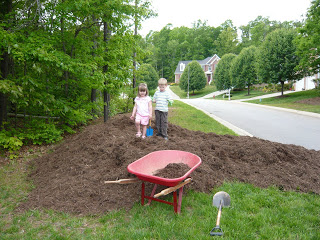
By now, you may have noticed piles or bags of mulch in landscapes all over the area. Last year, I wrote about some of the reasons why mulch is beneficial (see article here: http://durhammastergardeners.com/tag/mulch/). However, you CAN have too much of a good thing with mulch.
Hardwood or pine bark mulch is a commonly used material in our area. Experts recommend adding a 2-3” deep layer around your plants, which helps to slow water evaporation from the soil, keeps soil temperature more even, and reduces germination of weed seeds, among other benefits. So, if 2-3 inches is good, would more mulch be better? The answer is no. Adding a deep layer of mulch can be harmful to plants. A thick layer of mulch may keep moisture from rain or irrigation from reaching the soil where plant roots are growing, limiting the amount of water the plants can use. During wet periods, a heavy layer of mulch can slow evaporation, keeping the soil waterlogged. Plant roots require oxygen as well as water. A heavy mulch layer can keep roots growing in the soil beneath from getting enough oxygen from the air. Oxygen starved plants will decline over time.

Photo: Cornell University
Trees are frequently victims of overmulching. The practice of piling mulch around trees forming a “volcano” of mulch is common but harmful. As mentioned in the previous paragraph, too much mulch can keep water and oxygen from reaching roots. To compensate, trees may develop roots in the mulch volcano, where oxygen and water are plentiful. These shallow roots grow through the mulched area and can circle the tree. As a tree grow in diameter, the circled roots can strangle the tree, causing decline and death.

Photo: hort.ifas.ufl.edu
A thick layer of mulch around a tree also can trap moisture around its bark. Like all wood left in wet conditions, the tree bark will begin to rot over time. Decaying bark can be an entry point for fungi and bacteria as well as insects that can further damage the tree. That pile of mulch is the perfect cover for insects and rodents to hide while gnawing on trees, too.

To correctly mulch around a tree, keep the mulch a few inches away from the trunk of the tree. Many experts recommend mulching an area 3-4 feet in diameter around a newly planted tree, increasing the diameter as the tree grows.
If parts of your landscaping still have the recommended 2-3” layer of mulch, simply rake the mulch to give it a fresh appearance rather than adding an additional layer. This helps your wallet AND your plants.
-Ann Barnes