
By Marcia Kirinus NC State Extension Master Gardener SM volunteer of Durham County
Images by Marcia Kirinus except where indicated
Spigelia marilandica, commonly known as Carolina pink, Indian pink, or woodland pink, is a standout favorite among Southeastern gardeners and native plant enthusiasts. Celebrated as a darling of the native plant garden, it combines striking beauty with ecological value. Hummingbirds love it!
Growing about two feet tall and nearly as wide, Indian pink sends up sturdy, upright stems topped with brilliant ruby-red, tubular flowers that open to reveal contrasting neon-yellow interiors. The flowers resemble little flame torches perched at the tips of the stems. Blooming begins in late May, with the heaviest flush early in the season, and continues through July, with sporadic flowers into fall. Rather than putting on one grand floral display, the plant unfolds its show a few flowers at a time, offering a succession of blooms over several months.
Even when it isn’t flowering, Indian pink remains attractive. Its glossy green leaves form tidy clumps that add texture and structure to woodland gardens and other partly shaded sites.

Flower detail of Spigelia marilandica. Image credit: Deebie Roos
A Native Worth Protecting
I’d love to grow Indian pink all over my yard, but it isn’t the easiest perennial to propagate. That can make it harder to find in nurseries and more expensive than your average garden perennial. Commercial growers often rely on tissue culture to produce enough plants to meet demand.
Although Spigelia marilandica is not federally listed as endangered, it is listed as a threatened plant in North Carolina. Its global population is considered secure, but its documented native range in our state is limited.
According to the Flora of the Southeastern United States, Indian pink is native to Cherokee and Macon counties in North Carolina, in the southwestern mountains near the Georgia and Tennessee borders. It is not considered native to the Piedmont. However, it grows beautifully here and the fact that it blooms when our hummingbirds return in early summer makes it a must have for me.
Its limited distribution in North Carolina makes responsible propagation especially worthwhile. If you’d like to grow Indian pink in your garden, seek out nursery-grown plants and seeds from reputable sources. Avoid collecting from wild populations, and help ensure that this beautiful perennial remains part of our natural heritage.
A Sloth in the Garden
Indian pink operates on its own leisurely schedule. If ever a plant could be described as sloth-like, this is it. The seeds can be slow to germinate, the plants are slow to grow, and in spring, Indian pink is notoriously late to emerge. It is often one of the last perennials in the garden to break dormancy.
Yet once established, it is remarkably undemanding. Leave it in a suitable spot, and it will quietly settle in, growing a little larger and producing more flowers each year. It doesn’t wander around the garden or need constant management to keep it in bounds.
I rarely see insects feeding on mine. The foliage stays fresh and green, and the flowers remain bright throughout the season. I’ve read reports of rabbits nibbling on Indian pink, but I haven’t witnessed this – even with a family of bunnies nesting in my yard.
Indian pink grows in shade, partial sun, and even full sun when conditions are suitable. It generally prefers organically rich, moist, well-drained soil, but mine grow happily in relatively dry ground and have proved remarkably drought-tolerant.
This year put that resilience to the test. In Durham, North Carolina, mandatory water restrictions were in place throughout the growing season. None of my green friends had the luxury of a drink from the hose. Indian pink didn’t seem to care. It continued flowering despite the heat and lack of supplemental water. Its neighboring hydrangea, on the other hand, didn’t make it through the ordeal. That’s all right – more room for Indian pink!
Where Spigelia marilandica abandons its leisurely pace is in its seed-dispersal mechanism. The plant may take its time growing, but when it is ready to release its seeds, it does so with surprising – and rather explosive – enthusiasm.
Timing is Everything
Collecting Indian pink seeds presents a small challenge: wait too long, and the plant may have already launched them across the garden.
The flowers open sequentially along the stem, and the seed capsules mature in the same order. They don’t all ripen at once, so successful collection requires regular observation throughout the season.
As the capsules approach maturity, their color changes. Just before they split open, they become black on top and blackish-green on the bottom. This is the narrow window for collection.
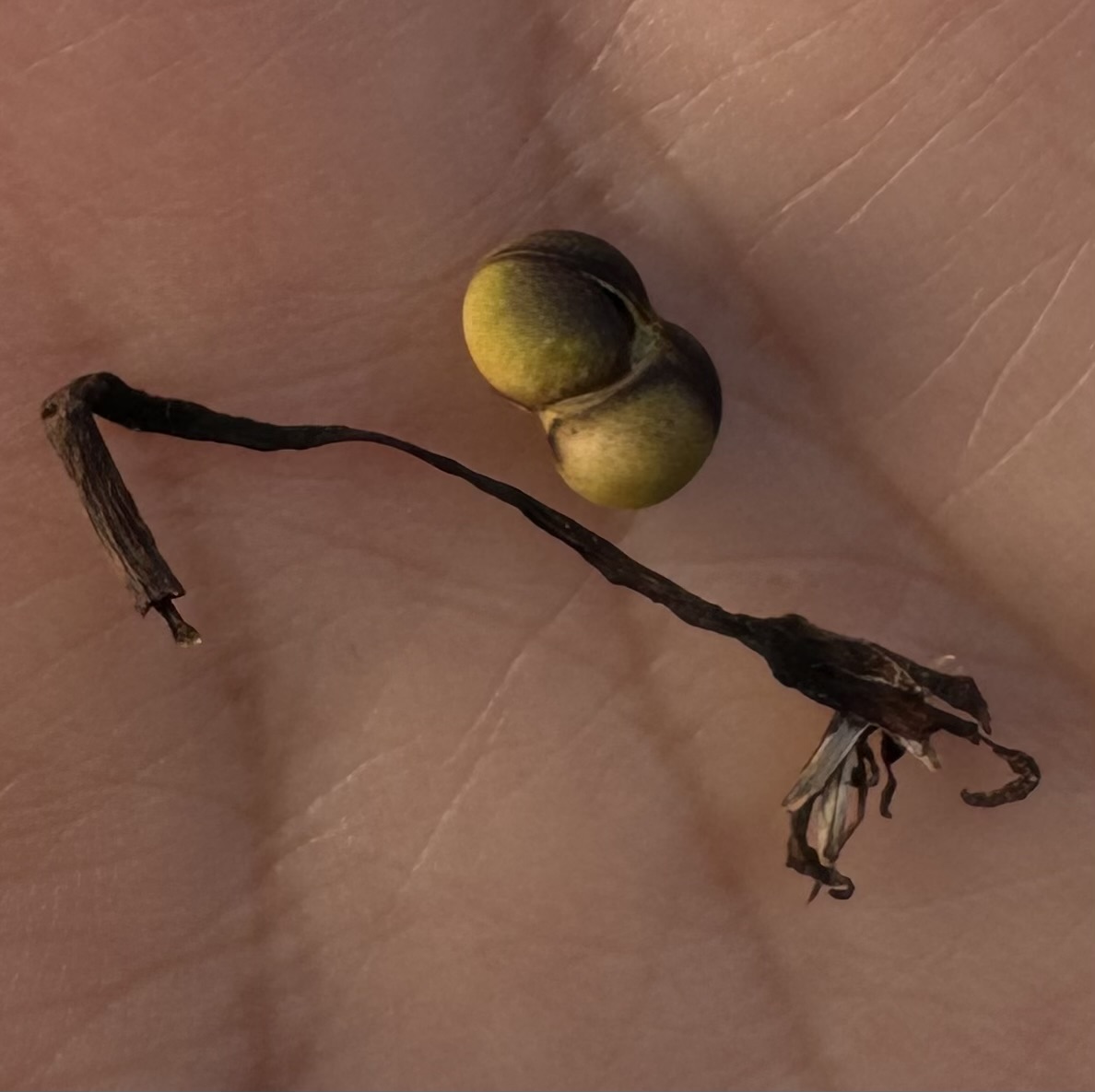
A developing, two-lobed seed capsule. Each capsule may contain three to five seeds.
Once mature, the capsules split suddenly, ejecting their seeds as far as four to seven feet from the parent plant. Miss the window between ripening and release, and the seeds may be gone before you know it.
The mechanism behind this launch is a fascinating example of explosive seed dispersal. As the capsule dries, tension builds within its tissues until it splits, releasing the seeds with surprising force. The capsule becomes a tiny catapult, flinging its seeds out into the world. For a plant that takes its time doing almost everything else, this is one spectacular exception.

How to Catch the Seeds
Fortunately, you don’t need to be faster than the plant. You just need a small, fine-mesh bag.
A lightweight organza bag works well. Once seed capsules begin to form, slip a bag over the flowering stem, enclosing the developing capsules, and secure it gently. The mesh allows air to circulate while catching the seeds when the capsules split open.
The trick is to bag the capsules before they mature, not when they’re already dark and ready to burst. Check the bags regularly as the capsules develop.
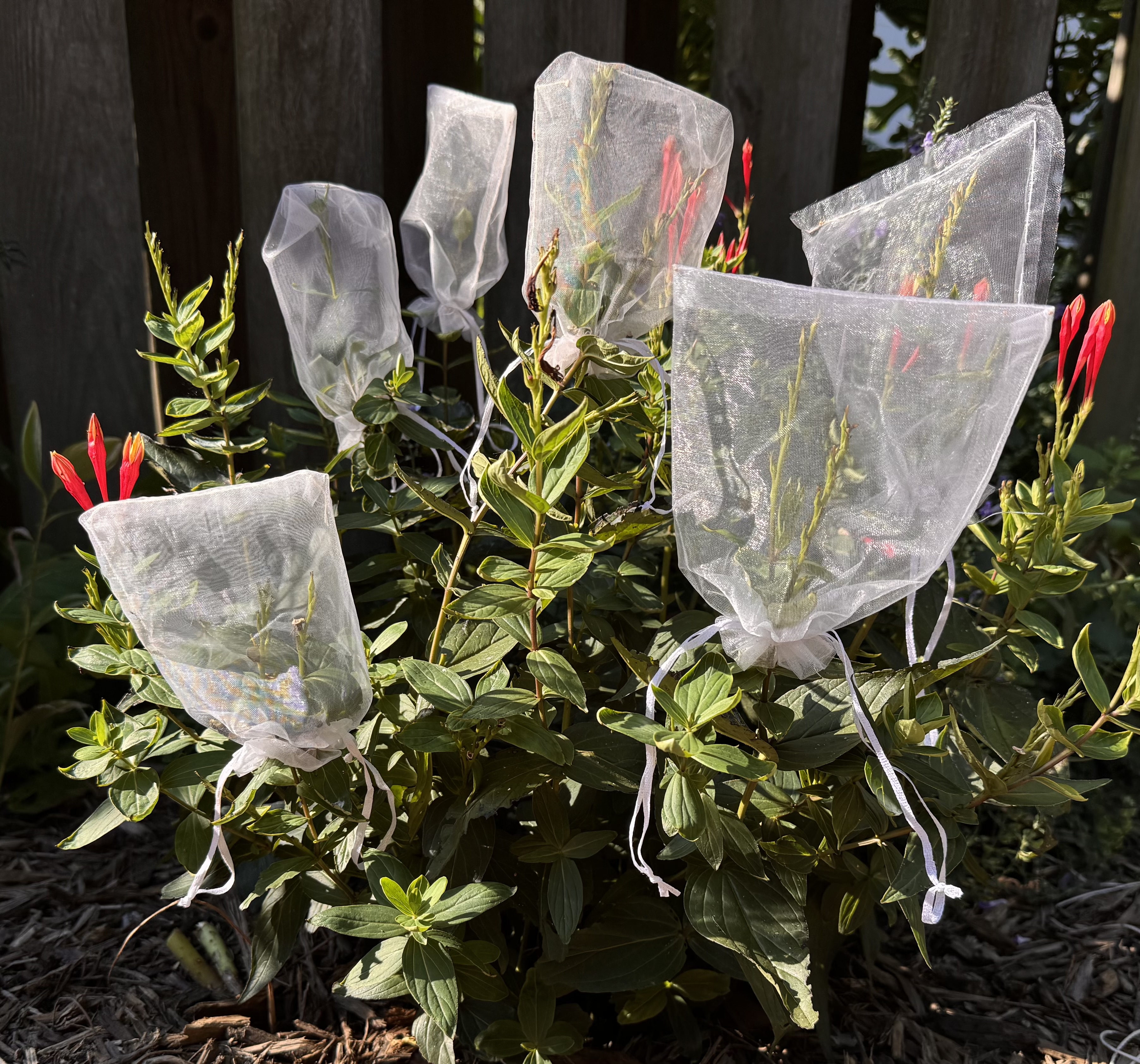
After pollination place and organza bag over the entire stem and check periodically for seed dispersal. The bag catches the explosive seed. Once seed is collected, cut stem over tray to sort out debris.
When you’re ready to harvest, cut the bagged stem and open the bag over a tray or sheet of white paper to collect the seeds and separate them from dried capsule and stem debris. In my collection, individual capsules have yielded three to five seeds.
Label the seeds with the botanical name and collection date. Fresh seed is generally best sown promptly. If you can’t sow it immediately, follow the storage recommendations in your propagation reference, ensuring that the seeds remain dry.
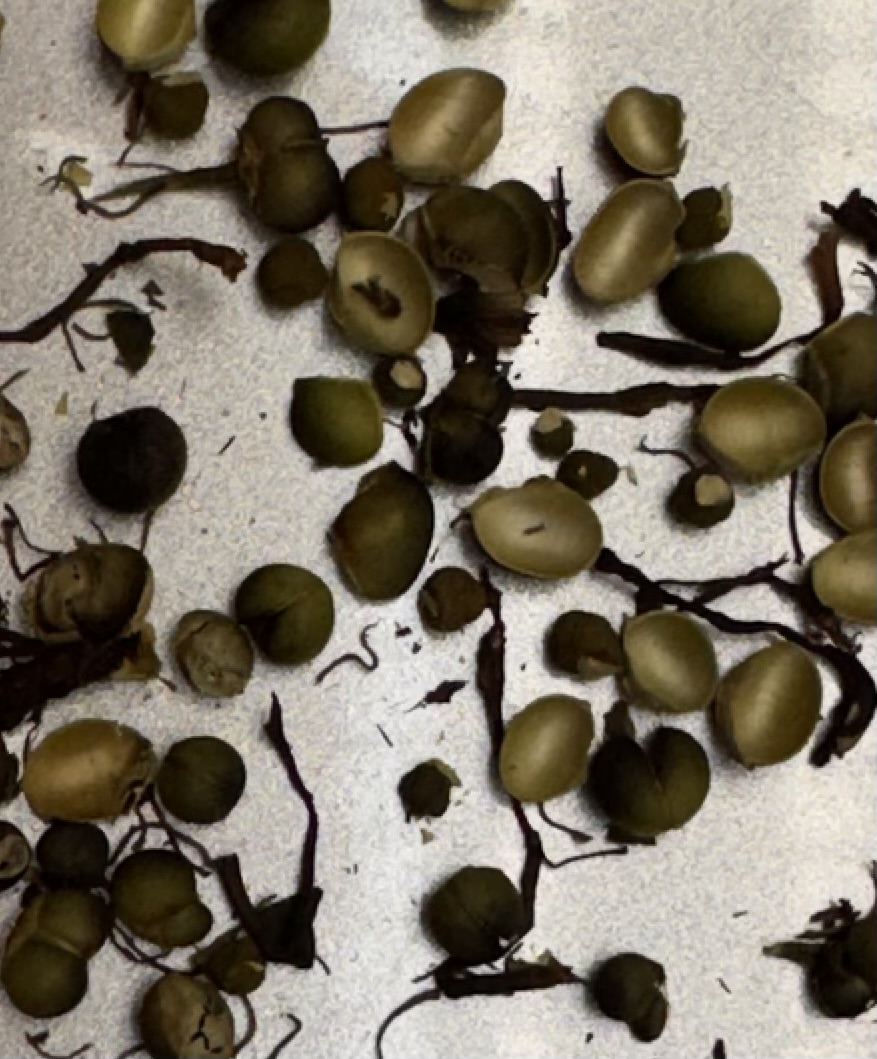

Left: Spigelia marilandica seed, capsule, and stem debris. Seed are small, black and roundish. Right: Capsules at top of picture, stem where seed formed, below the seeds within capsule.
How to Sow Seeds
Published propagation guidance recommends cold stratification for Spigelia marilandica. I wanted to test a method that would allow me to sow fresh seed and provide cold treatment in one step. After collecting seed, I sowed them on the surface of moist soil blocks, labelled the blocks, and placed them in a plastic bag inside my beverage cooler, which doubles as a seed-germination chamber. I set the temperature to 38°F and left the blocks there for 90 days.
After their simulated winter, I moved the blocks under grow lights in a room kept at 65–70°F. Then I waited. And waited.
Germination was slow and somewhat erratic. I kept the blocks moist, and after about a month, seven of my ten seeds had germinated. Three seedlings failed to make it to the transplant stage for reasons I haven’t yet determined, leaving me with four healthy plants.
That’s hardly a definitive propagation protocol, but it’s an encouraging start.
In previous experiments with other plants that germinated sporadically, I’ve found that moving seeds to a heat mat after cold treatment sometimes encourages more uniform germination. I’ll try that with my next batch of Indian pink. Just as three months of chilling can mimic winter, a return to warmth and light may help signal the arrival of spring.
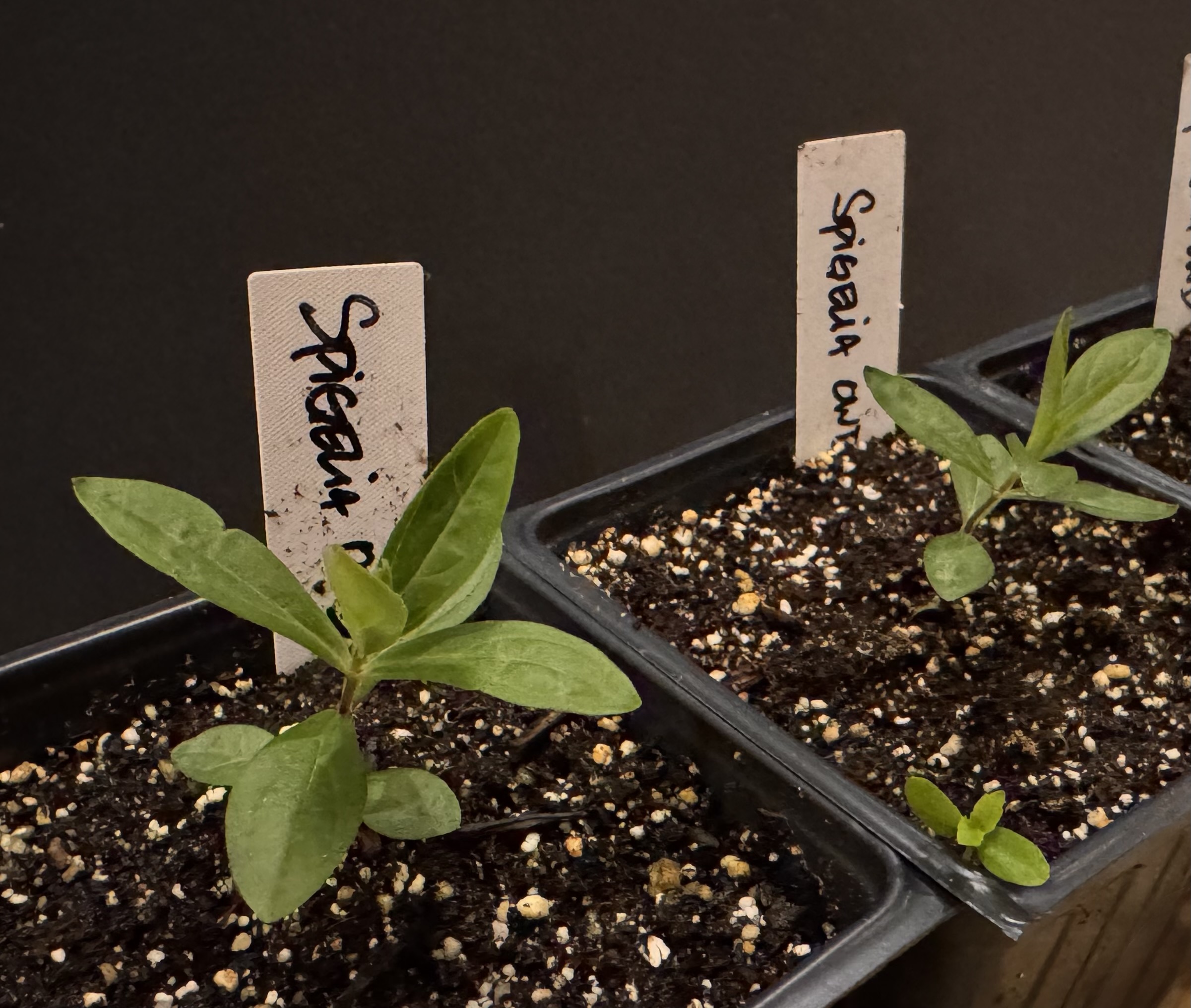
There’s still plenty to learn about the best way to germinate Indian pink, and I’ll keep experimenting. For now, I’ve managed to grow four new plants from seed – and that feels like a small victory with a plant that takes its time doing just about everything.