By Ariyah Chambers April, North Carolina Extension Master GardenerSM volunteer of Durham County


North Carolina’s newest specialty license plate celebrates one of the state’s most iconic plants, the Venus flytrap, native only to a 80-mile radius around the Wilmington area. Beautiful vistas from Grandfather Mountain and Emerald Isle illustrate the state’s diverse ecosystems. (Image credit: Melinda Heigel)
One thing I love most about North Carolina is its natural wonders. Stretching from Appalachia to the Atlantic, our state is teeming with biodiversity. More incredible is that some of our natural flora–like the world-famous Venus flytrap–are found nowhere else on earth. Called “endemic,” these plant species are native to a specific region and are found naturally only in that region.
Remarkable Plants that Call NC Home
North Carolina’s endemic plants are integral to our state’s ecological identity. These rare species evolved over many millennia by adapting to our region’s climates, soils, and elevations—creating unique ecosystems that are both fragile and fascinating.
Endemic plants are the building blocks of their habitats. They provide food and shelter to a range of wildlife, including essential pollinators. They also contribute to soil health and water retention, helping maintain ecological balance. The importance of biodiversity can’t be overstated.
So… which species are endemic to the Tarheel State, you ask? Let’s dig in!
In 2022, the NC Natural Heritage Program published this list of all plant taxa1 (including subspecies) that naturally exist within our state’s borders: 31 taxon in all. Take a look.
Plants, of course, don’t recognize state borders like humans do. “Near-endemic” refers to species that thrive mainly in North Carolina while brushing another Southern state or two. In 2014, ncpedia.org assembled a list of North Carolina’s 42 endemic and near-endemic plants that’s worth a read.
A Few Fine Examples of NC Endemics


(Left) You can spot Heller’s blazing star (Liatris helleri) on ledges of precipitous cliffs in northwestern North Carolina, especially Grandfather Mountain’s southeastern slopes. (Right) The Venus flytrap (Dionaea muscipula) is one of the most well-known carnivorous plants. The NC Heritage Program names the primary threats to Venus flytraps as loss of habitat, fire suppression and lack of appropriate habitat management, and poaching. (Image credit: Keith Bradley/NC Botanical Garden; Cathy Dewitt CC BY 4.0)
I hope these endemic and near-endemic species give you an idea of how enamoring North Carolina’s rare, native flora can be:
Heller’s Blazing Star (Liatris helleri s.s.) – one of about 40 species in the genus Liatris
- Description: A perennial wildflower that blooms striking purple flowers in late summer to early fall.
- Range: Found primarily in the southern Appalachians. Only eleven known populations, all occurring in North Carolina’s Burke, Caldwell, Mitchell, Avery, Watauga and Ashe counties.
- Habitat: Shallow acidic soils on high elevation rock outcrops and ledges.
- Fun Fact: Heller’s blazing star is considered fire-adapted, meaning that it does not benefit from the suppression of natural fire. (This makes sense for a native plant that acclimates to its natural environment.)
- Conservation: Listed as NC Status T (Threatened). The NC Botanical Garden conserves this rare species. Learn more on The Center for Plant Conservation site and see the US Fish & Wildlife’s recovery plan.
- Info source (search for species name) or this source for what’s written above
- T means Threatened. A taxon that is likely to become an endangered species within the foreseeable future throughout all or a significant portion of its range (Public Law 93-205 87 Stat. 884) source
Venus Flytrap (Dionaea muscipula) – near-endemic to North Carolina
- Description: World-famous carnivorous plant that supplements its diet with insects and arachnids. Its “trap” consists of two hinged lobes at the tip of each leaf. Hair-like structures (trichomes) trigger the lobes to close when they sense prey.
- Range: Endemic to an area in about an 80-mile arc around Wilmington, NC, which stretches into two counties in South Carolina.
- Habitat: Acidic, sandy soil that seems very dry but the water table is not far below the plant.
- Fun Fact: While illegal to collect from the wild, Venus flytraps can be ethically purchased from The NC Botanical Garden and other conservation organizations.
- Conservation: Listed as NC Status T (Threatened). Read about the NC Heritage Program’s conservation efforts, as well as the “story map” created with NASA, a “remote sensing” project that identifies sustainable habitats for the Venus flytrap.
- Info source: NC Plant Toolbox or this source (search for species name)


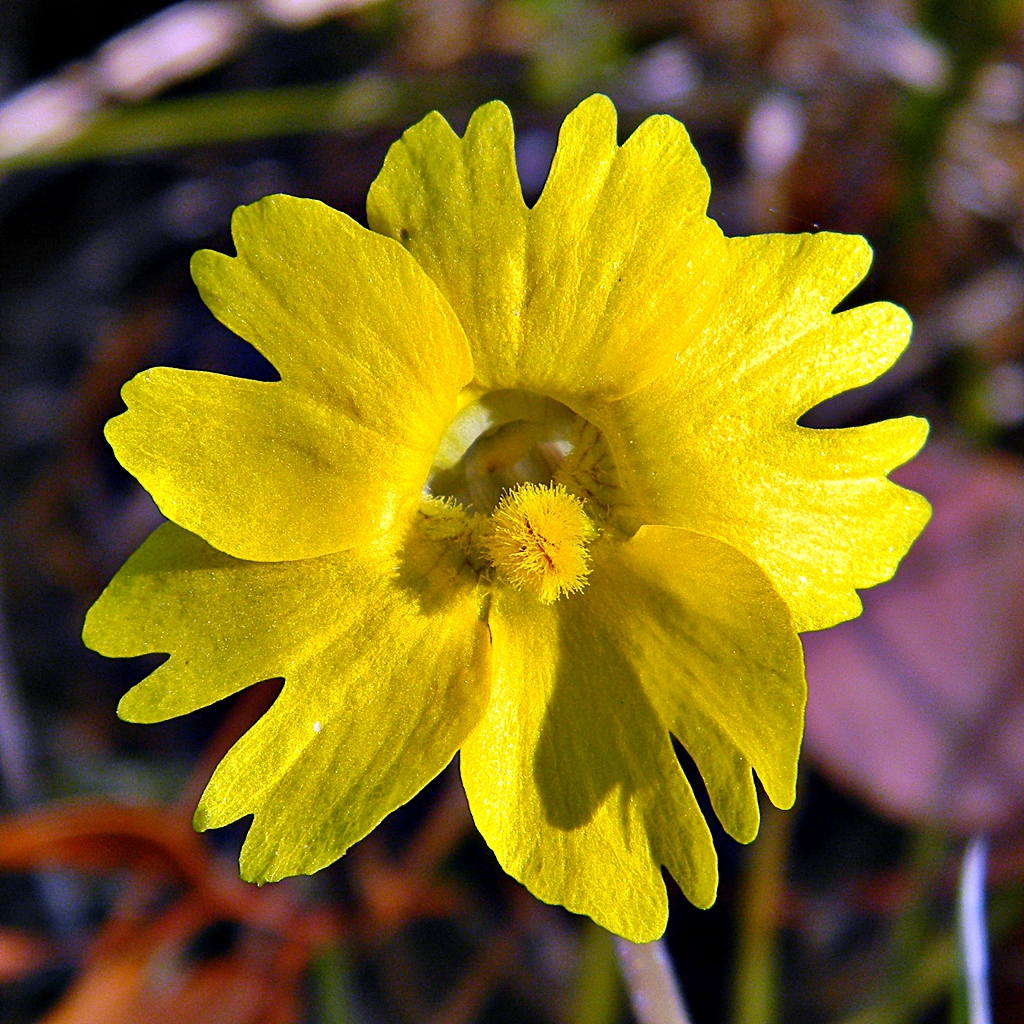
(Left) Pink-shell azalea (Rhododendron vaseyi) was discovered in 1878 in western North Carolina by G. R. Vasey, the plant’s namesake. (Right) Coastal goldenrod (Solidago villosicarpa) was first collected in 1949, misidentified for several decades, and described as a new species in 2000. (Image credit: Tim Waters CC BY-NC-ND 2.0; CHarrier CC BY)
Pink-shell Azalea (Rhododendron vaseyi) – member of the heath family
- Description: Deciduous shrub that shows pink flowers in spring. Typically grows 3 to 6 feet tall and has narrow, lance-shaped leaves.
- Range: Endemic to the Appalachian highlands of North Carolina with a main center of distribution west of Asheville.
- Habitat: Prefers moist, acidic soils in forested areas, often near streams and in the understory of hardwood forests.
- Fun Fact: Pink-shell azalea was found growing in the wild in Massachusetts. While it’s not native to that state, it naturalized on the site of an abandoned nursery.
- Conservation: Listed as NC Status SR-L (Significantly Rare–Limited), which means that “their fate depends largely on conservation here” in North Carolina.
- Info Source: Center for Plant Conservation and Natural Heritage Program (use search)
Coastal Goldenrod (Solidago villosicarpa) – always found within 1,000 feet of an estuary
- Description: This perennial plant has hairy stems and narrow leaves, producing bright yellow flower heads in late summer to fall.
- Range: Only four known populations in Onslow and Pender counties of North Carolina; between 100 and 1400 individual plants comprise each population.
- Habitat: Grows in wet, sandy soils, often in salt marshes, coastal grasslands, and disturbed areas.
- Fun Fact: coastal goldenrod is currently found on sites that were previously logged. Three of the four known populations are located on the Camp Lejeune Marine Corps Base in Onslow County, NC.
- Conservation: Listed as NC Status S1 (Critically Imperiled), at very high risk of extirpation in North Carolina. Read more about conservation efforts on the Center for Plant Conservation site.
- Info source: Natural Heritage Program (use search function), Center for Plant Conservation, NC Botanical Garden
Conservation of NC’s Endemic Plants
Endemic taxa are resilient, having adapted to their specialized environments over time. But because they’re rare–some species presenting only a few individuals or small populations–they can easily be wiped out. Threats to our native plants include:
- Habitat loss to recreational and residential development
- Trampling by hikers, climbers, and sightseers
- Natural succession to invasive species
- Collection and illegal poaching
- Acid precipitation and other forms of atmospheric pollution that have been found to be concentrated at higher elevations in the southern Appalachians
- Climate change
Here in North Carolina, we don’t yet know the damage incurred to our endemic plants (or animals) in October 2024 by Hurricane Helene. Some populations might have been devastated by storm damage or flood water. Other populations might spring back stronger; coastal goldenrod, for example, is documented to thrive where trees have been knocked down by hurricanes.
Conservation efforts are critical to preserving these unique plants. By protecting their habitats and raising awareness, we can help ensure that North Carolina’s endemic flora continues to flourish. Through conservation initiatives, botanical gardens, and community engagement, we can foster a deeper appreciation for these remarkable plants and the ecosystems they inhabit.
These organizations are just some that are active in conservation and education efforts:
North Carolina Plant Conservation Program (NCPCP), part of the North Carolina Department of Natural and Cultural Resources, works with partners like the NC Natural Heritage Program to protect rare and endangered plant species, including many endemic plants.
North Carolina Botanical Garden, located at the University of North Carolina at Chapel Hill, emphasizes the conservation of native and endemic plants through education, research, and horticultural practices. NCBG partners with The Center for Plant Conservation, whose plant database incudes many of our state’s rare endemic taxon.
US Fish and Wildlife Service (USFWS) collaborates with state and local agencies to protect endangered species, including endemic plants in North Carolina.
Conservation alliances like the North Carolina Wildlife Federation and The Nature Conservancy work on broader conservation that includes endemic plants.
Citizen science initiative programs like the North Carolina Native Plant Society engage the public in monitoring and documenting plant species can help conservation practices.
Research and educational programs at universities and research institutions like Duke, the University of North Carolina, and NC State University, conduct studies focused on endemic plants and how to increase the sustainability of their ecosystems.
How You Can Help Protect NC’s Endemic Plants
Your individual efforts can make a difference. Here’s a list of actionable to-dos for local gardeners and plant lovers:
- Educate Yourself
- Research our region’s endemic flora to understand their characteristics, habitats, and conservation status.
- Attend workshops or seminars focused on native and endemic plants.
- Use the NC Botanical Garden’s “Flora App” to identify species in the wild.2
- Incorporate Native Plants in Your Garden
- When and where possible, choose an endemic plant like Heller’s blazing star for your garden to support local biodiversity.
- Create a design that mimics natural ecosystems, combining various native species for a balanced environment.
- Consider these Recommended Native Plant Species from the NC Native Plant Society. Remember to choose the right plant for the right place in your landscape.
- Create a Pollinator-Friendly Space
- Plant a variety of native flowering plants to attract and support pollinators, essential for the reproduction of many endemic species.
- Provide nesting sites and water sources for pollinators in your garden.
- Participate in Local Conservation Efforts
- Join local organizations (like the ones named above) or volunteer for projects aimed at restoring native habitats.
- Participate in plant rescues or reforestation efforts organized by conservation groups.
- Promote Native Plant Awareness
- Share information about endemic plants with friends, family, and neighbors through social media or community events.
- Organize or participate in local gardening clubs (like the Durham Garden Forum) that focus on native and endemic plants.
- Create Educational Signage
- Label endemic species in your garden with informational signs to educate visitors about their importance and ecological roles.
- Provide facts about their rarity, uses, and conservation needs.
- Practice Sustainable Gardening
- Avoid the use of chemical pesticides and fertilizers that can harm native plants and wildlife.
- Use organic gardening practices to maintain soil health and biodiversity.
- Monitor and Document Plant Growth
- Keep records of the endemic plants you grow, noting their growth patterns, challenges, and successes.
- Share your observations with local conservation groups to contribute to broader studies on plant health.
- Contribute photos and notes from your wilderness hikes to iNaturalist.
- Host Workshops or Community Events
- Organize events to teach about the importance of endemic plants, including gardening tips and plant identification workshops.
- Collaborate with local schools to create educational programs focusing on native flora.
- Support Local Nurseries and Plant Sales
- Buy endemic plants from local nurseries that prioritize sustainable practices and conservation; confirm that the plants were not collected from the wild.
- Advocate for more native plant sales in your community.
Conclusion
North Carolina’s endemic plants are ecological treasures. They are rare, increasingly at risk, and worth protecting. Let’s ensure these plant species thrive for generations to come.
Notes
1–A taxon (plural is taxa) is a group of one or more populations of an organism scientists called taxononmists define as a unit. These organisms usually share characteristics.
2–Editor’s note: When this article was first published, this app was free. It is now fee-based.
Resources and Additional Information
2022 “PLANT TAXA ENDEMIC TO NORTH CAROLINA,” NC Natural Heritage Program, https://ncnhp.org/documents/2022-rare-plant-list-endemic-species-table/open
2014 “North Carolina Endemic and Near-endemic Plants,” https://ncpedia.org/environment/endemic-and-near
Regarding an endemic species’ conservation status: if you want to better understand what a conservation code, like T or E, stands for: 2022 “EXPLANATION OF STATUS AND RANK CODES: North Carolina Natural Heritage Program List of Rare Plant Species of North Carolina,” https://ncnhp.org/documents/2022-rare-plant-list-status-and-rank-codes/open
Species Database Search of the NC Natural Heritage Program, https://ncnhp.org/data/speciescommunity-search – comprehensive database for finding the counties, conservation status, etc. of each plant
Flora of the Southeastern United States, created by Alan S. Weakley and the Southeastern Flora Team (NC Botanical Garden) – excellent plant database https://fsus.ncbg.unc.edu/main.php?pg=index.php
The Native Plant Trust’s database https://plantfinder.nativeplanttrust.org/Plant-Search
2016 “Venus Flytraps Need Protection From Poachers in North Carolina,” NYT https://nytimes.com/2016/11/28/us/venus-flytraps-poaching-north-carolina.html 2020 “An ‘Extinction Hotspot’ in Appalachia,” Scientific American – The discovery of a lost plant species highlights the need to protect other endangered species in one of the most biodiverse regions in the US https://scientificamerican.com/article/an-extinction-hotspot-in-appalachia
Article Short Link: https://wp.me/p2nIr1-5kI
Editor’s Note: We’ll be taking next week off for Thanksgiving. We’ll see you again in December with more gardening goodness!