Upcoming Gardening Events: May 2026

Ask a Master Gardener Program is an opportunity for members of the community to ask questions about gardening and learn more about the NC State Extension Master GardenerSM program. Durham County Master GardenerSM volunteers are available to provide answers using research-based information about plants and plant problems.

(Image credit: Allie Mullin)

You’ll find Extension Master Gardener volunteers at the following community events ready for your questions: 

Saturday, May 2

  • 10:00 am – 3:00 pm NC Museum of Life & Science in conjunction with their event Bird Bonanza, 433 W. Murray Avenue, Durham.
  • 12:30 pm – 2:30 pm Durham County Library Plant Swap, Main Library branch, 300 N, Roxboro St, Durham.

Sunday, May 3, 10:00 am – 3:00 pm  Durham County Extension Master Gardener Demonstration Garden, in conjunction with Keep Durham Beautiful’s 3rd annual Durham Garden Tour, Durham Co. Extension Office, 721 Foster St, Durham.

Saturday, May 16, 8:00 am – 12:00 pm Durham Farmer’s Market at Central Park, 501 Foster Street, Durham.

Saturday, May 23, 9:00 am – 12:00 pm South Durham Farmer’s Market, 500 Park Offices Dr. (parking lot), Durham.

Saturday, May 30, 9:00 am – 12:00 pm 

  • 9:00 am – 12:00 pm South Durham Farmer’s Market, 500 Park Offices Dr. (parking lot), Durham
  • 10:00 am – 3:00 pm NC Museum of Life & Science in conjunction with their event Party for the Planet, 433 W. Murray Avenue, Durham.

Hattie Meadows Gardening School

In honor of a beloved Durham gardener Hattie Meadows, the community is invited to take part in the new Hattie Meadows Gardening School. This free community learning series is a partnership between Durham Cooperative Extension, Durham County Library, and Sarah P. Duke Gardens. Monthly classes will feature local teachers and gardening experts sharing practical knowledge on a wide range of gardening topics. It is perfect for beginners and experienced gardeners alike. Free, but space is limited and registration is required.

(Left to right)True indigo plant (Indigofera tinctoria) used to make blue dye naturally. Scenes from the Durham County Extension’s Demonstration Garden. (Image credit: Himanshu Sarpotdar CC BY-NC-ND 2.0; Allie Mullin)

This program is entitled “Languages of the Land: Getting to Know Native Fiber and Dye Plants” and presented by Adé Oni, founder of dìèdìè textile micromill and studio.The earth gives us everything we need to survive and adorn our lives. Let’s get to know the material culture and ancient relationships between food, fibers, and dyes. This is an interactive session for people who love and want to learn about land-based creativity rooted in Black and Indigenous ecologies. Make sure to bring a textile item that you love.

History is filled with countless stories that help us understand how gardening got to be what it is today. Come hear about what special people, places and events contributed to this awesome craft of gardening.Presented by Bryce Lane, NC State Alumni Distinguished Undergraduate Professor Emeritus and former host and producer three-time, Emmy winning, UNC TV public television show “In the Garden With Bryce Lane.”

Durham Garden Forum

Close-up of a green leaf infested with clusters of small green aphids.

Aphids, a common garden pest, are often located on the undersides of leaves. (Image credit: NC Cooperative Extension)

Pests and Diseases, virtual talk with Dr. Matt Bertone, Director of the NC State Plant Disease and Insect Clinic (PDIC), and Mike Munster, PDIC plant disease and diagnostician for commercial ornamentals. Tuesday, May 19, 7:00 pm – 8:30 pm. (Fee for non-members. Durham Garden Forum membership information and program details.

Sara P. Duke Gardens

Bearing Witness with Nature-based Art: A Grief Journey with Gaza. Sunday, May 3, 3:00 pm – 5:00 pm. Pop-up exhibit and artist talk with The Witness about their evolving art practice that centers around themes of identity, belonging, grief and sorrow. The Witness will share how applying images to fresh leaves and paper has allowed them to process the immense reactions and sorrow that emerged from witnessing the suffering Gaza. They will share how their nature-based art has changed in response to the seasons and a need for stronger creative expression. This talk offers an intimate view into their art practice and the stories around it. Free program, registration required. Registration and additional information for Bearing Witness exhibit and artist talk.

JC Raulston Arboretum

All May Midweek Programs are free, virtual, and require pre-registration.

“Per-annuals,” with Tim Alderton. Wednesday, May 6, 3:00 pm – 4:00 pm. Per-annuals program details and registration.

“PLT Premiere: Mexican Plants,” with Dennis Carey, Curator. Wednesday, May 13, 3:00 pm – 4:00 pm. Mexican plants registration and information.

“Top 5 – Clumping Bamboos,” with Tony Avent and Evan Villani, JLBG Founder and JCRA Research Technician. Wednesday, May 20, 3:00 pm – 4:00 pm. Bamboo program details and registration.

“Cool European Plants,” with Tim Alderton. May 27, 3:00 pm – 4:00 pm. European plants program registration and information.

Durham County Public Library

Plant Swap, Saturday, May 2, 12:30 – 2:30 pm, Main Library branch, 300 N. Roxboro St., Durham. Spring Community Plant Swap includes cuttings, seeds, bulbs, saplings, and more.

Edited by Melinda Heigel, NC State Extension Master GardenerSM volunteer of Durham County

Article Short Link: https://wp.me/p2nIr1-7nK

Discover the Natural World with Durham’s Hub Farm

By Justin Walker, Guest Contributor and Hub Farm Educator

This is the first article in a series on The Hub Farm, one of Durham’s garden gems and one of our community partners in gardening education.

(Left to right) “Farmer Justin” tending comfrey (Symphytum sp.) plants in the Hub Farm greenhouse. The small-but-mighty team at the farm: Geoffrey Seelen, Hub Farm manager, Ashley Boyette and Justin Walker, the farm’s educators, display found items and crops from the Hub Farm (ranging from turtle shells and deer antlers to loofas, strawflowers, and frames for honeybee hives) for Durham Public School’s 2026 Showcase of Schools. (Image credit: Justin Walker; Erin Carroll, Durham Public Schools)

My name is Justin Walker, aka “Farmer Justin.” I am an educator, gardener, social worker, and nature enthusiast who is a firm believer that the grand and wondrous natural world can be good medicine for all of us. Ever since I can remember, I have been drawn to natural spaces. From estuaries, to alpine lakes, from grasslands to deciduous forests, I can’t get enough. Couple any of these environments with nature’s bounty of nutritious foods, and that is what I call heaven! I believe life is a journey of continual discovery; and whatever mother nature hides, I seek to uncover the beauty and wonder she provides. 

My latest discovery has been one of the best I have yet to find. Today, as I write to you I am overlooking the quiet calm of a February morning in central North Carolina. I stand in our Discovery Garden at The Hub Farm, Durham Public Schools’ outdoor learning campus.

Although it is currently 40 degrees and overcast, clouds are starting to let the sun peak in on these bleak rows and empty beds, with the exception of a few rows of alliums planted by local middle school students in the fall. 

Recent views from the Hub Farm (clockwise from top left): Alliums, planted by local middle schoolers, provide some much needed green during the cold season. The floating lab is a great addition to our farm space. Designed and built by NC State Architecture and Design students, this unique space literally floats and is anchored by pylons to the bank of our pond. Here students can do water testing activities thanks to the panel in the floor that grants access to the pond beneath. The lab also allows us to host fishing activities and opportunities for aquatic environmental observation. Laying hens are part of our educational program and farm family. During these cold weather months and short days, we increase their performance with a diet of fermented feed. (Image credit: Justin Walker)

I am excited because I envision a bountiful growing season filled with edible offerings for students, teachers, and families throughout the Durham community.  

At the Hub Farm, we are a small dedicated team of educators who offers wide ranging learning opportunities for all Durham public schools students. Whether we are teaching a lesson in our educational garden about how vegetables impact the ecosystems of the human body, why sweet potatoes grow so well in North Carolina, or teaching students about macroinvertebrates at the pond, we are always learning and sharing. At every space on the farm students are encouraged to use all of their senses while being immersed in the outdoors. 

It’s currently too cold to host the student field trips that we are known for during the warmer months of the year. Much like winter, we are slowing down, reflecting, and reenergizing, building our curriculum and growing spaces for another year of exciting student engagement. 

The People, Partnerships and Mission of the Hub Farm

This year the Hub Farm is celebrating 14 years of supporting outdoor education for the Durham community. Funded by Durham Public Schools, our 30-acre farm came into existence in October of 2012. Over the years there have been many iterations of the farm’s offerings. One thing that has remained consistent is that our farm leadership is made up of a team of 3, which means we cover a lot of ground to keep our space functioning and robust.  So it is no surprise that when we are not hosting students for field trips and other educational initiatives, our growing volunteer base helps us keep our space thriving. We currently have a volunteer community of 25 wonderful people from a variety of backgrounds who support us with their time and hard work. 

In addition to dedicated community volunteers, this year we will be working closely with student-led organizations from our local high schools including Future Farmers of America (FFA) and partnering with the Occupational Course of Study students for career and job skills preparation.  We’ll also be supporting students for spring and summer high school internship programs where students will participate in a paid hands-on learning around farm management, enterprise management, program development, all while attaining transferable skills that are applicable throughout various areas of the marketplace. 

And let’s not forget our partnership with area college students, too. We also will continue working with Duke University’s undergraduate volunteers program for additional events throughout this year. 

We partner with Durham County Library for Storytime @ The Hub Farm. We aim to host more recreation opportunities for students, faculty, families and community members  in the future. The produce that we grow here at the farm is predominately for educational purposes, and we share it with students during our field trips. Our surplus fruits and vegetables are donated to our Durham Community Fridges throughout the city to help support mutual aid for those in need of free fresh produce that simultaneously helps to alleviate food waste.


Agricultural Projects at the Hub Farm – Learn with Us!

Just like we teach our students about growing food and understanding our natural world here at the Hub Farm, I’ll be sharing some growing tips with you as we explore the work we do here in the Durham community. In forthcoming articles, I’ll share in-depth information on two of our ongoing gardening projects: growing mushrooms and understanding vermiculture. We’ll talk about how we use these projects to teach our local kids as well as how you might be inspired to incorporate these things into your garden toolbox. Here’s a little preview.

Mushrooms

Preparing for mushroom inoculation this January at the Hub Farm. Here, I am cutting abundant sweet gum logs that will receive shiitake mushroom plugs. (Image credit: Geoff Seelen; Justin Walker)

Welcome to the “Mushroom Gorge,” a small space along one of our wooded areas near our chicken coop. In this area we house sweet gum logs that we cut on here on the farm. You may be wondering why sweet gum? Sweet gum trees (Liquidambar styraciflua) are hardy, native to Eastern North Carolina, and grow relatively quickly. They are a great source material because of their size, and they are an abundant tree here on the farm.

We cut them as needed in winter when they are dormant, and they work well because we cut trees that are anywhere between 4 to 10 inches in diameter and lengths of 3 to 4 feet long. Because the trees that are cut range from about 12 to 24 feet tall, we are able to maximize each tree’s value by utilizing the bulk of the tree. Logs which are cut between 3 and 4 feet long are viable for around 2 years and are abundant here on the farm. This particular variety of tree grows relatively quickly. They are durable and used for growing our shiitake mushrooms. 

We are currently gearing up for our winter mushroom inoculation activity that will include local high school students who will learn how to combine sweet gum trees, shiitake mushroom plugs, and power tools to begin the process that offers a bounty of mushrooms that will arrive in the warmer months. In a future blog post, I will take you along with us on our journey and introduce you to the wonders of growing mushrooms. Hopefully you will be inspired by our story!

Vermiculture

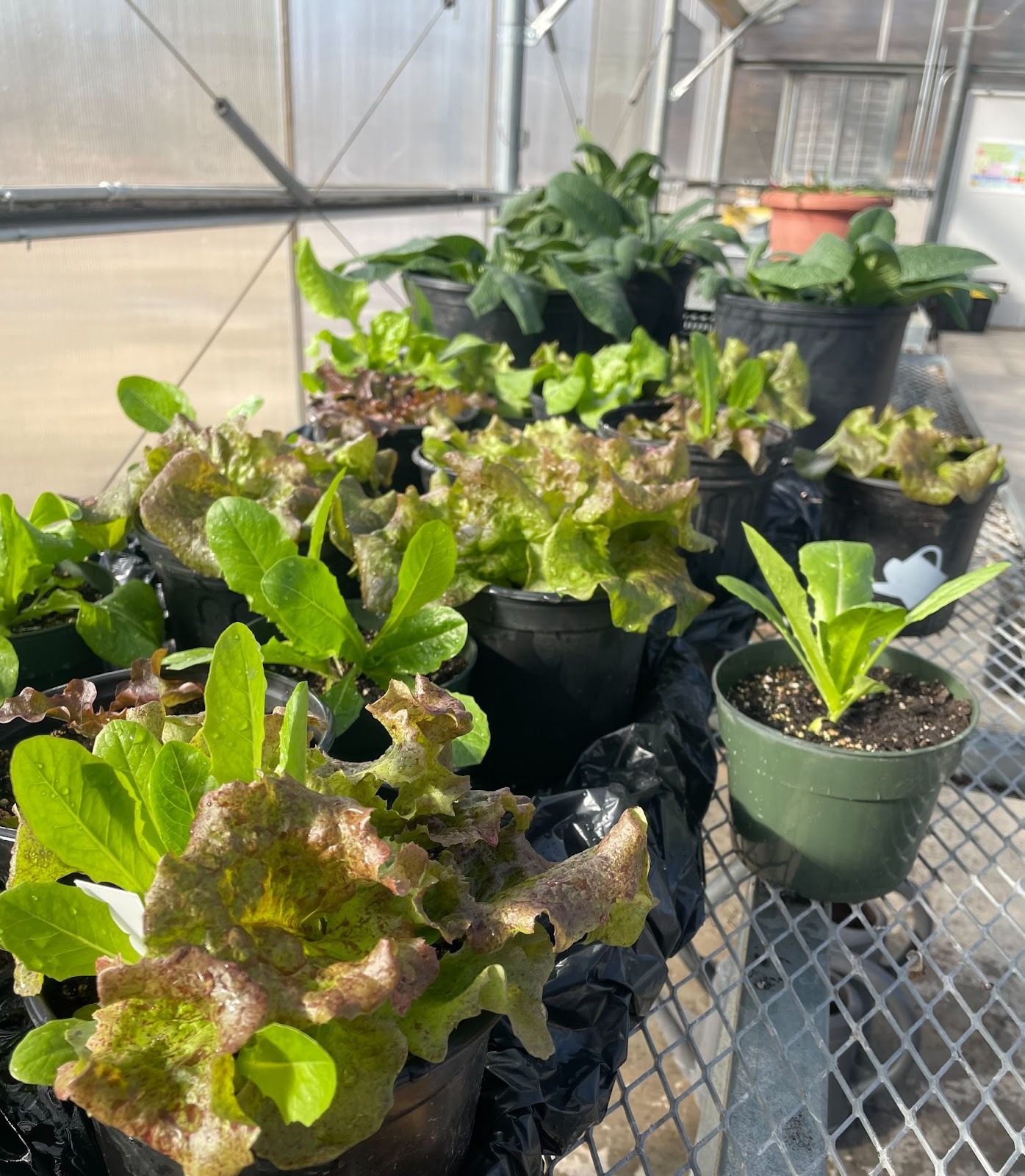
(Left to right) Red wiggler worms hard at work. The “worm tea,” a by-product of all that hard work, provides vital nutrients to crops like these lettuce plants in our greenhouse. We’ve also been incorporating extra worm tea and wrigglers to our garden beds as we prepare for spring planting. (Image credit: Justin Walker)

Composting with red wiggler worms plays a role in the life cycle of our farm. We use vermiculture (a process that relies on these worms to convert organic materials like food scraps, yard trimmings, and crop residues into valuable soil amendments) to teach students about how each of us–even these little creatures– plays an important role in nature and impacts our activities here at the Hub Farm. In a future blog post, I’ll dive more deeply into how we incorporate vermiculture in our program and explain the whats, hows, and whys that might encourage you to give vermicomposting a try in your garden.

Join Us as a Volunteer

People, namely volunteers, make the Hub Farm hum! (Image credit: Ashely Boyette)

As we enjoy the seasonal quiet we also anticipate a joyous kickstart to a fun-filled year. As a small team, we rely heavily on our volunteers and are always looking to expand our reach within the community. We will have a growing number of volunteer days and events this year, so if you are interested in joining us please reach out to me at justin_walker@dpsnc.net and get ready for an interactive experience. In 2026, we want to strengthen our community relationships, and of course, there are always chores to be done around the farm and fun to be had!

As the winter continues to give its offering of cold, quiet, and regenerative calm, I look forward to the emergence of spring when the farm is again boisterous and bustling with the excitement of students and buzzing with new life for another season of wonder and discovery. So please stay tuned as we look forward to sharing more about the happenings around the farm. I can’t wait to share more with you on our mushroom and vermiculture programming!

In the meantime, keep an eye out for our Instagram https://www.instagram.com/dpshubfarm/?hl=en posts that my teammate Ashley Boyette (ashley_boyette@dpsnc.net) is keeping up to date, and feel free to reach out via email for more volunteer information as winter begins to thaw and spring flowers begin to bloom.

Resources and Additional Information

Visit the Hub Farm’s online site: https://www.thehubfarm.org

To learn more about vermicomposting: https://composting.ces.ncsu.edu/vermicomposting-2/; on our blog: https://durhammastergardeners.com/2013/11/24/turn-kitchen-scraps-into-plant-food/

Read about mushroom cultivation: https://newcropsorganics.ces.ncsu.edu/specialty-crops/mushrooms/

Edited by Melinda Heigel, NC State Extension Master GardenerSM volunteer of Durham County

Article Short Link: https://wp.me/p2nIr1-75t