To Do in the Garden: October 2025

(aka: GARY’S GARRULOUS GARDENING GUIDE)

By Gary Crispell, NC State Extension Master GardenerSM volunteer of Durham County

I reckon we have seen the last of September and quite possibly the last of the 90-degree days. So, I have mixed feelings about all that. Being a devotee of the ancient Egyptian god, Ra, I rather like a temperature in the nineties. Being a gardener, I prefer a little more rain a lot more regularly. Camelot anyone?
The Accidental Cottage Garden (ACG) would agree with the more rain more often thing. It is sadder than “normal” (which is currently undergoing a redefinition). Most of the perennials have given up and gone into early hibernation.

The gardenias (Gardenia jasminoides), Black-eyed Susan (Rudbeckia) and Stoke’s aster (Stokesia) have passed their prime but continue to attract pollinators and take on interesting shapes that might be used in a Halloween flower bouquet. (Image credit: Javin Griffin)

The few that are left are the oft mentioned Chrysanthemum x ‘I-Don’t-Have-A-Clue’, hardy ageratum or blue mist flower (Conoclinium coelestinum or Eupatorium coelestinum). Take your pick. and gallardia (Gallardia pulchella), and Autumn Joy sedum (Hylotelephium “Herbstsfreude” ‘Autumn Joy”). BTW, this stonecrop is a cross-genus hybrid. It is a cross between Sedum telephinum and a species of ice plant, Hylotelephinum spectabile. (This insignificant bit of trivia is included in your subscription at no extra cost.)

A close-up of Autumn Joy sedum flowers in shades of pink and green, with a bee perched on one of the blooms.

Autumn Joy sedum is a year round plant. In spring, it has rounded, fleshy green leaves followed by light pink flower buds during the summer. In the fall, the flowers open and are quite attractive to butterflies and bees. In the winter season, browned seed heads are also eye-catching.  (Image credit: David J. Stang CC BY-SA4.0)

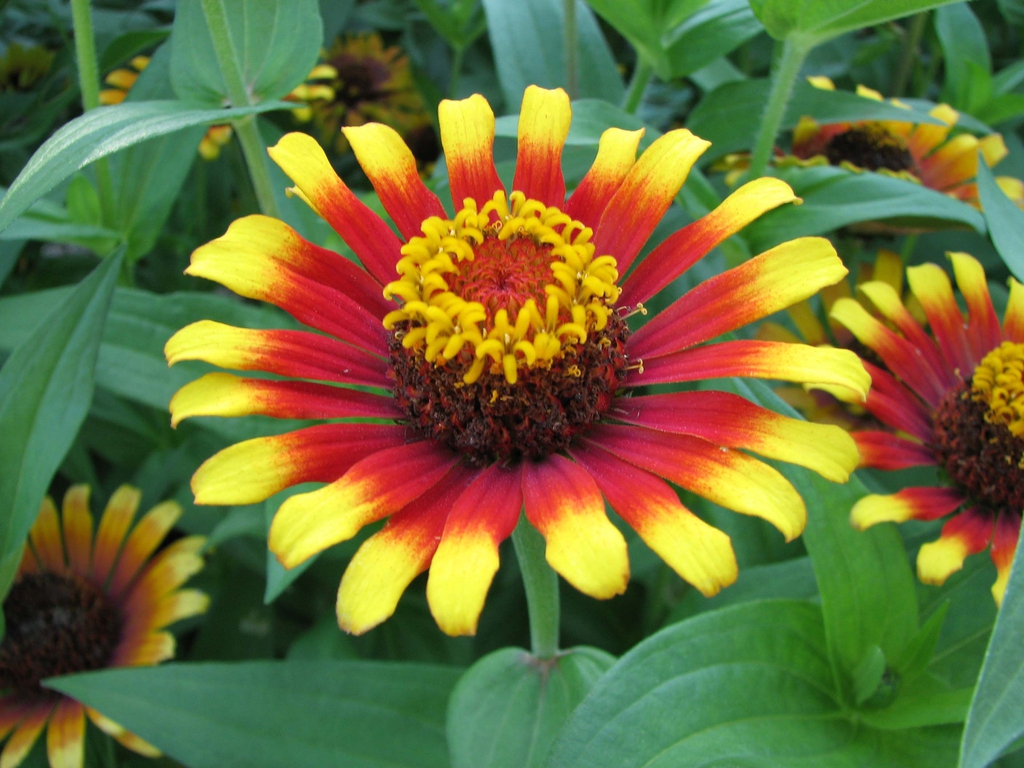
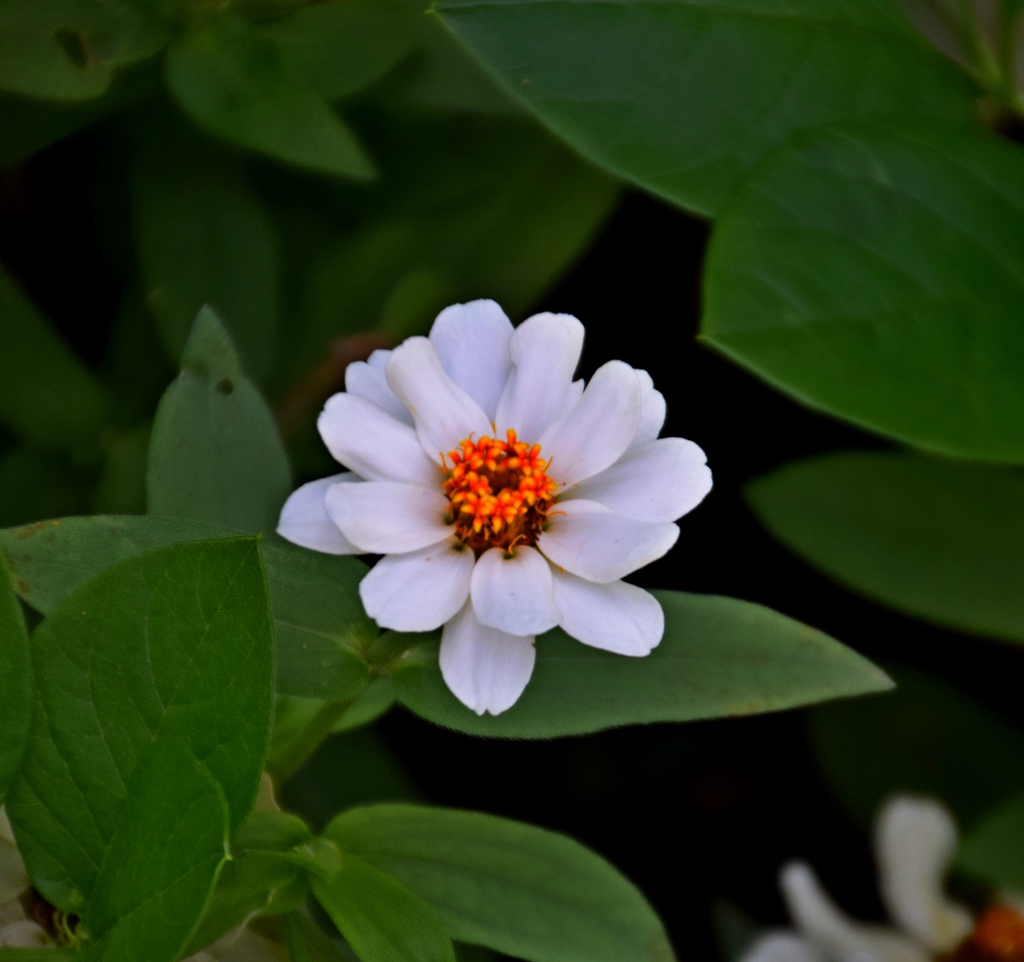
The African marigolds (Tagetes erecta) and zinnias (Zinnia elegans) have come back after some rain and much needed dead heading. And that’s all, folks. The gardening season starts to wind down in October unless you are doing some extensive landscaping. So, here’s the list of stuff to keep you off the streets for another month.

Lawn Care

Keep leaves from accumulating on newly seeded or overseeded lawns. Keep those same lawns moist until germination then be sure they get 1” of water per week, ½” per watering. Continue mowing cool season lawns (fescue, bluegrass, perennial rye) at 3 ½” to 4”.

Fertilizing

We are essentially done here except for spring-flowering bulbs (daffodils, tulips, crocuses, etc.). Incorporate a little balanced fertilizer (10-10-10 or equivalent) into the soil in and around the planting hole. Store leftover fertilizer in a dry place for the winter.

Planting

FALL IS FOR PLANTING! It’s the truth in this part of the world. It is especially true for containerized and B&B (balled and burlapped) nursery material (trees and shrubs). Planting them now gives them the opportunity to grow sufficient roots to withstand our now inevitable summer dry spells.
Want some color through the winter? Think pansies. This hardy member of the Viola genus will cheerily grace your yard with an almost endless display of delightful color throughout the winter. The sooner you plant them the more able they will be to survive the coldest North Carolina nights. One caveat; deer find them irresistible. They’re like dessert after a hearty meal of azaleas.

Colorful pansies in various shades of purple, yellow, and red blooming in a garden bed.

Pansies are loved by humans and deer. They are a colorful way to enjoy blooms in the fall, winter and early spring. (Image credit: David Monniaux CC BY-SA 3.0)

Spring-flowering bulbs should be planted this month. They need a period of cold before sprouting. Peonies can be planted/transplanted now. If you are not planting a fall veggie garden, consider planting a cover crop such as red clover (Trifolium pratense) or winter rye (Secale cereale). These plants are nitrogen-fixing (They add nitrogen to the soil) and can be tilled in in the spring. Win, win, win. Do you have a cold frame? Now is the ideal time to plant a salad garden to keep you in greens all winter. Leaf lettuces, green onions, spinach, radishes & carrots will keep you eating healthy ‘til spring.

Pruning

Wait until after a killer frost (which used to come in October but may no longer arrive until November. Climate change. Adapt or find a good therapist. After said frost it will be time to finish cleaning out the perennial garden. Ignore the advice and habit of your grandmothers and do not cut back all the perennials. There are solo bees (read pollinators) and some other beneficial insects that lay eggs on and in the stems. Leaving the stems until spring helps to ensure another generation. Root prune any shrubs or trees that you want to move in the spring.

Spraying

Hopefully by now most of the pests have gone into overwinter mode. There are a couple that you can still battle with. Lace bugs, especially on azaleas and pyracantha, can be active all winter whenever the leaf surface temperature suits them. The other treatable pests are the scale insects found most often on euonymus and camellias, though they will occasionally find other plants to their liking. I had some on a Japanese maple (Acer palmatum) in a previous garden. Both of these pests can be treated with a horticultural oil that will smother all the stages of their life cycle.

Propagation

Are you starting new plants from cuttings? Be sure to check them at least twice a month for overall health and vigor. Water as needed. (That’s PRN for the medical gardeners out there.) If you are one of the fortunate few with a rhubarb patch now is a good time to divide the plants. It really prefers colder climes than USDA Zone 7. Rhubarb is a favorite in this house, but ain’t no way we’re movin’ north far enough to grow it. Been there. Done that and did NOT get the tee shirt.

Other Fall Appropriate Outdoor Activities

Besides snow skiing and outdoor ice hockey, what isn’t appropriate for a delightful October day? Ok, I’ll limit the list to gardening activities (mostly).

  • GET A FREE SOIL SAMPLE NOW! There is a monetary charge for them between November and April.
  • Make a compost pile out of the inevitable leaf collection on your yard. The landfill doesn’t need them.
  • Clean and fill bird feeders.
  • Clean out any unoccupied bird houses to get them ready for winter borders.
  • Dig up tender summer-flowering bulbs (gladiolas, dahlias, caladiums, etc.) and store them in a cool dark place where random rodents can’t access them.
  • Clean and lubricate lawn and garden equipment that won’t be used again until next season.
  • Go for a hike in the woods. The Eno River is especially lovely in the fall but check to see which parts are open.
  • Fire pits and s’mores come to mind. (I said mostly garden stuff.)
  • Find some kids and carve pumpkins (around the fire pit with s’mores and hot chocolate).
  • Enjoy the crispness of October ‘cause it’ll be cold soon.

Happy October, y’all!

Additional Reading and Resources

Looking for a “spooky” garden as we move into fall and winter? Ariyah Chambers April gives advice on designing a Goth Garden. This article was originally posted in October, 2024 and remains a favorite of many blog readers. https://wp.me/p2nIr1-5cW.

Even if you have little space, it is possible to have a small container garden for some fresh herbs and vegetables during the fall and winter. https://content.ces.ncsu.edu/how-to-create-a-container-garden-for-edibles-in-the-north-carolina-piedmont

It’s not too early to start thinking about winterizing your plants and deciding whether they should be kept outdoors or indoors. https://content.ces.ncsu.edu/preparing-nursery-plants-for-winter

Edited by Martha Keehner Engelke

Shortlink: https://wp.me/p2nIr1-6wX

To Do in the Garden: September 2025

By Gary Crispell, NC State Extension Master GardenerSM volunteer of Durham County


Hey, look! It’s September and for the moment it has cooled off and the relentless humidity has dropped below 185%. How sweet is that? Another drop or two of rain here in Durham would be nice. It got a little dry in the last half of August, but at this time of the year one must be careful what one wishes for. Ask the folks in Asheville.

(Left to right) Resilient purple coneflowers (Echinacea purpurea) continue to enliven the ACG. Let your coneflowers go to seed and leave the seed heads and stalks. Goldfinches and other small birds feed on them in the fall and throughout the winter months. Blanket flowers (Gaillardia pulchella), are long, reliable, no-fuss bloomers even in heat and drought conditions. Their seed heads are also enjoyed by a host of songbirds. (Image credit: Javin Griffin; iStock.com/ABDESIGN from NC State Extension)

The Accidental Cottage Garden (ACG) looks, well, pathetic. I eschewed using city water for anything except the tomatoes and peppers, and the rain barrels have gotten down to the bottom of the (Dare I say it?) barrel. The butterfly weed (Asclepias tuberosa) looks weird with new blooms and nearly ripe seed pods. Looks like an “oops” late-pregnancy sort of thing. The purple coneflowers (Echinacea purpurea) are barely hanging on, but the goldfinches (Spinus tristis) are loving the seeds, and we had a bumper crop.

Gaillardia (Gaillardia pulchella) are really drought resistant. They keep their spot in the garden colorful for months with absolutely no care whatsoever. The spreading garden mum (Chrysanthemum “I-don’t- have-a-clue”) is reblooming as usual. It, too, requires very little attention other than deadheading the first blooms.

The other hangers-on are evening primrose (Primula vulgaris) (What possessed me to plant those?), False vervain (Verbena carnea), Balloon flower (Platycodon grandiflorus), African marigold (Tagetes erecta), Zinnias (Zinnia elegans), Black eyed susans (Rudbeckia fulgida), and sun flowers (Helianthus annuus). And climbing all over everything, Cypress vine (Ipomoea quamochit). I love the red flowers, but the vine is a bit much.

(Left to right) Summer-to-fall flowers still going strong in the ACG are the vibrant purple balloon flower (Platycodon grandiflorus), African marigold (Tagetes erecta), and the assertive self-seeding evening primrose (Primula vulgaris). (Image credit: Jimmi Lazuli; Javin Griffin)

Now if we could get an inch of rain a week through September the rest of this article will be relevant.

Lawn Care

If your fescue lawn looks like mine, September is the time for rejuvenation
(reseed/overseed). Loosen the soil in bare areas (or till up the whole yard) before sowing seed. A major key in sowing a successful lawn in the seed/soil contact—the more the better. If your bare spots are larger than 1 square foot a light layer of wheat straw will help maintain moisture and keep the birds from finding all of your grass seed.

Apply lime and fertilizer per your SOIL TEST recommendations. (I just know you got a FREE soil test this summer. If not, it’s free now through the end of November!) Resist the urge to fertilize any warm season lawns (Bermuda grass, Zoysia, centipede) now. It will encourage too much new growth just when they should be getting ready for dormancy.

You may treat lawns for grubs up until the middle of the month. After that the grubs will have “settled down for a long winter’s nap.”

Pruning

Still not allowed. Wait until Thanksgiving. Since you are going to do all your shopping online you will have time to prune on Black Friday. You need to work off the extra slice of pumpkin pie anyway. Otherwise, sharpen the equipment and hang up on the wall for now.

Spraying

Look for the same usual suspects as you did in August (i.e. wooly adelgid on hemlock, spider mites on all coniferous evergreens, tea scale on euonymus and camellia and lace bugs on azaleas and pyracantha. FYI: azaleas grown in the sun will be more susceptible to lace bugs than those grown in shadier conditions.) Perpetuate your perpetual rose program. Keep an eye out for other insects and diseases. They like fall as much as Homo sapiens do.

Propagation

It is time to dig and divide spring-flowering bulbs. Daffodils in particular will be appreciative of the attention and reward you in the spring. It is also, time to transplant peonies. Oversize the new planting hole and the root ball and avoid planting too deeply. Cut back any old stems. Mulch well.

IF SEPTEMBER TURNS OUT TO BE MYTHICALLY GORGEOUS

  • Go outside just to be outside.
  • Mulch your plant beds if your OCD/ADHD won’t let you kick back and relax.
  • Clean up and put up all the equipment you won’t need until next year.
  • Plant a fall garden. Beyond that, fall is an excellent time to plant perennials, trees and shrubs. “Fall is for planting!”
  • Clean up the summer garden, but consider leaving it a bit untidy to give a boost to birds and insects during cold months.
  • Take a kid or a dog or a kid and a dog to a park and enjoy their enjoyment.
  • Stay hydrated, stay healthy, and get your fall vaccines so that you can garden through the fall and winter without interruption.

Savor September, Y’all.

Edited by Melinda Heigel, NC State Extension Master GardenerSM volunteer of Durham County

Resources and Additional Information

Make your home landscape more bird-friendly: https://caldwell.ces.ncsu.edu/2021/12/feed-the-birds/

Helpful information on grub control for turf grass: https://www.turffiles.ncsu.edu/insects/white-grubs-in-turf

Revisit some of our earlier blogs on fall planting: Starting Cool-Season Annuals for Early Spring Blooms; Garden Veggies Year Round: One Gardener’s Calendar; Best Practices: Planting Trees and Shrubs

Learn more about the advantages of planting in the fall: https://arboretum.ucdavis.edu/blog/5-reasons-why-fall-best-time-plant

For pro tips on dividing your perennials: https://forsyth.ces.ncsu.edu/2022/10/dividing-perennials

Edited by Melinda Heigel, NC State Extension Master GardenerSM volunteer of Durham County

Article Short Link: https://wp.me/p2nIr1-6ne