
By Astrid Cook-Dail, NC State Extension Master GardenerSM volunteer of Durham County
It may still be too hot and humid to think about digging planting holes, but fall is right around the corner! Now is a great time to sit in the cool air conditioning and start planning what new plants you’ll add to your garden in the next few months as the temperatures start cooling off. Hopefully by the end of this post, Blue Star (Amsonia) will be on that list.


Bluestar offers unparalleled landscape interest for three seasons of the year. At left: Spring brings gorgeous blue flower clusters adored by pollinators. Middle: Summer highlights the fine foliage texture and shrub-like structure of the plant. At right: The plant glows gold as the weather cools and we head into fall. (Image credit: Cathy Dewitt; Andrea Laine; Jim Robbins)
The Amsonia genus contains multiple species suitable for NC Piedmont gardens. All feature multi-season interest as well as durability for our unpredictable weather. It is the epitome of a low-maintenance plant while also having a naturally tidy habit and reinvigorating the landscape with its lovely golden color just as summer perennials are winding down for the year. What’s more, pollinators adore the blossoms, deer are unlikely to browse it, and it is extremely simple to propagate!
Botanical Overview
Blue Star is in the dogbane or Apocynaceae family (also home to milkweeds), and like many of the members of this family, it has a milky latex sap. Eastern Bluestar (Amsonia tabernaemontana) is native to the central and southern US; meanwhile, other species like Amsonia hubrichtii and Amsonia ciliata are native to the central US.
Blue Star is a native herbaceous perennial; it dies back above the soil at frost and regrows from the crown in early spring. Clusters of light blue flowers bloom atop a 2-3′ mound of tidy rounded foliage in April to May. When the flowers die back, they reveal finely textured foliage that stays lush and green despite the heat and humidity of summer. Then, it is ready to steal the show again in late October and November when the weather cools.

Close-up of the flowers on Arkansas Bluestar (Amsonia hubrichtii). (Image credit: Plant Toolbox [CC BY-SA 3.0])
Cultivation and Care
Blue Star holds an erect, mounded shape in well-drained soils and full sun to part shade conditions. While it prefers fertile soils with organic matter, it tolerates a variety of soils common in central NC. To encourage a tidy form, trim the plant back lightly after spring blooming.
Planting and Propagation
Like many herbaceous perennials, new Blue Star plants are best added to the garden in spring or fall, and watered regularly for the first several weeks until establishment. When trimming the plant back in spring, snip a few softwood stem tips and propagate the plant easily by rooting cuttings in well-drained potting soil.
A Few More Fall-Interest Natives
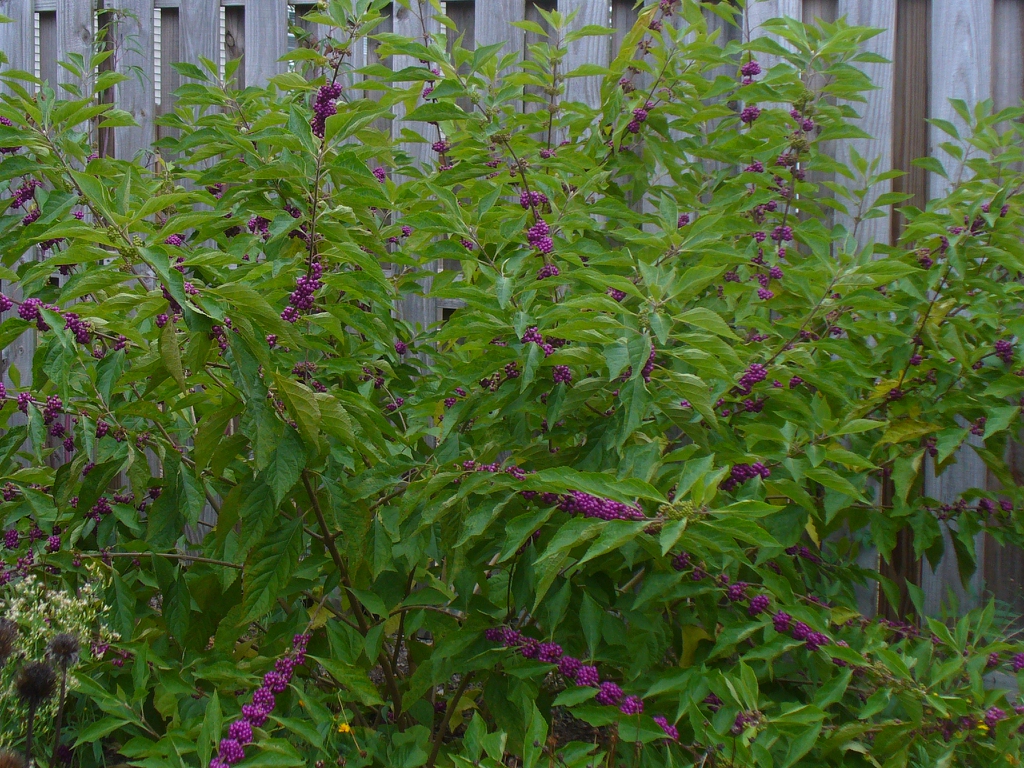
American Beautyberry (Callicarpa americana) has a natural arching shape that, along with its striking berries, provide structural interest in the fall garden. (Image credit: Susan Strine)
- Beautyberry (Callicarpa americana) – Deciduous shrub growing to 8′ tall and wide with beautiful purple berries in the fall, beloved by songbirds and small mammals
- Big-Headed Aster (Symphyotrichum grandiflorum) – NCBG’s 2026 Wildflower of the Year! Large purple fall flowers on this 1-2′ perennial wildflower suited to full sun and a variety of conditions. Like many Asters, provides essential fall nectar and pollen for migrating Monarchs and other insects
- Switchgrass (Panicum virgatum) – Striking grass reaching 7′ with its pink flowers, and the whole plant turns gold to provide winter interest
- Little Bluestem (Schizachyrium scoparium) – A smaller, clumping grass (2-4′) that turns gold in autumn and holds its color all winter
- Highbush Blueberry (Vaccinium corymbosum) – Our native blueberry is a large deciduous shrub growing to 12′ tall and wide, suitable for acidic soils. They provide delicious berries for both humans and wildlife in the summer and gorgeous red foliage interest in the fall
Additional Reading and Resources:
NC Plant Toolbox to search for additional native plants with fall interest
Plant Goldenrod for Outstanding Fall Color
Virginia Creeper: Up or Down It’s the Perfect Vine for Gardens
Native Fall Foliage Color in the Piedmont
Deer-Resistant Native Gardening
University of Florida IFAS CALS on propagating via softwood cuttings
Edited by Astrid Cook-Dail, NC State Extension Master GardenerSM volunteer of Durham County