Virginia Creeper: Up or Down It’s the Perfect Vine for Gardens

By Wendy Diaz, NC State Extension Master GardenerSM volunteer of Durham County

Editor’s Note: For a closer look at any image, simply double click on the photo.

Vines, if properly managed, are an attractive addition to any garden. They cover the vertical component of the landscape and can create a nice backdrop for flower beds. They also can creep horizontally over the ground developing roots that produce a lush green ground cover. Our native Virginia creeper vine (Parthenoncissus quinquefolia) is a good candidate because it adds texture, color, and interest to your garden and at the same time provides food and shelter for wildlife as well as erosion control.

Virginia creeper vine with reddish-orange leaves climbing up a tree trunk in a woodland setting.

Behold the stunning reddish-orange fall color of Virginia creeper vine climbing up a red maple tree in my woodland garden along the north side of the house in October 2021. (Image credit: Wendy Diaz)


Virginia creeper is a better alternative to traditional vines that are invasive species such as English ivy (Hedera helix) and Chinese wisteria (Wisteria sinensis).1 It doesn’t form a dense mat like other traditional vines but a more elegant lighter texture due to its 5-parted long leaves. At the North Carolina Botanical Garden, Virginia creeper covers their deer fence and gate and is trained over arbors at the entrance to the Plant Family Garden and staff entrances across from the carnivorous-plant raised beds.

(Above left to right) Leaves of the Virginia creeper vine turning crimson red along with the plant’s dark blue berries growing on a deer fence in the North Carolina Botanical Gardens this September. Here, the vine graces an arbor to staff entrance of the garden. (Below right to left) In May of 2024, Virginia creeper blooming with small yellow flowers gracefully covering an arbor welcoming guests and the same view in late September of 2025 when leaf color was sparse due to drought. (Image credit: Wendy Diaz)


Virginia creeper vine is generally a volunteer plant in my yard as it self-seeds or its seeds are dispersed by birds. If it appears in your yard, you may want to keep and control it to maintain the benefits of its beauty and ecosystem services.2 Virginia creeper vine can be seen just about anywhere in the Piedmont this time of year because its bright fall foliage stands out, although this year with the drought in August and September the leaves may have fallen off the vine before they turned color in October.

Virginia creeper vine, with its stunning fall color, climbing up an old tobacco barn in late October 2025. (Image credit: Wendy Diaz)

Description of Virginia Creeper Vine


Virginia creeper is a deciduous, perennial woody vine with a native range in eastern United States from Canada to Mexico.3 It is hardy from Zones 3 to 10. This fast-growing, high-climbing vine is a member of the grape family (Vitaceae) and does not twine but uses tendrils to latch onto a surface. This vigorous grower can climb 30 to 50 feet in a year. It can very easily cling and climb on smooth surfaces so keep it away from the painted siding on your house. Although it does not harm masonry, its high flammability rating requires it to be planted away from your house.4

This relatively low maintenance vine tolerates a wide variety of soil and light conditions. It grows most vigorously in full sun but tolerates partial shade. It needs medium moisture to thrive but tolerates dry soils when established. It is an ideal plant for planting near black walnut (Juglans nigra) trees because it is not affected by juglone, a toxic substance that prevents many plants from growing under or near them.  It is also deer resistant. The attractive compound-palmate leaves have 5 leaflets that are 6 inches long and dark green in the summer turning to shades of purple, orange to crimson red in the fall.

Close-up of Virginia creeper vine with reddish-orange autumn leaves climbing up a tree trunk.

Bright orangey-red fall color of Virginia creeper vine in October. (Image credit: Wendy Diaz)

The leaves are often confused with poison ivy because of their similar growth habit and leaf size, and they often grow together but Virginia creeper has 5 leaflets per compound leaf whereas poison ivy has 3 leaflets.


With these early November photos, it’s easy to see why the Virginia creeper vine (left) and poison ivy (right) are easily mistaken for one another. Remember the tried-and-true phrase to distinguish poison ivy in this case: “Leaves of 3, let them be.” (Image credit: Wendy Diaz)

The insignificant greenish-yellow flowers develop into showy round, ¼ inch diameter, fleshy berries that mature from green to blue-black in late summer to early fall. Their peduncles, stalks that support flowers, also change color from green to bright red in the fall. The 2 or 3 seeds in the berries are toxic to humans because of the high concentration of oxalic acid but are an important source of food for songbirds, deer, squirrels, skunks and other small animals. The flowers provide nectar to bees.

Close-up of Virginia creeper vine leaves with blue-black berries and red peduncles against a blurred background.

Blue-black round Virginia creeper berries (poisonous to human but valuable to wildlife) and red peduncles in September. (Image credit: Wendy Diaz)


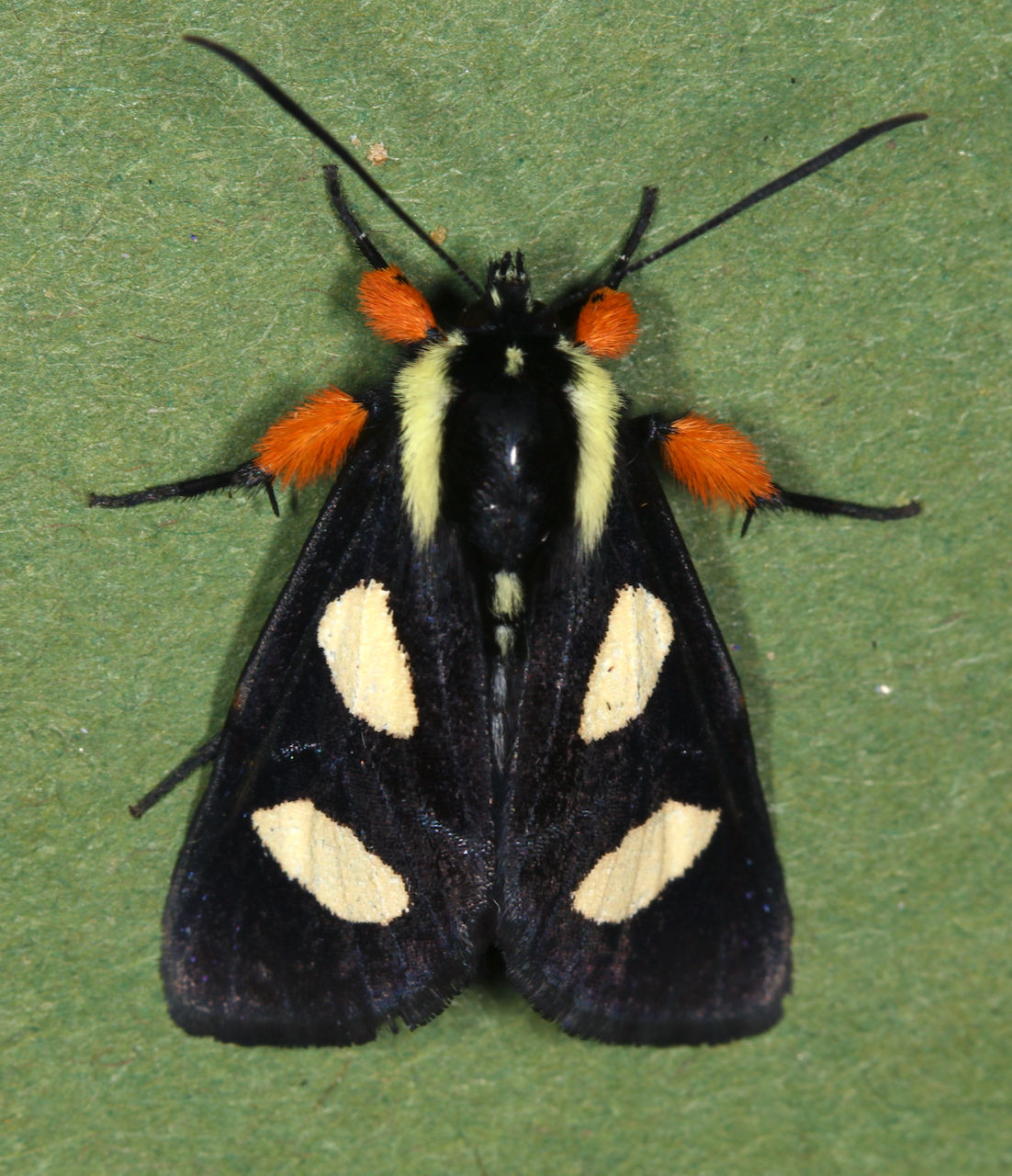
Branching tendrils form opposite the leaves on the vine and strong adhesive pads or disks develop at the tendril tip called holdfasts. Holdfasts will leave a residue when removed from a smooth surface. The vine’s gray-brown bark develops aerial roots when it climbs trees. Virginia creeper vine is even a host plant for the lepidoptera species of moth called the eight spotted forester moth (Alypia langtoni).5

A brown lizard perched on the rough bark of a tree, with green Virginia creeper leaves and a fuzzy aerial root of the vine nearby.

Aerial roots of a Virginia creeper vine on a maple tree. Eastern fence lizard (Sceloporus undulatus) has a similar texture and colored skin of vine stem with camouflaging effect. (Image credit: Wendy Diaz)

Maintaining Virginia Creeper Vine

Virginia creeper is not for everyone due to its rapid growth rate and potential to damage siding and gutters if you forget about it and it finds your house to climb on. Just ask Kit Flynn who does not appreciate this native intruder into her garden because it can grow thirty feet in a year, covers anything and its roots are difficult to pull out.6 But my garden is more on the wild side, and I appreciate its ability to also grow as a ground cover alternative to grass. I do love its brilliant reddish-orange fall color. I have plenty of room in my yard for native vines that like to take over like Virginia creeper after I removed all my invasive species vines of English ivy (Hedera helix), Japanese honeysuckle (Lonicera japonica), periwinkle (Vinca major), and Chinese wisteria (Wisteria sinensis).

Virginia creeper vine with reddish-orange leaves climbing a tree, surrounded by green foliage in a woodland setting.

Crimson red Virginia creeper along my north property boundary in October. (Image credit: Wendy Diaz)

Using Virginia Creeper Vine in the Landscape

I found that as a native plant it can be used as a transitional plant in the landscape or the final say in both my woodland backyard and conventional front yard as I transform our property into a more ecofriendly garden that represents the flora of what used to be here before my subdivision was built. I am trying to make up for some small part of habitat loss and create a yard that is more interesting and engaging with not only beautiful plants but wildlife too.

(Left) In April, woodland garden along north side of house along property boundary after removing Vinca major, planting natives, and encouraging natives like Virginia creeper to grow. (Right) Native plants have filled in the woodland garden by June with the help of Virginia creeper suppressing weeds in leaf litter. (Image credit: Wendy Diaz)


I also leave dead trees and snags in my garden which the vine can climb on. This has a dual purpose of helping to sustain wildlife and covering a decaying tree. There is no need to purchase this native thanks to the birds in the area and it appeared in the woods after I removed the mat of Vinca major.

Close-up of Virginia creeper vine leaves and blue-black berries growing on a tree, with a garden bench in the background.

Virginia creeper vine with blue-black berries covering a snag in September. (Image credit: Wendy Diaz)


I converted about one third of our small front lawn from fescue grass to a patch of about a foot-high Virginia creeper vine by transplanting some rooted vine to the front yard from the north yard, and it took off. Yes, I have to occasionally pull up its young runners it as it creeps into the remaining grass, but at least I have a seasonal green mat with no weeds near the street and along our driveway where it was difficult to maintain a green lawn and a bare spot and where I removed 3 large burning bushes (Euonymus alatus).


It also prevents erosion during high rainfall events as water streams down to this lowest point of our yard. Our HOA has not issued me a letter because it is contained by the grass edge (by me) and the concrete curb. I pull it off the crape myrtle (Lagerstroemia) trunks nearby so it has a more intentional look. My neighbor was alarmed and questioned me (he thought I was cultivating poison ivy) one day when I was pulling some of it up out of my grass patch. I politely explained what it was and how to tell the difference between Virginia creeper and poison ivy. Education is a major part of the process of changing my garden plants, I guess.

(Left to right) Virginia creeper as a ground cover near the street. Close-up of Virginia creeper ground cover. (Image credit: Wendy Diaz)


Virginia creeper ground cover required minimal weeding because its wide large palmate-shaped leaves shaded out weeds for the most part. I did let a few volunteer black-eyed Susan (Rudbeckia spp.) grow in the ground cover patch this year. Even on a smaller scale, the Virginia creeper vine has even found a place to adorn my fairy garden.

A Virginia creeper vine featuring aerial roots and tendrils climbing the trunk of a tree, with a whimsical fairy garden at its base, including miniature houses and colorful decorations.

Virginia creeper vine climbing on base of red maple (Acer rubrum) as a back drop for my fairy garden. Note the young aerial roots and dried tendrils on the vine. (Image credit: Wendy Diaz)


I hope you’ll try Virginia creeper in your garden if you have a suitable place; I know you won’t regret it. After all, if it can grab your attention while driving by a spartan utility pole, it can make anything look good in your yard and at the same time attract some interesting wildlife.

Eye-catching Virginia creeper vine climbing a utility pole in south Durham in early November. Eastern fence lizard climbing on Virginia creeper vine. Closeup of eastern fence lizard sharing the spotlight with Virginia creeper vine leaves later April. (Image credit: Wendy Diaz)


Notes


1– https://extensiongardener.ces.ncsu.edu/gardening-publications-2/extgardener-%20previous-newsletters/extgardener-past-features/extgardener-virginia-creeper-is-in-the-%20ivy-league/
2– https://hort.extension.wisc.edu/articles/virginia-creeper-parthenocissus-quinquefolia/
3 —https://woodyplants.cals.cornell.edu/plant/165
4–https://plants.ces.ncsu.edu/plants/parthenocissus-quinquefolia/
5 —https://www.butterfliesandmoths.org/species/Alypia-octomacula ;
https://auth1.dpr.ncparks.gov/moths/photos_records/2024/06/83462_1718995245_2.jpeg
6– https://www.trianglegardener.com/are-native-plants-better/

Resources and Additional Information

On the blog, more on replacing invasive plants with natives: https://wp.me/p2nIr1-5CJ

On the blog, a better alternative to invasive wisteria: https://wp.me/p2nIr1-2aE

Edited by Melinda Heigel, NC State Extension Master GardenerSM volunteer of Durham County

Article Short Link: https://wp.me/p2nIr1-6Ki

Deer-Resistant Native Gardening

By Lissa Lutz, N.C. State Extension Master GardenerSM volunteer of Durham County

(Image credit: Pixabay/MrsBrown)

Figuring out how to garden when you have deer is already a challenge, so you may be wondering how it can be done using only native plants. But fear not; with a little planning and careful plant selection it can be done. If you are just beginning to transition to native plants, keep in mind that a ratio of 70% native to 30% non-native is an acceptable and reasonable goal.1 While non-native plants are generally unable to host caterpillar species that are a critical food source for baby birds, there are some deer-resistant selections that can provide nectar for pollinators, habitat for animals, and structure and beauty in the garden design.

Plan for Structure in the Garden

When designing a new garden bed, it can be helpful to start with shrubs or small trees, particularly evergreens, that will provide structure or “bones” for the garden.The evergreen native yaupon holly (Ilex vomitoria) can be a solid backdrop to your other native plants.2 It tolerates sun to shade, comes in dwarf forms, and sports bright red berries in fall through winter which provide food for songbirds and small mammals. Sweet pepperbush (Clethra alnifolia), sweetshrub (Calycanthus floridus), and beautyberry (Callicarpa americana) are native shrubs that are not evergreen but can offer structure and texture to the winter design, and attractive foliage, flowers and berries during the other seasons. All three thrive in full sun to part shade. Calycanthus has fragrant spring blooms and Clethra’s late summer white flowers are a magnet for pollinators. Callicarpa sports a multitude of small bright purple berries as a valuable winter food source for birds and mammals.

Native shrubs that can provide structure for a garden include: (1) sweetshrub (Calycanthus floridus); (2) sweet pepperbush (Clethra alnifolia); (3) yaupon holly (Ilex vomitoria); (4) beautyberry (Callicarpa americana). (Image credit: Madeleine Bell CC-BY-SA 2.0); Susan Strine CC BY 2.0; Scott Zona CC BY-NC 2.0 ; Cathy DeWitt CC BY 4.0)

Some non-native options that are both hardy and striking include the evergreen tea olive (Osmanthus fragrans) and false holly (Osmanthus heterophyllus), with ‘Goshiki’ as a choice cultivar. Paperbush (Edgeworthia chrysantha) is not evergreen but has delightful fragrant blooms in the winter and is an underutilized deer resistant shrub with beautiful form with or without its leaves. All three thrive in full sun to part shade. For a lower growing shrub in a sunny garden, consider the evergreen creeping rosemary (Salvia rosmarinus ‘Prostratus’) which will happily cascade over a rock or retaining wall.

If your garden is on the shadier side, try the native evergreen anise tree (Illicium floridanum) or doghobble (Leocothoe fontanesiana). Illicium can grow to 10’ but is easily kept in bounds by pruning. It also comes in numerous cultivars with a variety of flower colors and size ranges including dwarf forms. Leucothoe boasts showy, fragrant white flowers in spring. 

(Left to right) Native plants that will thrive in shady gardens include anise tree (Illicium floridanum) or doghobble (Leocothoe fontanesiana).(Image credit: Cathy DeWitt CC BY-NC-ND 4.0; Suzanne_Cadwell CC BY-NC 2.0)

A non-native choice for the shadier garden might include the Japanese plum-yew (Cephalotaxus harringtonia). ‘Duke Gardens’ is a local cultivar noted for its compact shape.

Fill in the Garden with Perennials

Once you have anchored your garden design with some shrubs or small trees, it’s time to fill in with perennials. Many perennials can also provide structure and texture throughout the winter when you recognize the importance of leaving plants in the fall to provide winter habitat and food for animals. Hollow stems become nesting sites for solitary bees, and dried seed heads provide food for birds.

Choose Keystone Species

Significant deer pressure does narrow the palette but there are still many good plant options. A good place to start is to consider keystone species–plants that support the highest diversity and number of caterpillars. Goldenrods (Solidago spp.) are high on this list. If your garden is small consider some of the more well-mannered species such as sweet goldenrod (Solidago odora), white goldenrod (Solidago bicolor), or slender goldenrod (Solidago erecta). Most goldenrods bloom in the fall but using several different varieties can offer a spectrum of bloom time, shape, and color throughout the fall.3

(Left to right) White goldenrod (Solidago bicolor) and New England aster (Symphyotrichum novae-angliae) are two “keystone” species that should be on your list of the deer-resistant natives. Both offer colorful fall blooms to the landscape. (Image credit: Fritz Flohr Reynolds CC-BY-SA 2.0 ; Drew Avery CC BY 2.0)

Asters are also considered a keystone species. Asters may not be entirely deer resistant, especially under high deer pressure, but they tend to be so vigorous and bloom so late that deer browse is more like an early pruning and they will still often have a fine flower display in the fall. Consider incorporating aromatic aster (Symphyotrichum oblongifolium), New England aster (Symphyotrichum novae-angliae) or blue wood aster (Symphyotrichum cordifolium) to support specialized bees, caterpillars, songbirds and small mammals.

Plant Flowers with a Purpose

Flowers attract pollinators and add beauty. Many deer resistant natives are also great pollinator plants. Any of the mountain mints (Pycnanthemum spp.), will be swarming with hundreds of tiny pollinators throughout their bloom season, along with fragrant minty foliage. Blunt mountain mint (Pycnanthemum muticum) keeps evergreen through the winter, rising to several feet in the summer when it blooms. It can spread but is easy to pull up and share extra plants. Narrowleaf mountain mint (Pycnanthemum tenuifolium), has fine foliage and is more clumping. Hoary mountain mint (Pycnanthemum incanum) has silvery white foliage and fragrant leaves, but also likes to have some space and may be better for larger gardens. The mountain mints will tolerate partial shade.4

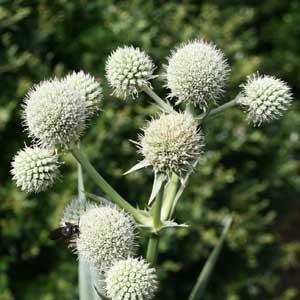
Boneset and thoroughwort (Eupatorium spp.) are underutilized native pollinator plants with excellent deer resistance. They have white flowers in summer and fall that attract bees and butterflies. Common boneset (Eupatorium perfoliatum) likes wet soils and will spread to form colonies. Roundleaf thoroughwort (Eupatorium rotundifolium) can tolerate both wet and dry conditions. Foxglove beardtongue (Penstemon digitalis) has showy white flowers in spring and its evergreen rosettes persist throughout the winter. An interesting and lesser-known plant that also has evergreen foliage in the winter is rattlesnake master (Eryngium yuccifolium), identifiable by its funky white ball-shaped flowers. Anise hyssop (Agastache foeniculum) is another key pollinator plant that has excellent deer resistance due to its licorice scent.

(Left to right) Common boneset (Eupatorium perfoliatum), foxglove beardtongue (Penstemon digitalis), and rattlesnake master (Eryngium yuccifolium) are striking native plants that are deer resistant and attractive to pollinators. (Image credit: Fritz Flohr Reynolds CC BY-ND 4.0; Julie Anne Workman CC BY-SA 3.0; Debbie Roos CC BY 2.0)

The beebalms (Monarda spp) seem to be less reliably deer resistant but are worth trying for their sheer flower power. Spotted beebalm (Monarda punctata) is an unusual species that seems to have somewhat higher deer resistance. It is a less aggressive spreader, and supports moths, butterflies, bees, hummingbirds, and several moth larvae.

(Left to right) Eastern bluestar‘s (Amsonia tabernaemontana) pale blue star-shaped flowers are attractive to beneficial insects but not to deer. These plants also provide fall color, as pictured here with the bright yellow leaves of the Arkansas bluestar (Amsonia hubrichtii). (Image credit: leonora Enking CC-BY-SA 2.0; Jim Robbins CC BY-NC-ND 4.0)

A must-have in the deer resistant native garden are the bluestars (Amsonia spp.). Eastern bluestar (Amsonia tabernaemontana) has delightful blue flowers in the spring and can grow to shrub-like sizes. Similarly Arkansas bluestar (Amsonia hubrichtii) can get quite large with fine textured foliage that turns dazzlingly yellow in the fall. Both species do well in full sun but can tolerate part shade.

Russian sage (Salvia yangii) is not native but attracts bees, butterflies and hummingbirds and sports showy blue flowers spring through fall. It tolerates drought and is highly deer resistant.

Add Native Grasses to Your Landscape

Don’t forget grasses (or ferns and sedges for the shady garden). Native grasses can also be excellent choices if you have full sun and deer. Pink muhly grass (Muhlenbergia capillaris) is a well-known grass with plumes of delicate pink in the fall. Little bluestem (Schizachyrium scoparium), splitbeard bluestem (Andropogon ternarius), and others can lend a prairie-like look in a more natural garden setting. Bottlebrush grass (Elymus hystrix) is a more shade-tolerant grass with a seed head that looks just like a bottle brush. These grass species stay beautiful throughout the winter and support butterfly and moth larvae.

(Left to right) Many grasses are both native and deer resistant. For sunny areas choose muhly grass (Muhlenbergia capillaris) or little bluestem (Schizachyrium scoparium) are good choices. For shady areas consider bottlebrush grass (Elymus hystrix). (Image credit: Jim Robbins CC BY-NC-ND 4.0); Hope Duckworth CC BY 4.0)

Ferns also tend to be deer resistant and are more shade tolerant, with many native and non-native varieties to choose from. Christmas fern (Polystichum acrostichoides) is an evergreen native fern that will slowly spread and naturalize. Southern shield fern (Thelypteris kunthii) is a deciduous native but tolerates a wide variety of conditions and will naturalize to form large colonies. Ostrich fern (Onoclea struthiopteris) has a more formal vase shape and will also spread readily in favorable conditions. The evergreen native Cherokee sedge (Carex cherokeensis) tolerates wet soils, shade, and deer.

The North Carolina Extension Gardener Plant Toolbox provides full descriptions and excellent pictures for all of these plants and many more. Use the information in the Toolbox to select plants that match your site conditions – sun, part sun, shade, wet, dry, etc. Knowing size, bloom time and other attributes of each plant will help you to design your own native garden that will grow and prosper even in the presence of hungry deer.

Design Diagrams for Deer-resistant Gardens

Some simple garden designs that you can start with are shown below. When you have created your plant list, start your shopping at the Friends of Durham County Master Gardener Plant Sale on Saturday, April 5, 2025, from 10am until sold out, at 721 Foster Street in Durham.

Sun-Loving Garden Design

Garden design by Deborah Pilkington. (Left to right) (1) Amsonia hubrichtii (Cathy Dewitt CC BY 4.0); (2) Agastache foeniculum (Magnus Manske CC BY-SA3.0); (3) Eryngium yuccifolium (Joshua Mayer CC BY-SA 4.0); (4) Allium cernuum (Judy Gallagher CC BY 2.0).

Shade-Tolerant Garden Design

Garden design by Deborah Pilkington. (Left to right) (1) Illicium parviflorum ‘Florida Sunshine’ (Tony Avent of Plant Delights Nursery); (2) Solidago odora (CC0); (3) Symphyotrichum cordifolium (Dan Mullen CC BY-NC-ND 2.0); (4) Cherokee sedge Carex cherokeensis (K. AndreCC BY 2.0).

Agastache foeniculum

Amsonia spp.

Callicarpa americana

Carex cherokeensis

Edgeworthia chrysantha

Elymus hystrix

Eryngium yuccifolium

Eupatorium spp.

Ferns, native and non-native

Grasses, native

Illicium floridanum

Monarda spp.

Osmanthus spp.

Penstemon digitalis

Pycnanthemum spp.

Salvia yangii

Solidago spp.

Symphyotrichum spp.

Notes

1–Nonnative plants reduce population growth of an insectivorous bird.

2–Take a deeper dive on the native shrub the yaupon holly.

3–A previous blog post gives an excellent review on the care and planting of different varieties of goldenrod.

4–Read more about mountain mint on our blog.

Resources and Additional Information

Residential yard management and landscape cover affect urban bird community diversity across the continental USA https://esajournals.onlinelibrary.wiley.com/doi/10.1002/eap.2455

Article Short Link: https://wp.me/p2nIr1-5HN