Pure Sunshine in the Dark Winter Days  

By Stacy Edwards, NC State Extension Master GardenerSM volunteer intern of Durham County

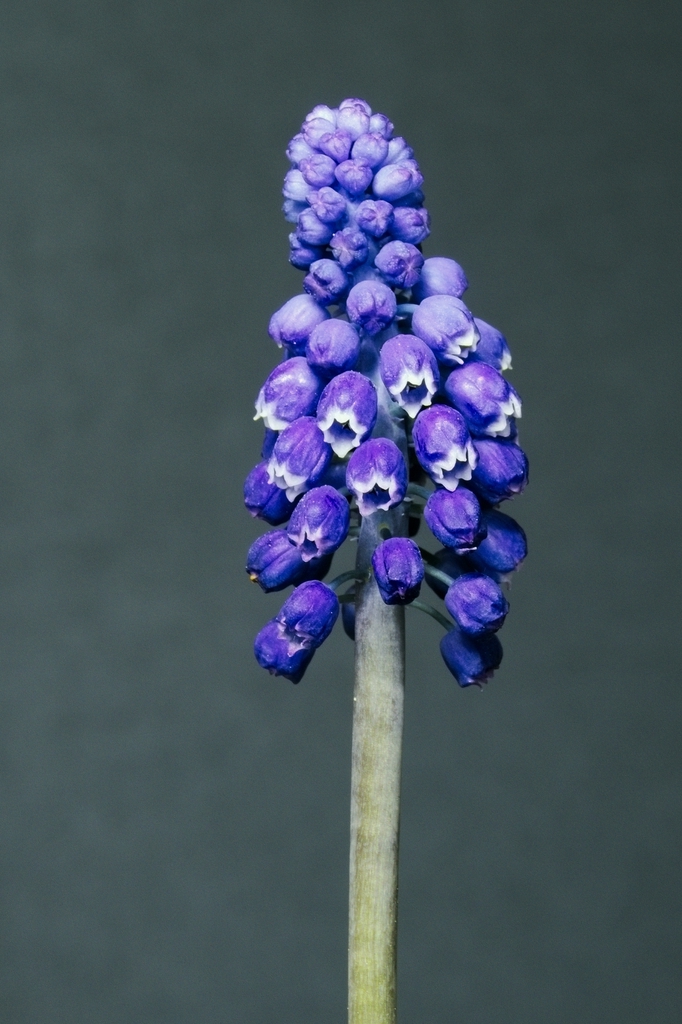
(Image credit: Melinda Heigel; Bff CC BY-SA 4.0)

If you need a little encouragement in the dark days of January and February, consider planting spring-flowering bulbs now!  From the purple, grape-like clusters and green spikes of muscari, to the sunny blossoms of daffodils and brilliant colors of tulips, there is a bulb for everyone and every landscape…and even the indoors.   

Soil and Bulbs

Bulbs like well-drained soil and a pH of 6-7.   Heavy clay in our soils in the Piedmont region of Zone 8 are a blessing and a curse.  On the plus side, it’s nutrient rich and provides stable footing for roots. But clay holds water and can cause bulbs to rot.  Drainage is greatly improved by adding compost, soil conditioner, or pine bark mulch into the soil as bulbs are planted.  And speaking of soil, now is a great time to have your soil tested to see if there are any nutrients lacking or other needs.  In the absence of a soil test, consider applying a slow-release complete fertilizer into the soil at the time of planting by following the instructions on the label.1   

Sun Requirements and Bulbs

Most bulbs like at least 6 hours of sun.  But even the shadiest gardens can be great sites for bulbs in the winter as the deciduous trees lose their leaves and allow the sun to get in.  Consider the path of the sun as you pick your spot.  Some areas that would normally receive full sun in the summer may receive less sun in the winter.  Again, drainage and consideration of planting location will help bloom production. 

Tips for Planting Bulbs

Generally, bulbs should be planted 3-4 times as deep as their width but follow directions on the package.  For large bulbs, like the giant alliums, allow 3-6″ between bulbs.  Smaller bulbs can be closer together – 1-2.”  A Hori-Hori knife can be very useful, and many knives have rulers embedded on the blade for measuring planting depth.  Of course, a small trowel or shovel can be used too.  A good layer of 2-3″ of mulch on top of the soil after planting will protect the bulb from severe weather and helps lock moisture in the soil. Planting bulbs in mass clusters makes for a better, more dramatic show.   

Spring-flowering bulbs make excellent long-lasting cut flowers. While it’s common to force bulbs like paperwhites and amaryllis during the holiday season, other bulbs like tulips, though more tricky since pre-chilling is required, are also suitable candidates. (Image credit: Stacy Edwards; Melinda Heigel)

Enjoying Bulbs Indoors and Outdoors

Consider starting indoors right now by forcing bulbs to bloom, which is the process of expediting the plant’s normal bloom cycle.  All bulbs can be forced into blooming.  The spring varieties, such as crocus, snowdrops, daffodils, and hyacinths, require a chilling period of 12-18 weeks whereas amaryllis and paperwhites do not.  This article contains more information on forcing bulbs.   

Extend the spring season by keeping the bloom times of each type of bulb in mind when making selections. You can often find information on flowering times right on bulb packaging. (Image credit: Stacy Edwards; Melinda Heigel)

There is a wide selection of bulbs that grow well in central NC.  The North Carolina State University Plant Toolbox has a list of tulip bulbs that consistently do well as well as more details. Consider planting a variety of bulbs so that blooming extends over a few months.  In early spring muscari, crocus, hyacinths and anemone begin to pop up out of the ground, showing promise that spring is on its way.

Daffodils follow with tulips and lilies shortly thereafter.  Allium giganteum is a personal favorite with clusters of tiny flowers in the shape of a giant lollipop.  Bulbs can be sourced online or at your local garden center and even the big box stores.  Look for bulbs that are large and firm, are free of blemishes, and have not begun to sprout. 

A Little Houskeeping on Growing Bulbs

In our Zone 8 area, many bulbs are considered perennials and come back year after year, requiring very little maintenance. After you’ve enjoyed the brilliant display of flowers, cut the spent blossoms and leave the stems and leaves to fade on their own.  The natural deterioration of the leaves allows the bulb to store energy for next year’s bloom.  Some gardeners fold over the leaves or tie them in a knot close to the soil level to obscure the unattractive browning of the stems, but many plant experts caution against this. This practice can reduce the leaf area exposed to sunlight and the amount of energy (food) the plant can store. And some gardeners just keep adding more plants to distract the view.   

Bulb planting is an easy process, and the small amount of work is rewarded by a brilliant and encouraging display of flowers in the early spring when it seems as though the gray days are never ending.  Happy planting!  

Notes

1–A complete fertilizer is one that contains all three of the primary plant nutrients: nitrogen, phosphorus, and potassium, in that order. You will see that listed as three numbers separated by hyphens. An example of a complete fertilizer profile you would find on a bag of fertilizer is 10 – 10 – 10.

Resources and Additional Information

More on spring-flowering bulbs, including additional selection recommendations and care instructions: https://hgic.clemson.edu/factsheet/spring-flowering-bulbs/

More on the blog about amaryllis bulbs, often forced indoors during the holidays:https://wp.me/p2nIr1-30g

Edited by Melinda Heigel, NC State Extension Master Gardener volunteer of Durham County

Article Short Link: https://wp.me/p2nIr1-6F4

To Do in the Garden: March 2025

By Gary Crispell, NC State Extension Master GardenerSM volunteer of Durham County

BOLO (be on the lookout) for early spring bloomers including star magnolia (Magnolia stellata), daffodils (Narsisus spp.) perhaps covered in late snow or bathed in warm sunshine, and the Eastern redbud (Cercis canadensis). (Image credit: Melinda Heigel)

March: noun, the third month of the Julian calendar, verb from middle French meaning to trample. It appears that boots (not jack) might be in order.

By the time Y’all read this winter may be gone—or not.  The weather pattern may have changed to a drier more user-friendly one—or not.  We might be able to get out and work in our gardens—or not.  It might snow another 3 or 6″ to complement the already prodigious amount we’ve received.  Welcome to piedmont North Carolina in the spring where we beg for more/less rain, sunshine, wind, whatever we don’t currently have and decry perceived excesses of anything.  Gardeners can be a needy lot, but there is always hope.  We are nothing if not hopeful and optimistic.  We KNOW it (whatever “it” is) will get better and things will be just fine.

So, here are the things that can/should be done in the garden in March depending on all the things in the earlier paragraph.  Happy gardening!

Lawn Care

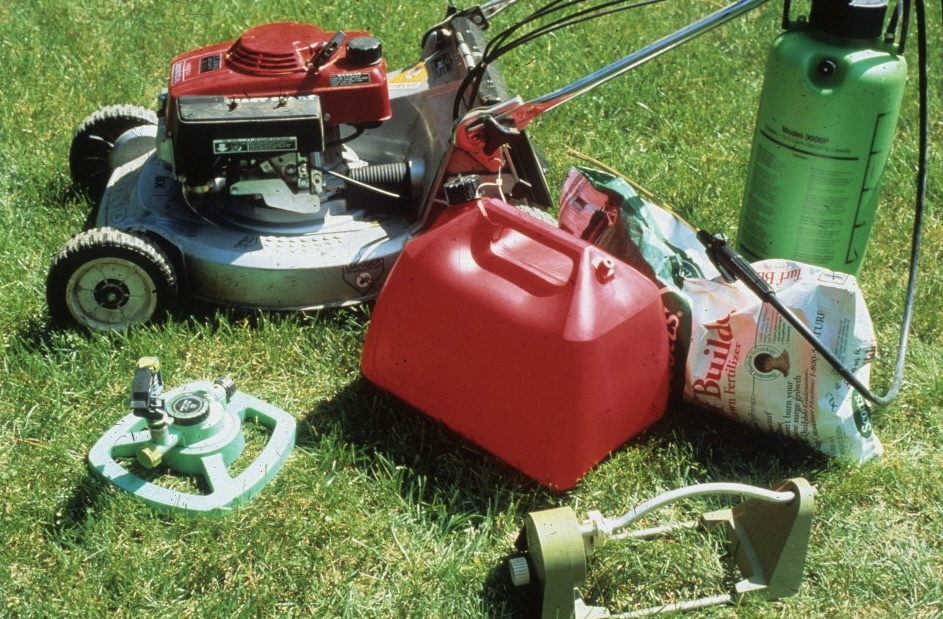
(Image credit: NC State Extension)

Cool season grasses (tall fescue, bluegrass, perennial rye) can be fertilized with a slow release high nitrogen (the first number) fertilizer.

Apply preemergent weed control after the forsythia (Forsythia intermedia) blooms and before the native dogwoods (Cornus florida) bloom.  (That there is real science.)

Commence mowing activities when needed (or when the mower no longer mires in the mud).  Cool season grasses should be kept mown at 3” to 4.” Warm season grasses (zoysia, Bermuda, centipede) are still dormant.  You get to play with them next month.

Remember, grass clippings should either be left on the lawn, composted, or used for mulch.  They don’t belong in the landfill.

Fertilizing

Feed your shrubbery this month.  Established plants do not need heavy fertilizing.  Let “moderation in all things” be your mantra. Shade trees can be fertilized now, but only if your SOIL TEST (free again beginning April 1 through November) indicates a need.

Emerging bulbs can be fertilized this month. Fertilize asparagus beds early in March, before the new spears emerge.

Planting

As usual, everything in this section is dependent upon soil conditions.

Trees and shrubs may be planted now as well as fruit trees and grape vines up to bud break.  Plants planted now will require more intentional water management through our oft droughty summer.

March is a good time to plant perennials.

Start annuals and warm season vegetables inside now if you haven’t already done so.  These can be transplanted outside after the threat of frost has gone.  (No bets on that date anymore.)

Rose bushes can be planted now.

The same veggies that can be planted in the fall can also be planted now (unless, of course, you are sick to death of broccoli and beets).  These include the aforementioned broccoli, beets, carrots, cabbages, cauliflower, potatoes and turnips.  Then there are the salad greens, lettuces, spinach, chard, etc.  So, in May it’ll be salad and roasted root vegetables for supper?

Pruning

Prune any fruit trees that didn’t get done in February.

Deadhead any early spring annuals such as pansies (Viola x hybrids) as the blooms fade in order to prolong bloom time.

Roses can be pruned in the latter half of the month.

Overgrown broadleaf shrubs can still be severely whacked.  (No, it won’t kill them, and they be much more manageable—for a while.)1

Spraying

The following miscreant pests will be out and about this time of the year:  euonymus scale, spider mites on evergreens, hybrid rhododendron borers, and lace bugs on azaleas.  Spray only as necessary with an appropriate product and always read and follow label directions.

Apply a dormant oil to fruit trees to control several insects.  This is especially important if you have just pruned the trees.

When in bloom, spray apple and pear trees with streptomycin to prevent fire blight.

Other Swell Stuff You Can Do in March

Get ready for prime time.  Check all your gardening equipment and make sure it will be ready to go when you need it.  Nothing is more frustrating than being all psyched up to mow the grass (I have heard there really are people for whom this is a reality) only to discover that the starter battery is dead, the blades need to be sharpened, all the tires are flat, the belt that broke last fall didn’t fix itself over the winter, all the things.  Check all the garden gizmos now and prevent a possible psychotic break later.

Try experimenting with a new annual, perennial or veggie this season.  Experimenting can be fun, and you might just discover a new BFF plant.  Also, experimenting has been shown to have very few side effects.

North Carolina Arbor Day (not to be confused with National Arbor Day) is this month.  It is always the first Friday after the 15th, ergo on the 21st this year.  Plant a tree or seven.

Get a few of your summer clothes out of the attic but keep your heavy winter jacket close by.  You could need both in the same day.

Mellow March, Y’all.

Notes

1–Keep in mind, many woody ornamentals are pruned according to their flowering date. Spring bloomers like dogwood or forsythia are usually pruned after they bloom. Summer-flowering plants are generally best pruned when dormant before new growth begins in the spring.

Resources and Additional Information

Learn more about organic lawn care: https://content.ces.ncsu.edu/organic-lawn-care-a-guide-to-organic-lawn-maintenance-and-pest-management

How to read a fertilizing label like a pro: https://hgic.clemson.edu/factsheet/reading-a-fertilizer-label

Spring vegetable gardening: https://content.ces.ncsu.edu/home-vegetable-gardening-a-quick-reference-guide

Read our blog article on year round vegetable gardening for early springtime tips: https://wp.me/p2nIr1-2F1

Pruning techniques for trees and shrubs: https://content.ces.ncsu.edu/general-pruning-techniques

Guide to cleaning and sharpening garden tools: https://bookstore.ksre.ksu.edu/download/how-to-clean-and-sharpen-garden-tools_MF3288

Article Short Link: https://wp.me/p2nIr1-5Eg