To Do in The Garden: May 2026

By Gary Crispell, NC State Extension Master Gardener SM volunteer of Durham County

Ahh, May.  The lovely month.  The month for mothers, proms, college graduations, and the first great beach weekend—Memorial Day. It is generally not too hot and rarely too cool. The month of balmy days that lead to enchanting evenings on the veranda (deck, patio, veranda—whatever).  Enjoy the evening. There’s gardening to be done on the morrow.

Despite the drought, the ACG springs to life. The purple of the iris (Iris germanica) shines against a bright blue sky. (Image credit: Gary Crispell)

Speaking of the morrow, there’s sooo much to be done in the Accidental Cottage Garden (ACG).  Being essentially out of commission for six months puts one rather much behind gardening wise.  Nature continues on no matter what your condition.  We were most fortunate to have 7 generous and caring Extension Master GardenerSM volunteers descend upon the ACG and clean it up in preparation for spring.  Never were friends more welcome.  The reward for their efforts is a plethora of blooming plants.  There are flax (Linum vesitatissimum), dianthus (Dianthus deltoides), rocket larkspur (Delphinium ajacis), English daisy (Bella perennis), and false vervain (Verbena canadensis) which will be around all summer.  The iris (Iris germanica) were amazing.  Some of them had been in 3 gallon nursery pots since we moved eight years ago.  I think they were overjoyed to get their roots into something other than C-horizon subsoil.

(Left to right) Cottage garden staples, multicolored sweet Williams are popping, and the always drought resistant, tried-and true-gallardia has returned. (Image credit: Gary Crispell; Melinda Heigel)

The gallardia (Gallardia pulcherella) has also begun its summer-long show, while the peonies (Paeonia suffruticossa x hybrid) came and went in less than a week—too hot and dry, I reckon.  What we really enjoy right now are the many-hued sweet Williams (Dianthus barbadus).  They just cover the white/pink/red/violet spectrum.

This year’s experiment (There’s always one.) will be with a lot of zinnia (Zinnia elegans) seeds and not quite as many cosmos (C. bipinnatus & C. sulphureus).  Going for the cut flower thing.  I wanted to sow them a month ago, but I have (like everyone else) been waiting for rain.  Now that we’ve had some, let’s go play in the garden!  

Lawn Care

Warm season grass people, it is your turn.  If you didn’t fertilize the lawn in April, get to it.  A good slow-release fertilizer that meets the requirements notated in your SOIL TEST results is in order.  Also, sharpen those mower blades.

Cool season grass folks, just mow it, but not less than 3”.  Do not, he repeated, fertilize cool season grasses until fall.

Fertilizing

Speaking of fertilizing; long-season vegetable crops like tomatoes, beans, and squash (among others) will benefit from a side dressing1 6-8 weeks after germination.  (What?!  You didn’t start your own from seed?  You bought plants at a Big Box?  Give them a week or two in the ground and then side dress.)

While you have the bag open throw some fert at your summer annuals and perennials, too.

Azaleas and rhododendrons and camellias and other ericaceous (acid loving) plants will benefit from a shot of acid fertilizer about now.

Planting

May is the second best time in the veggie garden.  (Everybody knows harvest is the best time.)  It is time to plant beans (snap, pole, bush limas, etc.), cantaloupe, cucumbers, eggplant, okra, southern peas, peppers sweet and hot, pumpkins, squash, watermelon and, for you non-competitive types, tomatoes.

Gladioli bulbs may be planted now as may begonias, geraniums and other annuals that you didn’t plant in late April.

Pruning

May is a good time for pruning late-winter and spring-blooming woody plants like camellias and camellias–once the bloom show has ceased.(Image credit:Jim Robbins CC BY-NC-ND 4.0; Cathy DeWitt CC BY 4.0)

Spring-flowering shrubs (e.g. azaleas, camellias, etc.) may be pruned as soon as the blooms fade.  Azaleas may be pruned until the 4th of July without cutting off next year’s buds.

Overgrown hedges can still be pruned.

Keep pinching back garden mums until mid-July.

Hand prune azalea and camellia leaf galls.  They are generally not harmful to the plant but are most unattractive.

I realize your grandmother always cut back the daffodils and iris and other spring bulbs as soon as the flowers faded.  I urge you to resist the temptation to carry on that tradition.  The bulbs need that foliage to make the sugars that will provide the energy to bloom again next year.  Wait until the foliage itself yellows before whacking it off and relegating it to the compost heap.  The bulbs thank you.

Spraying

Monitor rhododendron species including azaleas for borers.  Spray if necessary.

Spray iris beds for iris borers which you probably will not see.

Scout for and spray as necessary for bag worms.  They are on the move this month.

May is a good time to begin to try to eliminate poison ivy/oak (Rhus radicans) and Japanese honeysuckle (Lonicera japonica).  Best wishes.

Begin spraying squash vines for borers.

Monitor the blueberry plants for borers.  Spray as necessary.

Continue the never-ending spray programs for roses, fruit trees and bunch grapes.

Other insect pests active now include azalea lace bugs, boxwood leaf miners, euonymus and tea scales, spider mites (especially on coniferous evergreens), the ubiquitous aphids, and the bane of my gardening existence–white flies.

If (or more likely when) your tomatoes show signs of blight begin a fungicide regimen.

Always, always only spray when necessary and READ & FOLLOW label directions.

OTHER THINGS TO DO IN MAY THAT COULD QUITE POSSIBLY INCLUDE THE GARDEN

Celebrate Cinco de Mayo with mariachis and an appropriate libation (and friends, of course).

Mulch stuff.  You and the plants will be much happier through the summer (of drought and water restrictions?).

Perhaps Sunday afternoon tea on the veranda (or wine and cheese–nobody’s judging.)

Put out a flag on Memorial Day and thank a veteran.

A most merry May, Y’all.

Notes

1–Side dressing refers to the placement of fertilizer alongside plant rows or plants. This is typically done once plants have started to grow.

Resources and Additional Information

Caring for spring bulbs after flowering

Tips on pruning camellias

Fundamentals of fertilizing

How to direct sew flower seed in spring

Edited by Melinda Heigel, NC State Extension Master Gardener SM volunteer of Durham County

Article Short Link: https://wp.me/p2nIr1-7rV
To Do in the Garden: March 2026

By Gary Crispell, NC State Extension Master GardenerSM volunteer of Durham County

Aka: GARY’S GARULOUS GARDENING GUIDE

OMG! Was February wild or what? It was consistent in its inconsistency and that’s about all there is to that. Don’t look now, but it is March. Not the parade kind of march with bands and floats and stuff. March as in “Look at all the green things coming up in the garden!” That March. The garden wakes up in March and stretches like a dog after a nap.

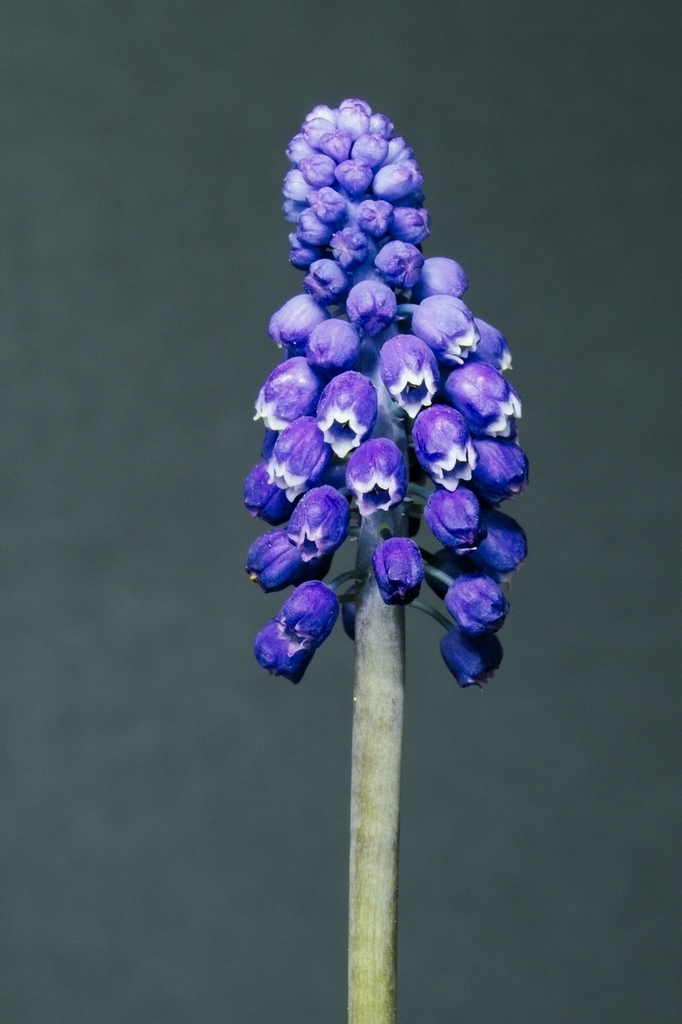
The Accidental Cottage Garden (ACG) is still hibernating for the most part. There are some grape hyacinths (Muscari armeniacum) in bloom, and the saucer magnolia (M. soulangeana) is opening just in time to get frosted. We’ve been here eight years now and we got to enjoy that tree in full flower twice. It would really prefer to be in Wilmington, but the bus ticket is too expensive. Even the pansies (Viola x hybrid) on the deck succumbed to the cold this year. The pots froze solid and killed the roots. I think there are plenty of perennial rosettes out there, but literally not having a leg to stand on has made it difficult to negotiate the yard. It will be a grand adventure seeing who has returned and who was just resting preparing to show off. We have attained meteorological spring, so get out those garden gloves and hats. Locate the sunscreen just in case, and don’t forget the liniment and heating pad and ice packs. Just being real here. Let’s go work in the garden before the insects wake up.

Lawn Care

It is time to fertilize cool season grasses (tall fescue, bluegrass, perennial rye). A slow release, high nitrogen (the “N” /first number on the bag) fertilizer will give you the greenest lawn into the summer. These grasses typically want to go dormant in the heat of summer (July & August), so unless you want to water them a lot during that time, this will be the last time to fertilize them until late August/early September. Preemergent crabgrass control should be applied between the time the forsythia (Forsythia intermedia) bloom and the time the native dogwoods (Cornus florida) bloom. Later than that and the soil temperature will be warm enough that the crabgrass will have already germinated. Mowing can commence whenever it seems appropriate. You know, like when the lawn looks raggedy and the soil is dry enough that the mower won’t leave ruts. Mow to a height of 3” to 4”. That height allows the grass blades to shade the soil (read root zone) and protect it from the heat of summer. It also helps weed control by preventing enough sunlight for weed germination and growth. win, win.

Let the clippings return to the ground unless they are too long (Waited a bit too long between mowings, did we?) or wet and clumping (and if we are mowing the grass when it’s wet, why?). Clippings do not belong in the landfill. If leaving them on the ground isn’t an option use them in the compost pile or as mulch.

(Image credit: Gman Viz/CC BY-NC-SA 2.0)

Fertilization (other than the lawn)

Green things that can be fertilized this month include shade trees, shrubs, and spring-flowering bulbs. Green things that should not be fertilized this month include St. Patrick’s Day revelers and leprechauns. Moderation is the key. (Take note revelers.) Asparagus beds should be fertilized early in March before the new spears appear. Work some fertilizer into the veggie garden bed(s). Lime may also be worked in now if your SOIL TEST so indicates. It will take 3 to 6 months for the calcium to become available to the plants, but that should be just in time for the June tomatoes and great timing for the Fall garden. Besides, if you don’t do it now, when will you?

Planting

All the things you didn’t get around to planting in the Fall (life got in the way, right?) can be planted now, and sooner rather than later. Just be cognizant of the fact that they will probably have greater water needs through the summer than anything planted in the Fall. Fall planted material had all winter to establish a root system strong enough to carry it through less than severe drought. There are exceptions, but there are always exceptions. (Take the aforementioned revelers and leprechauns for example.) Other things to be planted this month include perennials, for example coreopsis (C. bipinnata, C. lanceolata), foxglove (Digitalis purpurea), purple cone flower (Echinacea purpurea), balloon flower (Platycodon grandiflorus) and roses (Rosa sps.) While you have the trowel in hand might as well hit the vegetable garden. The same things that could be planted in late February can still be planted now. We’re talking root veggies (beets, carrots, potatoes, turnips, etc.) and salad greens (leaf lettuces, cabbages, kale, etc.). There is still time to start annuals and warm season vegetables inside for transplanting in April or May.

Pruning

Be advised, finish any fruit tree pruning ASAP. Prune roses mid to late March. (As an aside, now that we have been bumped up a USDA zone to 8, that timeline may need revising to an earlier date. I’ll research that for next year. Stay tuned.) Prune to a 5 leaflet leaf if those are visible. Otherwise prune the cane to an outward facing bud. Prune spring-flowering shrubs soon after the blooms fade. Dead head (pick off spent blossoms) pansies (Viola x hybrid) to prolong bloom time.

Spraying

Break out the sprayers! However, before using said sprayers check the plants for pests. With few exceptions (There they are again and we’ll get to them yet again in a minute.) prophylactic pesticide application is unwarranted. Always know what it is you are trying to control so that you can use the appropriate product. ALWAYS read the label and ALWAYS follow the instructions thereon. Applying a horticultural dormant oil to fruit trees, (prophylactically) particularly those that have recently been pruned, will help control several insect problems. (I told you we’d see exceptions again.)

MORE THINGS TO DO WHEN THE WEATHR IS HIGHLY UNPREDICTABLE

Get all the soon-to-be-needed gardening equipment ready for use. If it is supposed to be sharp, sharpen it. If it needs calibrating (sprayers and spreaders), calibrate it. If it has moving parts, lubricate them. If it has a four stroke motor, change the oil and filter. Plant a tree for Arbor Day. Here in North Carolina that is March 20th this year. It is always the first Friday after the 15 th . There will be several city, county, state sponsored events that will be posted on the various websites after March 1. In all things gardening, have fun. If it isn’t fun, hire it out or plant something that doesn’t require the burdensome task you deplore. Gardening should be fun, relaxing,
therapeutic even. It is March. Let the fun begin!

Logo for North Carolina Arbor Day featuring the text 'NC' in dark blue and 'Arbor Day' in green, with a green tree graphic.

NC Arbor Day will be held March 20, 2026 with many events throughout the state. To learn more go to: https://www.arborday.org/celebrate/history

Additional Reading and Resources

NC State Extension. Central North Carolina Planting Calendar for Annual Vegetables, Fruits, and Herbs

NC State Extension. Pruning Calendar

Edited by Martha Keehner Engelke NC State Extension Master GardenerSM volunteer of Durham County

Shortlink: https://wp.me/p2nIr1-7aD