
By Marcia Kirinus, NC State Extension Master GardenerSM volunteer of Durham County

Did you know that the National Wildlife Federation has designated October as Leave the Leaves Month? This initiative encourages people to rethink traditional fall yard clean-up by leaving fallen leaves in place—or at least on your property—instead of bagging them up and sending them to the landfill
Traditional fall clean-up often involves raking or blowing leaves, bagging them, and setting them out on the curb. Then we head over to the big box store to buy mulch and fertilizer to replace what nature is already providing. This process is time consuming, resource draining, and unnecessary. Leaves are not trash. We are missing an opportunity.
Instead, let nature do the hard work — your garden will thank you. The thing that is most natural to do — the thing that happens in nature — is to let your leaves lie where they fall. If you have extra leaves, bag them and offer them to neighbors or local gardeners who can make good use of them.
Beyond convenience, there are significant benefits to leaving the leaves. First and foremost, they nourish the soil. As leaves decompose, they enrich the soil with nutrients, promoting healthier, richer soils. Consider them free mulch and fertilizer. Second, leaves insulate the soil, protecting it from temperature fluctuations. They also help retain moisture. Finally, leaves make incredibly important habitats for wildlife. Have you noticed a decline in lightning bugs? Most of their life cycle is spent under leaf debris. By keeping your leaves in place you can boost wildlife habitats, enrich your soil, and even help with global environmental challenges.
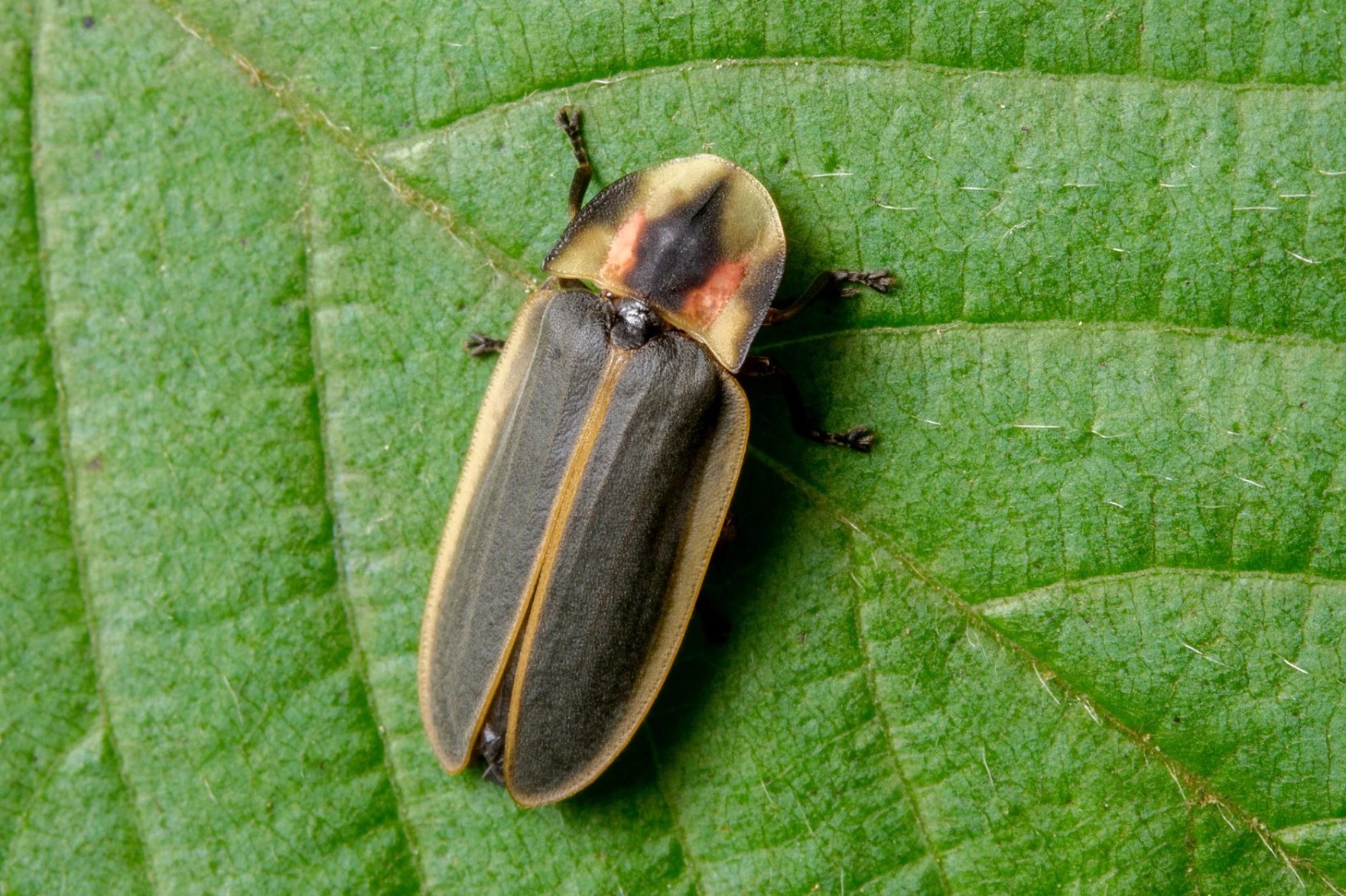

Left: Adult Firefly. Right: Larvae of Firefly . Most fireflies are habitat specialists. They rely on undisturbed leaf litter for one year or more to complete their lifecycles. These insects spend most of their lives as larvae preying on earthworms and other animals in the soil or leaf litter. If that habitat is disrupted during their youth, populations can be extinguished. (Image credit M. Bertone, NCSU Entomology.)

Last year’s oak leaves slowly decomposing with the help of small pinwheel mushrooms (Marasmius rotula). Image credit: Jean Epiphan
Soil Enrichment: The Cornerstone of Healthy Gardens
Soils rich in organic matter absorb and retain water better, turning a soggy lawn into a sponge-like garden bed. In as little as two years, you can turn those wet areas into walkable spaces. It’s not a miracle as building soils naturally is a slow process, but it’s a start and it’s free.
Healthy soil, enriched by decomposed leaves, supports deep-rooted plants, reduces watering needs, and improves plant resilience.
Wildlife Benefits: From Moths to Bumblebees
Leaves provide shelter for many species, including fireflies, butterflies, Moths and endangered bumblebees. Caterpillars overwinter in leaf litter, which also sustains backyard birds in spring. By leaving leaves on the ground, you’re creating essential habitats for these creatures, helping maintain biodiversity and supporting the larger food chain, from insects to birds. Caterpillars, which overwinter in the leaf litter, are a primary food source for 96% of backyard birds during the spring.


From Left to Right: Luna moth pupae, ( Actias luna ), are often difficult to see as they are a chestnut brown and overwinter in leaf litter. In the spring it will emerge as a soft green, 3 to 4.5 inch moth. All life stages provide food for predators. (Image credit: Donald W. Hall, UF) Leaf litter is the ideal Earthworm habitat. Earthworms provide beneficial castings which are building blocks to healthy soil. (Image credit: M. Bertone, NCSU) Woolly bear (Pyrrharctia isabella) construct shelters like this one made from pine needles to protect themselves from the winter elements. They also commonly use leaf litter and other yard debris. (Image credit: batwrangler, flickr. with permission)
Small Acts, Big Impact: Helping with Global Change
By making small changes in how we manage our yards, we can create big environmental benefits—both locally and globally. Leaving the leaves isn’t just about benefiting your yard—it’s about making a difference on a global scale. Encouraging wildlife and helping to maintain a balance in the food chain is one way you are helping. By skipping the blower and rake, you also reduce fossil fuel consumption, lowering your carbon footprint. Additionally, leaves that are sent to landfills contribute to methane emissions as they decompose without oxygen. Composting them in your yard helps reduce these emissions.
If you still want to move your leaves around the yard, consider using a rake instead of a blower. Rakes are quieter, healthier for you, and don’t rely on fossil fuels. They also give you more control, allowing you to gently move the leaves without disturbing the soil or nearby wildlife. My neighbor for 17 years told me that he can rake faster than he can blow his leaves. I was dubious. At the time, my clean-up tool was a blower. However, I hated the noise and smell so I took his words as a challenge. I pulled out the rake and never looked back. I can rake faster, and with a lighter touch. I can listen to the birds and I feel stronger, fitter for doing so.
I also reduced my turfgrass lawn significantly so I can leave the leaves in place. I converted it into valuable wildlife habitat by planting native ferns and flowers. Lawns require water, fertilizer, and herbicides, not to mention mowing, which creates noise and uses fossil fuels. And lawns are wildlife dead zones. However, I still need a place to play fetch with Moira, so a small patch of “meadow” remains. I say meadow because it is green – mostly clover.
Making the most of your leaves
Here are a few simple strategies to keep them working for you. You don’t have to leave all the leaves exactly where they fall.
- On Lawns: A thick layer of leaves can suffocate your lawn. Instead, run a mower over the leaves to chop them into smaller pieces. A thin layer (1–2 inches) of shredded leaves can actually nourish the grass over the winter, breaking down over time to feed the soil.
- Flower or Vegetable Beds: Spread whole leaves in flower beds or vegetable gardens. They act as mulch, suppressing weeds and adding organic matter as they decompose, improving soil structure and fertility. For most garden beds, a leaf layer of 3–5 inches deep is ideal. Avoid piling leaves directly on top of plants; instead, place them around the plants, covering any exposed soil. This will suppress weeds, preserve soil moisture, and return nutrients to the roots as the leaves decompose.
- Composting: Leaves are perfect for composting—rich in carbon and ideal for building fertile soil. Consider adding them to your compost pile or creating a leaf mold. If the wind blows leaves into unwanted areas, let nature guide them into natural piles, and then redistribute the leaves to your garden beds or around trees.


From left to right: Mower cutting leaves into small pieces instead of removing them (Image credit: Pixaby);. Moving whole leaves to help create paths by suppressing weeds (Image credit: Justin Butts). Composting excessive leaves (Image credit: Christy Bredenkamp, NC Extension Director, Moore County).
Conclusion: A Small Change with a Big Impact
With just a few thoughtful changes, as gardeners and homeowners, we have the power to make a positive impact on the environment by simply rethinking how we take care of our little piece of earth outside of our back door. This October, join the movement and Leave the Leaves—because every leaf left behind makes a difference.
Resources and Additional Information
- Nesting and Overwintering Habitats for Pollinators and Other Beneficial Insects: https://xerces.org/sites/default/files/publications/18-014.pdf
- Richmond, Virginia Cooperative Extension article on benefits of leaving leaves. https://richmond.ces.ncsu.edu/2016/10/leave-the-leaves/
- Clemson Cooperative Extension: https://blogs.clemson.edu/extension/leave-the-leaves/
- Rutger’s Cooperative Extention: Don’t Blow Life Away: Leave the Leaves: https://salem.njaes.rutgers.edu/2024/10/17/dont-blow-life-away-leave-the-leaves/
- NCSU Habitat Principles: https://entomology.ces.ncsu.edu/biological-control-information-center/habitat-for-beneficials-principles/
- National Wildlife Federation: https://www.nwf.org/Leavetheleaves
- Discovering the Secret Science of Fire Flies: https://homegrown.extension.ncsu.edu/2021/06/17/discover-the-secret-science-of-fireflies/
- How Can you Make your Yard More Friendly to FireFlies: NC State Experts Explain: https://www.wunc.org/environment/2024-07-11/attract-fireflies-north-carolina-light-pollution
- Hidden in the Leaf Pile: Luna moths, woolly bears, and swallowtails all need a safe place to “hibernate”: //www.purduelandscapereport.org/article/hidden-in-the-leaf-pile-luna-moths-woolly-bears-and-swallowtails-all-need-a-safe-place-to-hibernate/
Article Short Link: https://wp.me/p2nIr1-5bS


