To Do in the Garden: March 2025

By Gary Crispell, NC State Extension Master GardenerSM volunteer of Durham County

BOLO (be on the lookout) for early spring bloomers including star magnolia (Magnolia stellata), daffodils (Narsisus spp.) perhaps covered in late snow or bathed in warm sunshine, and the Eastern redbud (Cercis canadensis). (Image credit: Melinda Heigel)

March: noun, the third month of the Julian calendar, verb from middle French meaning to trample. It appears that boots (not jack) might be in order.

By the time Y’all read this winter may be gone—or not.  The weather pattern may have changed to a drier more user-friendly one—or not.  We might be able to get out and work in our gardens—or not.  It might snow another 3 or 6″ to complement the already prodigious amount we’ve received.  Welcome to piedmont North Carolina in the spring where we beg for more/less rain, sunshine, wind, whatever we don’t currently have and decry perceived excesses of anything.  Gardeners can be a needy lot, but there is always hope.  We are nothing if not hopeful and optimistic.  We KNOW it (whatever “it” is) will get better and things will be just fine.

So, here are the things that can/should be done in the garden in March depending on all the things in the earlier paragraph.  Happy gardening!

Lawn Care

(Image credit: NC State Extension)

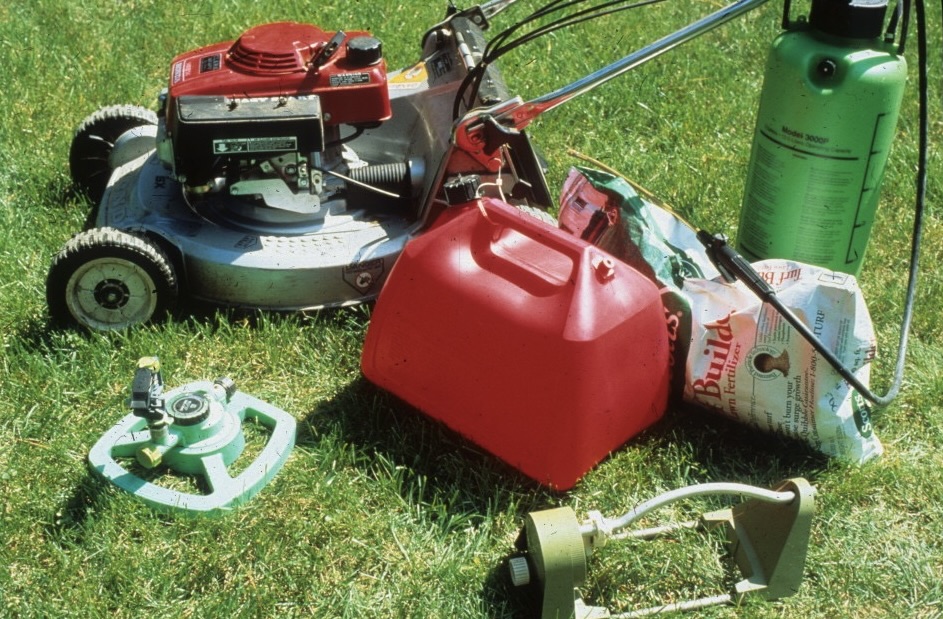
Cool season grasses (tall fescue, bluegrass, perennial rye) can be fertilized with a slow release high nitrogen (the first number) fertilizer.

Apply preemergent weed control after the forsythia (Forsythia intermedia) blooms and before the native dogwoods (Cornus florida) bloom.  (That there is real science.)

Commence mowing activities when needed (or when the mower no longer mires in the mud).  Cool season grasses should be kept mown at 3” to 4.” Warm season grasses (zoysia, Bermuda, centipede) are still dormant.  You get to play with them next month.

Remember, grass clippings should either be left on the lawn, composted, or used for mulch.  They don’t belong in the landfill.

Fertilizing

Feed your shrubbery this month.  Established plants do not need heavy fertilizing.  Let “moderation in all things” be your mantra. Shade trees can be fertilized now, but only if your SOIL TEST (free again beginning April 1 through November) indicates a need.

Emerging bulbs can be fertilized this month. Fertilize asparagus beds early in March, before the new spears emerge.

Planting

As usual, everything in this section is dependent upon soil conditions.

Trees and shrubs may be planted now as well as fruit trees and grape vines up to bud break.  Plants planted now will require more intentional water management through our oft droughty summer.

March is a good time to plant perennials.

Start annuals and warm season vegetables inside now if you haven’t already done so.  These can be transplanted outside after the threat of frost has gone.  (No bets on that date anymore.)

Rose bushes can be planted now.

The same veggies that can be planted in the fall can also be planted now (unless, of course, you are sick to death of broccoli and beets).  These include the aforementioned broccoli, beets, carrots, cabbages, cauliflower, potatoes and turnips.  Then there are the salad greens, lettuces, spinach, chard, etc.  So, in May it’ll be salad and roasted root vegetables for supper?

Pruning

Prune any fruit trees that didn’t get done in February.

Deadhead any early spring annuals such as pansies (Viola x hybrids) as the blooms fade in order to prolong bloom time.

Roses can be pruned in the latter half of the month.

Overgrown broadleaf shrubs can still be severely whacked.  (No, it won’t kill them, and they be much more manageable—for a while.)1

Spraying

The following miscreant pests will be out and about this time of the year:  euonymus scale, spider mites on evergreens, hybrid rhododendron borers, and lace bugs on azaleas.  Spray only as necessary with an appropriate product and always read and follow label directions.

Apply a dormant oil to fruit trees to control several insects.  This is especially important if you have just pruned the trees.

When in bloom, spray apple and pear trees with streptomycin to prevent fire blight.

Other Swell Stuff You Can Do in March

Get ready for prime time.  Check all your gardening equipment and make sure it will be ready to go when you need it.  Nothing is more frustrating than being all psyched up to mow the grass (I have heard there really are people for whom this is a reality) only to discover that the starter battery is dead, the blades need to be sharpened, all the tires are flat, the belt that broke last fall didn’t fix itself over the winter, all the things.  Check all the garden gizmos now and prevent a possible psychotic break later.

Try experimenting with a new annual, perennial or veggie this season.  Experimenting can be fun, and you might just discover a new BFF plant.  Also, experimenting has been shown to have very few side effects.

North Carolina Arbor Day (not to be confused with National Arbor Day) is this month.  It is always the first Friday after the 15th, ergo on the 21st this year.  Plant a tree or seven.

Get a few of your summer clothes out of the attic but keep your heavy winter jacket close by.  You could need both in the same day.

Mellow March, Y’all.

Notes

1–Keep in mind, many woody ornamentals are pruned according to their flowering date. Spring bloomers like dogwood or forsythia are usually pruned after they bloom. Summer-flowering plants are generally best pruned when dormant before new growth begins in the spring.

Resources and Additional Information

Learn more about organic lawn care: https://content.ces.ncsu.edu/organic-lawn-care-a-guide-to-organic-lawn-maintenance-and-pest-management

How to read a fertilizing label like a pro: https://hgic.clemson.edu/factsheet/reading-a-fertilizer-label

Spring vegetable gardening: https://content.ces.ncsu.edu/home-vegetable-gardening-a-quick-reference-guide

Read our blog article on year round vegetable gardening for early springtime tips: https://wp.me/p2nIr1-2F1

Pruning techniques for trees and shrubs: https://content.ces.ncsu.edu/general-pruning-techniques

Guide to cleaning and sharpening garden tools: https://bookstore.ksre.ksu.edu/download/how-to-clean-and-sharpen-garden-tools_MF3288

Article Short Link: https://wp.me/p2nIr1-5Eg

Mustard: It’s Not Just for Hotdogs

By Melinda Heigel, NC State Extension Master GardenerSM volunteer of Durham County

(Left) The big, bold leaves of ‘Red Giant‘ mustard take center stage in this large container providing texture, height, volume, and intense color. This mustard was fast growing, survived cold temperatures with minimal protection. It was also slow to bolt when the weather got warm in the spring. (Middle and right) The ‘Miz America’ mizuna-mustard hybrid was equally stunning in a built-in planter box and potted alongside pansies, violas, and a lemon cypress, (Hesperocyparis macrocarpa ‘Goldcrest’ ). While these head turners are edible, I planted them for their color and form. (Image credit: Melinda Heigel)1

Wait? I thought this was a blog about gardening, not cooking! Well, the mustard I am referring to isn’t the zippy condiment we all know but is the plant I discovered is a star in fall containers. I’ve written in the past about the herb bloody dock, also known as sorrel, and what a bullet-proof companion it is for pansies, violas, snapdragons, ornamental kale, cabbage, and other autumn-to-spring plants. Last year I tried adding mustard to my potted arrangements and was thrilled with the results.

A Question of Hardiness

Along with broccoli, collards, and kale, mustard is a cole crop that performs best in consistently cool temperatures when grown in the vegetable garden. But over the last couple of years I’ve started seeing different mustard plants at the local nurseries more and more alongside the annual cold-weather ornamentals. The mustard plants offered some really interesting leafy forms for planting in pots. I was dubious, though, about their hardiness over the winter, unprotected in containers, but what is gardening without experimentation? With the exception of a couple nights with temps in the teens in the dead of winter, I did not cover any mustard plants. To my surprise, they performed just as well as their cool-weather container companions.

(Left to right) Mustard plants already making a debut at the local nursery this month alongside fall’s usual suspects. In late spring of 2024, my ‘Miz America’ mustard plants produced bright yellow flowers when they bolted. The plants really earned their keep–providing interesting leaves for months followed by these showy late-spring blooms. And did I mention spring pollinators were drawn to their nectar and pollen? (Image credit: Melinda Heigel)

If the spring weather warmed up too quickly, as it is known to do in central NC, I also wondered whether these cool-temp lovers would bolt (flower) and fade too quickly given their prominent placements. Most of the containers were in the hottest place around our house–on a dark-colored deck that receives full sun. Happily, the mustard tolerated a good number of hot days in late April and early May before bolting. Even after flowering, they were still going strong when I removed them to make way for summer plants. While I may have just the right conditions in my landscape for these results, I can’t chalk this success up to anything remarkable. Mustard plants are easy to grow. And I’ve come to find out, one of the types I planted is actually bred to be bolt resistant, ensuring longevity.

Mustard Varieties for Annual Container Gardening

Red Giant Mustard (Brassica juncea ‘Red Giant’)

I found this to be a striking specimen. In my big container, it quickly grew to be over 3 feet tall, with gracefully arching leaves that reminded me of a classical acanthus—yes, you really can wax poetic about mustard. If grown in optimum conditions, this plant has been reported to grow as large as 4 feet. Though I have not experienced this, don’t underestimate its vigor. When planning your mixed pot, give it plenty of room. ‘Big Giant’ mustard leaves start off green but mature into a deep maroon with contrasting green stems, midribs, and leaf veins. This plant is specifically bred to be both cold-and-bolt tolerant. Frost intensifies the color. It grows best in full sun with well-drained soil. It paired nicely with the flowering cushion spurge ‘Ascot Rainbow’ (Euphorbia x martinii ‘Ascot Rainbow’) as a backdrop.

In terms of its characteristics as an edible, this mustard has a bold taste like wasabi or horseradish and can be pickled, eaten cooked (mature leaves), and eaten raw (young leaves). Hot weather sharpens the flavor, especially in the older leaves of the plant.

Image credit: Melinda Heigel

Miz America Hybrid (Brassica juncea ‘Miz America’)

At once striking and delicate, the deeply lobed and serrated leaves of this mustard are a showy deep burgundy with vibrant hot-pink midribs and venation. Like ‘Red Giant,’ it is a fast grower and prefers full sun. It serves as an excellent filler in containers, given its upright and compact habit.

From a culinary perspective, ‘Miz America’ has a mild peppery flavor. It’s a hybrid plant that comes from crossing two distinct mustard varieties. One of the parents, mizuna, is a mild green mustard, which gives ‘Miz America’ its beautiful serrated edges and mild flavor. You can enjoy the leaves of all mustards in a salad by picking them young—under 6 inches. If picked at a more mature size, they can be added to a dish to impart a hint of sweetness with a mustard tang. Consider adding them to a bowl of hot, creamy soup such as butternut squash or tomato. Not only does it give you additional nutritional value without adding additional calories, but it adds a nice crunch and a bit of zing.

I’ve yet to replant my containers and built-in planter box this fall, but you’d better bet that mustard plants will be making a repeat performance in 2024. I’ve already seen ‘Red Giant’ in the nurseries, but I am also on the hunt for some other intriguing mustards to test out—namely ‘Brazen Brass’ and ‘Dragon Tongue.’ If you want something unusual, showy, and even tasty in your fall plantings, remember to go heavy on the mustard.

Notes

1–Want a closer look at a photo? Simply double click on the image for a better view.

2–According to Missouri Botanical Garden, Brassica juncea, known by its common names Chinese mustard or brown mustard, is listed as a noxious weed in some states including Michigan, Florida, and Alaska and considered invasive. Cultivars discussed here are bred to be used as annual edibles or ornamentals in gardens.

Resources and Additional Information

Article Short Link: https://wp.me/p2nIr1-54k